
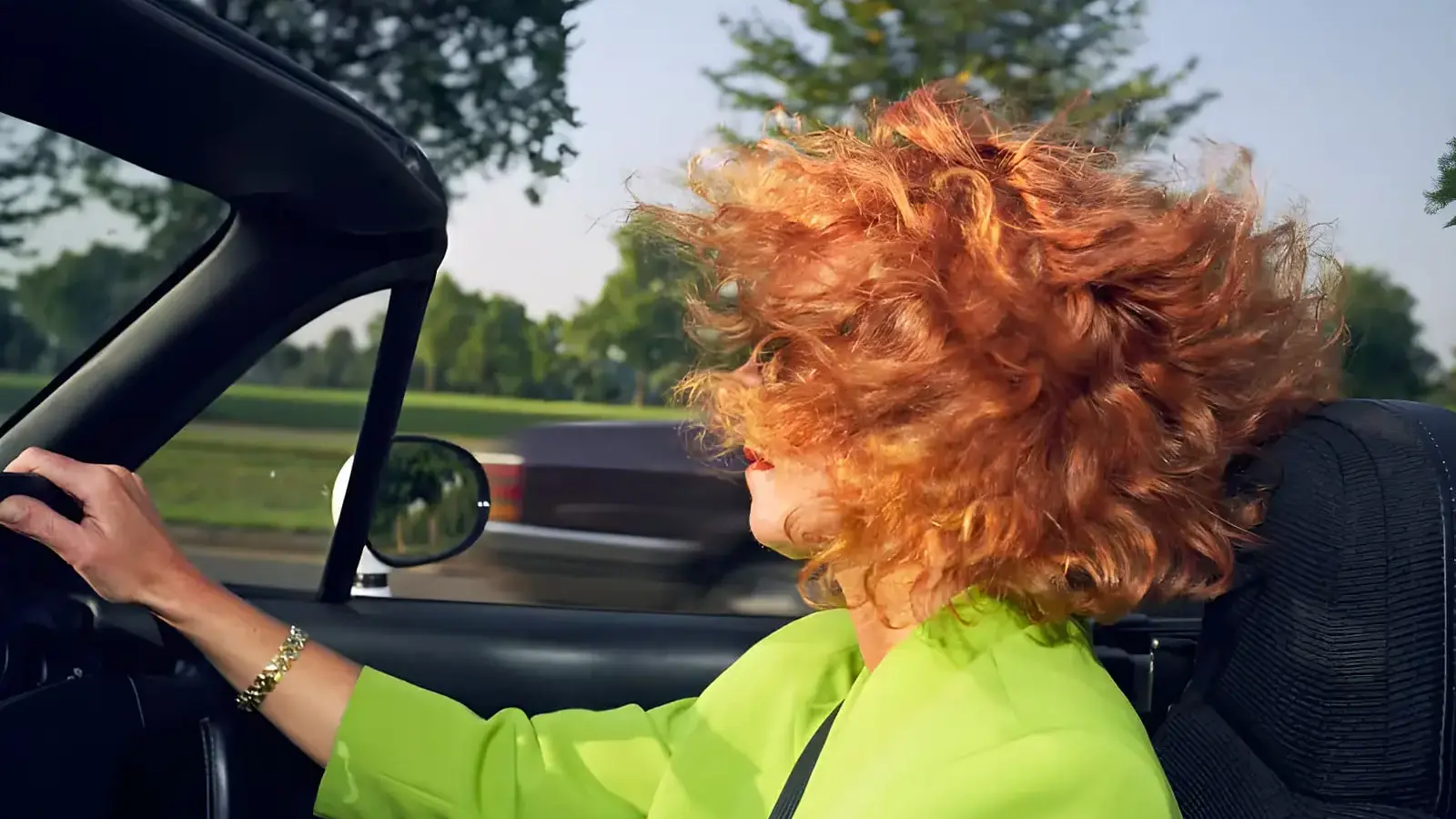
Why do we look almost naked compared with our primate cousins, yet still sport thick hair on the head, face, underarms and groin? Ask a passerby on the street and you will get opinions: hygiene, fashion, genes. The scientific answers are messier, richer and less settled. Human hair is a living archive that records millions of years of biology, behavior and culture.
From fuzzy ancestors to a mostly bare skin
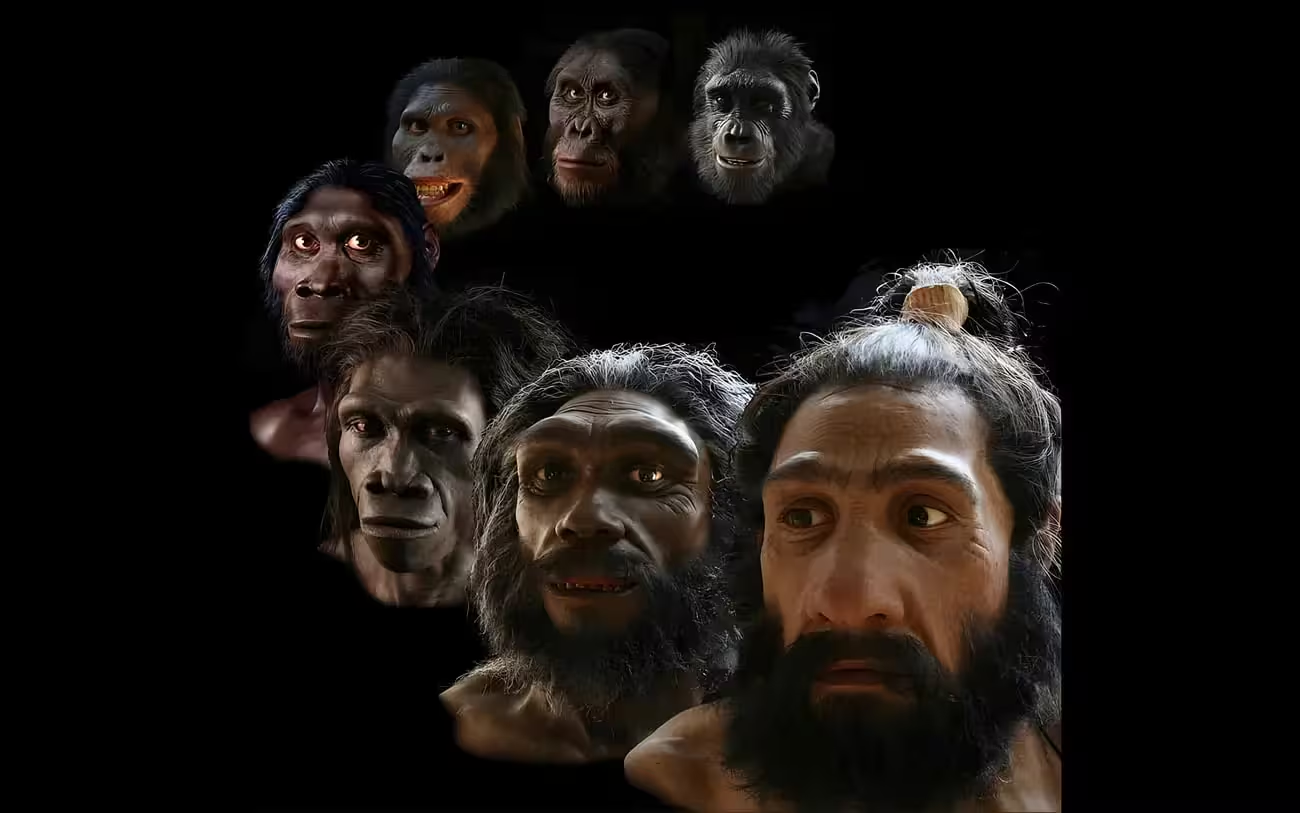
The fossil and comparative record gives us a long view. The earliest direct traces of fur-like coverings date back roughly 245 million years to cynodonts, a branch of proto-mammals that led toward modern mammals. Those early hairs probably started as insulation, a way to hold heat for small warm-blooded animals. Over deep time, structures linked to hair follicles diversified and took on other roles: sweat glands, mammary glands and scent-producing glands all trace parts of their origin back to follicular architecture.
So why did Homo sapiens end up with a mostly hairless body despite having almost as many follicles as other primates? The short answer is that quantitative follicle counts do not tell the full story. Most human follicles produce very fine, short vellus hair rather than long, pigmented terminal hair. Almost every part of the skin except the palms and soles has follicles. The evolutionary shift was therefore not one of losing follicles wholesale, but of changing what those follicles produce. The result is a body that appears glabrous while conserving the basic follicular toolkit.
That fact reframes many hypotheses. A transition toward a more active, endurance-oriented hominin lifestyle may have favored efficient sweating and cooling. Sparse, fine body hair helps evaporative cooling while plentiful eccrine sweat glands shed heat. This trade-off—improved thermoregulation at the cost of less insulating fur—lines up with models in which early humans adapted to open, sunlit habitats and long-distance walking or running.
Why some hair stayed: thermoregulation, protection, signaling
Not all hair was equally dispensable. Certain patches of terminal hair remained and became prominent at puberty: scalp, eyebrows, eyelashes, beard in men, axillary and pubic hair. Each retained region likely reflects a mixture of selective pressures rather than a single clear cause.
- Scalp hair: It does work. Scalp hair helps shield the head from intense sunlight and may moderate heat gain. Experiments and observational studies suggest that different hair shapes influence thermal and radiative behavior: tightly curled hair can deflect more direct solar radiation while still permitting heat generated at the scalp to escape, a potentially useful adaptation for populations in high-UV environments.
- Facial hair: Beards are partly about physics and partly about politics. A dense beard changes perceived facial dimensions, conveying age, maturity or aggression. In social species that rely on visual assessment, such a display could affect status contests or mate choice.
- Axillary and pubic hair: These locations sit over clusters of apocrine glands that produce complex chemical compounds. Hair can trap and slowly release body odors; that property might have amplified chemosensory signals important for social communication or mate assessment. This scent-trapping hypothesis remains plausible, though hard to test rigorously with current methods.
In short, thermoregulation, ultraviolet protection and social signaling likely all played roles, with population-specific terrains and climates nudging hair form in different directions. Genetics, too, matter: hair color, curl and thickness are polygenic traits shaped by migration, isolation and local adaptation.
Cultural life of hair: identity, status and conflict
Hair has never been purely biological. Human communities have used hair as a visible language for identity, rank and religion since prehistory. Archaeology shows that hair modification and decoration are ancient practices. In ancient Egypt, people dyed, braided and augmented their hair. Ramses II reportedly used henna to disguise graying hair. Excavations at the 3,300-year-old site of Amarna revealed a woman whose hair was arranged with elaborate cosmetics and approximately 70 additional hair pieces.
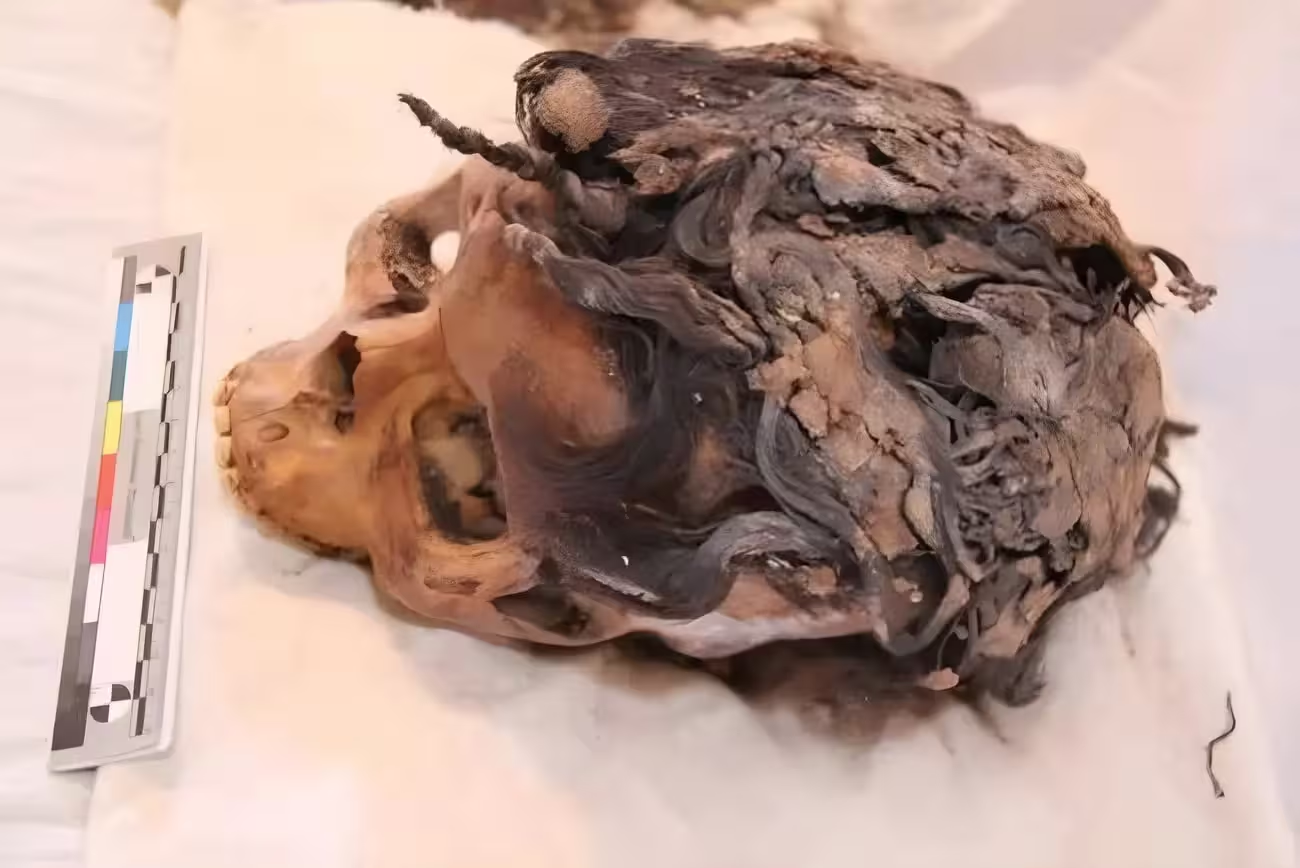
A 3,300-year-old woman found at the ancient city of Amarna in Egypt had her hair styled with elaborate cosmetics and about 70 added hair pieces. Photographers: Jolanda Bos and Lonneke Beukenholdt.
Across cultures, hair practices mark gender, status and conformity. Long hair on women has been read as a sign of femininity in certain societies and punished or removed in others as a means of control. In modern history hair texture became an axis for discrimination: colonial and apartheid regimes used hair form—curliness, coarseness—as part of pseudo-scientific hierarchies. Those prejudices have real consequences, shaping employment, social mobility and personal dignity.
The psychological weight of hair today is visible in clinics and salons alike. Hair loss, unwanted hair growth, and socially stigmatized hair locations can affect self-image, fueling anxiety and depression for many. Cosmetic and medical industries have grown around those human responses, but the social story remains paramount: hair matters because people assign meaning to it.
What remains uncertain: hypotheses awaiting evidence
Many plausible ideas about hair are still hypotheses. How much did sexual selection shape scalp hair versus natural selection via sun exposure? Do axillary and pubic hairs primarily serve chemosensory functions, or do they have other roles tied to friction reduction or lubrication? The evidence is partial and sometimes contradictory. Some studies connect curly hair to UV protection; others emphasize thermodynamics. Some behavioral work links beards to social dominance signals; other studies show context-dependent preferences among potential mates.
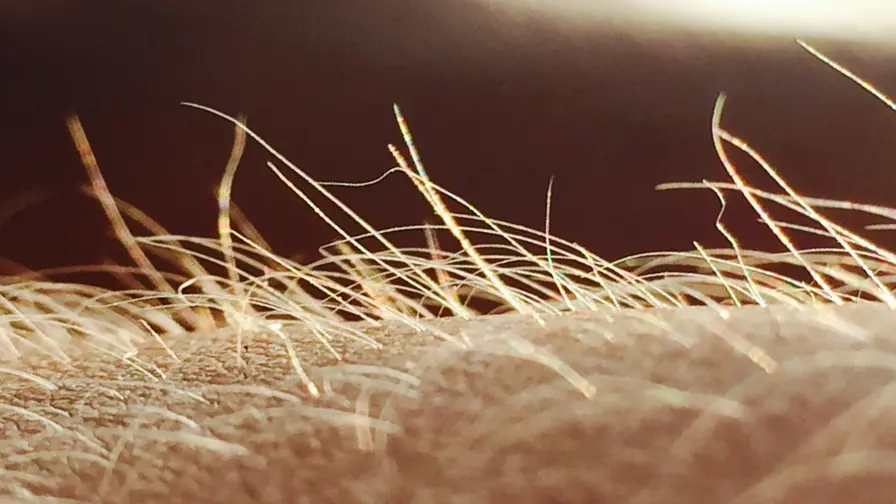
Progress requires experiment, nuance and cultural sensitivity. Modern human diversity offers natural experiments: populations living in different climates and with different social norms show variable hair types and grooming practices. Genetics and paleoclimate reconstructions add further dimensions. But teasing cause from consequence in traits so tightly woven with culture is hard work.
Expert Insight
Dr. Emma Carter, an evolutionary anthropologist who studies human adaptation, offers a pragmatic view: 'Hair is a multi-tool. Think of it like a Swiss army knife of evolution: small functions add up. Scalp hair buffers sun and heat, facial hair changes social perception, and armpit and pubic hair alter odor dynamics. No single certificate of utility will explain everything. We need comparative field studies that combine physiology, genetics and social behavior to untangle the story.'
'Experimental work on thermal effects of different hair morphologies is promising,' she adds. 'At the same time, cultural practices have amplified or suppressed traits in ways that complicate direct evolutionary inference. That complexity is what makes this topic fascinating.'
Implications and open questions
Understanding why humans are relatively hairless but retain patches of terminal hair matters beyond academic curiosity. It touches on human health, cultural heritage and social justice. For medicine, distinguishing between vellus and terminal hair pathways informs treatments for hair loss and hirsutism. For public policy, acknowledging the social dimensions of hair—how texture and style get policed—helps to address discrimination. For education, teaching hair as an evolutionary and cultural subject can counter simplistic narratives that reduce biological difference to hierarchy.
A few directions stand out for future work. First, better biomechanical and thermodynamic experiments that test real-world heat exposure across hair types can sharpen adaptive claims. Second, cross-cultural behavioral studies can clarify how grooming and mating preferences interact with natural selection. Third, genomic studies that map the regulatory networks controlling follicle outputs will reveal the molecular switches that changed vellus into terminal hair in some places and not others.
Conclusion
Human hair is a palimpsest of biology and culture. We keep the pieces that helped us move, signal and survive, and we lost the rest as environments and lifestyles shifted. Many plausible explanations exist for why scalp, facial, axillary and pubic hair persisted, but few are conclusively proven. The remaining questions invite interdisciplinary work: fossils and genes; physiology and sociology; salons and field sites. Above all, hair reminds us that what looks trivial can be densely meaningful.

“The cosmos has always fascinated me. I write about space missions, astronomy, and the technologies pushing humanity beyond Earth.”

Discussion
Leave a Comment
Comments (1)
Wow never thought hair held such a layered story, cool and kinda mindblowing... Scalp vs body hair, evolution is messy but fascinating