
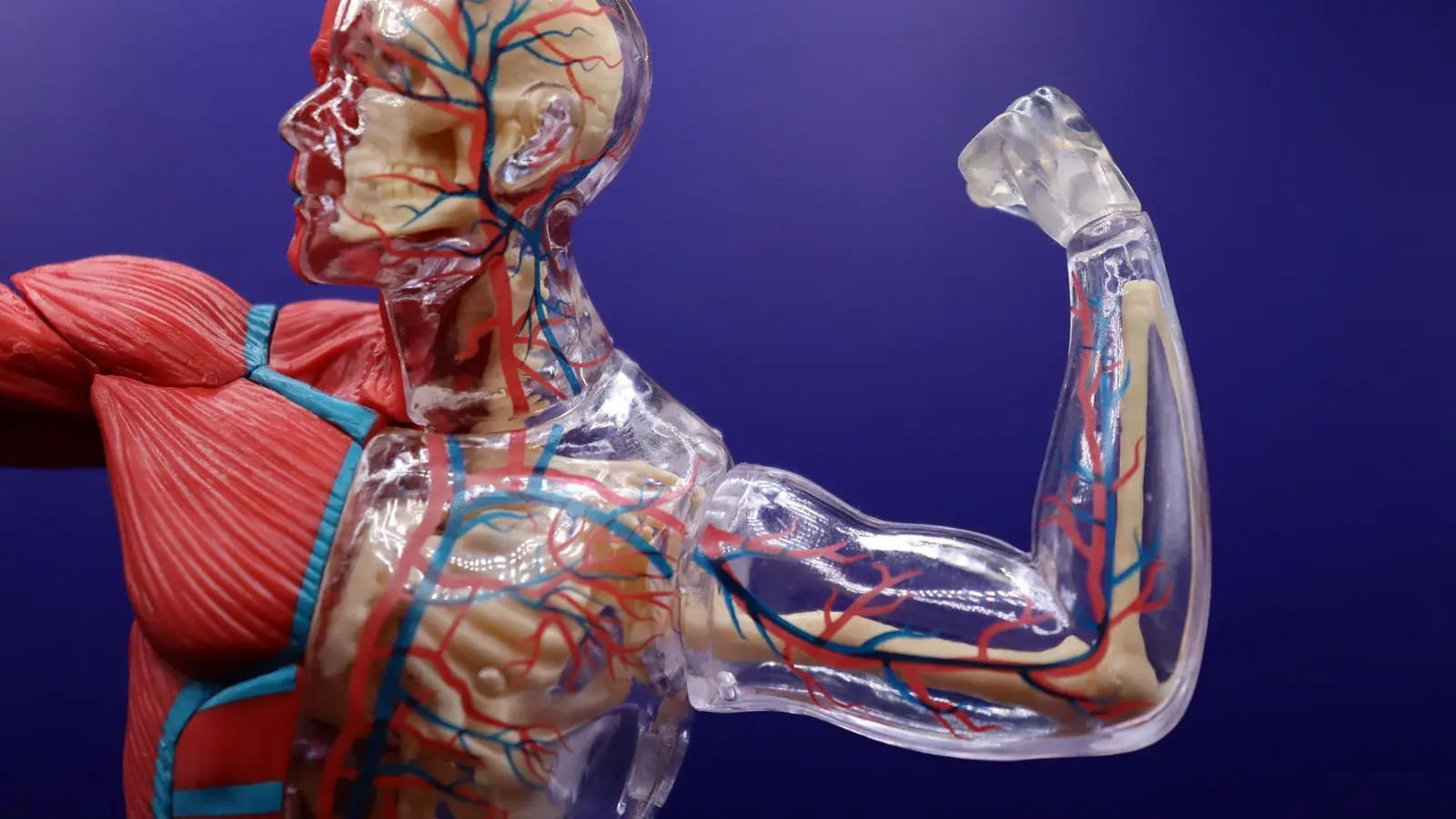
The clearest early alarm for dementia might not be your waistline but the strength in your limbs. New evidence suggests that fading muscle — not rising pounds alone — could be a stronger predictor of cognitive decline.
Researchers at Curtin University reviewed more than 80 observational studies to untangle how body composition across the lifespan relates to later dementia. The headline finding: people with sarcopenia — a marked loss of muscle mass, strength, and function that commonly accompanies ageing — showed roughly a 42 percent higher risk of developing dementia compared with those without. That association outpaced the links seen for simple measures of body weight.
When weight is not the whole story
Obesity produced a more complicated picture. In midlife, excess weight was associated with a modestly higher dementia risk — about a 9 percent increase. But the direction flips in older adults: among people aged 65 and above, obesity correlated with about a 17 percent lower dementia risk in the pooled data. That pattern echoes the so-called obesity paradox reported in other ageing studies, where body mass behaves differently as physiology changes with age.
Lead investigator Dr. Uraiporn Booranasuksakul of Burapha University emphasizes that weight alone is an incomplete metric. "It’s not just about how much you weigh," she says. "Maintaining muscle strength and function appears to matter as we get older. Losing muscle could be an important early warning sign for dementia risk."

Professor Mario Siervo of Curtin’s School of Population Health, a corresponding author on the review, urged caution in interpretation. The shifting association between obesity and dementia across age groups does not imply that gaining weight is protective. Rather, it highlights a complex interplay among ageing, body composition and brain health that requires more nuanced study.
Only a handful of studies have explored sarcopenic obesity — the coexistence of low muscle mass or strength and excess body fat. The four studies that met the review’s criteria did not show a statistically significant combined link with dementia, but the small number and methodological differences mean the question remains open.

The practical takeaway is straightforward: clinicians and the public should look beyond the scale. Preserving muscle mass and function through resistance exercise, balanced protein intake and fall-prevention strategies is likely to support healthy ageing and may reduce dementia risk alongside other known lifestyle measures.
- Prioritize strength training at all ages; even modest resistance work preserves muscle function.
- Ensure adequate dietary protein and address nutrient deficiencies that impair muscle maintenance.
- Monitor functional markers such as grip strength and walking speed in routine care.
Public-health voices welcomed the review. Professor Warren Harding, Chairman and Head of Research and Partnerships at Alzheimer’s WA, noted that the global burden of dementia is huge — roughly an economic impact of approximately €2.6 trillion — and that lifestyle factors such as exercise, nutrition, sensory health and cognitive engagement remain central to prevention strategies.
Mechanisms linking muscle and brain are plausible. Skeletal muscle functions as an endocrine organ, releasing myokines that influence inflammation, metabolism and neuroplasticity. Reduced mobility also accelerates social isolation, vascular risk and sedentary behaviours that can harm cognition. In short: weaker muscles set off a cascade of biological and social changes that could erode brain resilience.
Expert Insight
"We tend to think of dementia as a purely cognitive problem, but it emerges from bodily systems that age together," says Dr. Lina Martinez, a geriatric neurologist and clinical researcher. "Muscle loss reduces physical reserve, increases vulnerability to illness and injury, and alters inflammatory signaling — all of which can accelerate cognitive decline. Focusing on strength and function offers a concrete, actionable pathway to reduce risk."
Looking ahead, the authors call for longer-term cohort studies that measure muscle, fat distribution and functional markers across decades. Randomized trials testing whether targeted resistance training or nutrition interventions slow cognitive decline would be the next step toward causal evidence.
This review reframes how clinicians and individuals might think about healthy ageing: not as a choice between weight loss and weight gain, but as a balance of maintaining muscle, managing metabolic risk, and preserving mobility and independence. The message is timely and tangible — build strength, eat well, stay active — and it may protect both body and mind.


“My work centers on sustainability, energy, and environmental science — examining how innovation can lead to a greener future.”

Discussion
Leave a Comment
Comments
No comments yet. Be the first.