
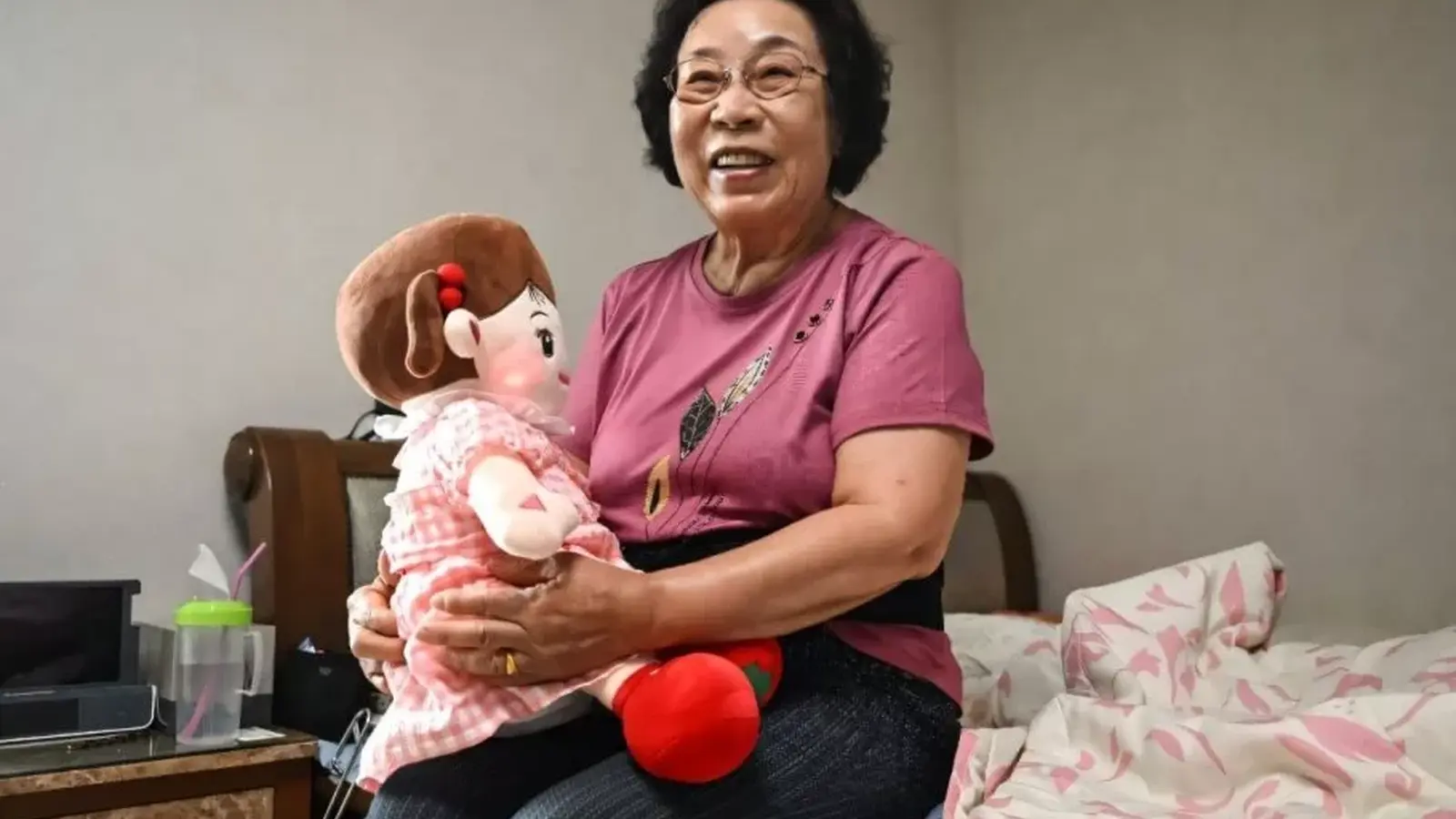
Bang Chun-ja wakes up to a warm, childlike voice before she even reaches the kettle. The small doll perched on her table says hello, reminds her to take medicine, and sings a short tune when she looks tired. For the 78-year-old living alone in a compact Seoul apartment, this soft presence has become the day’s most reliable greeting.
When technology becomes kin
South Korea faces a demographic squeeze few countries have seen. Birthrates are the lowest globally, and nearly half the population is over 50. Alone households make up roughly 42 percent of all homes. In that landscape, social isolation is not a sidebar; it is a public-health emergency. In 2024 the news agency AFP reported more than 3,920 cases of so-called "death in solitude," the highest annual tally since such records began in 2017.

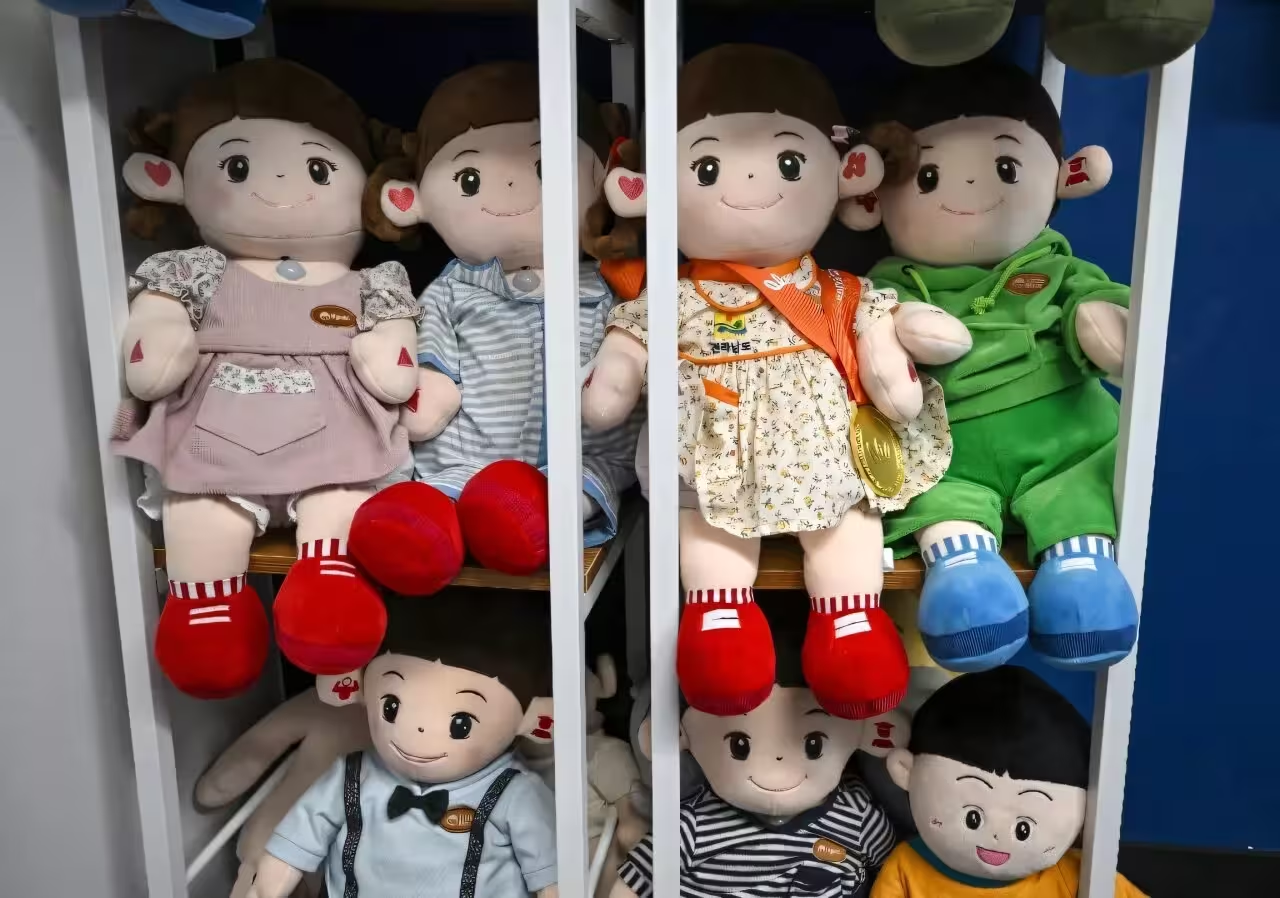
Startups and municipal governments have begun to respond with what might feel like a strange balm: companion devices shaped like stuffed dolls. One of the better-known models, produced by the company Hyodol, combines soft fabrics and engineered personality to fill social gaps for older adults. The device uses conversational AI and scripted prompts derived from interviews with seniors to simulate an affectionate companion—sometimes purposely modeled as a grandchild figure.
The doll is more than a talking toy. Under the plush surface are microphones, simple motion sensors, and software that blends large-language chat models with tailored dialog trees. That means the system can hold natural-sounding exchanges while following safety protocols designed from ethnographic fieldwork. Hyodol reports roughly 14,500 units deployed across private homes, municipal programs, and eldercare facilities in South Korea.

Why choose a doll over a tablet or a phone call? Many seniors in Korea spent decades in physically demanding work and household labor. The feeling of no longer being needed is a deep, persistent ache. An inanimate object that asks for affection and offers unconditional interest can counteract that emotional void in ways screens and reminders often cannot. The designers deliberately engineer prompts that invite touch—requests to stroke the doll’s hair or to share snacks—in order to evoke intimate, low-risk interactions.
Technology, trust, and trade-offs
Hyodol’s founder, Kim Ji-hee, spent years interviewing widows and isolated elders to understand what companionship looked like in practice. One account she recalls involved a widow who kept multiple household appliances because they reminded her of family. These interviews shaped the device’s personality and safety rules. Recordings of user voices are reportedly stored internally to improve the conversational model, and medical data such as sleep patterns or mood logs are shared with social workers only with explicit consent.

At the technical level, the dolls fuse several strands of contemporary engineering: natural-language processing for conversational flow, embedded sensors for activity detection, and basic telemetry that can flag prolonged inactivity. Think of a low-power Internet of Things node with an empathetic surface. The AI backbone borrows conversational techniques similar to mainstream language models, but the system’s behavior is tightly constrained by interview-based scripts to avoid inappropriate responses.
That constraint is necessary because there are real ethical questions. Care workers who have recommended the device report noticeable reductions in loneliness and depressive symptoms among users. Nurse Oh Sun-hwa, who suggested the device to Bang Chun-ja, says the doll calmed patients who previously stared at the ceiling for hours. But she also worries: will families come to see these devices as replacements rather than supplements? If relatives assume an AI will cover emotional labor, visits could decline, deepening isolation in other ways.
There is also a regulatory angle. Devices that collect health-related telemetry sit at the intersection of consumer tech and medical monitoring. Proper data governance, transparent consent, and robust local storage to prevent misuse are all part of responsible deployment. South Korea’s local trials currently emphasize opt-in data sharing and municipal oversight, but the long-term governance model remains unsettled.
Expert Insight
Dr. Elena Park, a gerontechnologist at a Seoul research institute, frames the question bluntly: "Technology can scaffold social contact; it cannot fully substitute for it. These dolls reduce immediate distress and give caregivers remote eyes on risk signals, but policymakers must prevent complacency. The best outcomes come when AI companions are paired with active community outreach, not as a reason to cut it."
Her emphasis is on integration: combining wearable or embedded sensors that detect sleep and movement with coordinated social services. In practical terms, that might mean an alert prompts a scheduled volunteer call or a home visit rather than only a municipal dashboard notification.
Outlook and broader implications
As populations age globally, the Hyodol story points to a hybrid future of gerontechnology where soft interfaces meet hard data. The approach raises design questions that researchers are now addressing: how to calibrate emotional realism to avoid deception, how to preserve dignity, and how to scale human follow-up in cost-effective ways. There are also opportunities. Advances in low-energy sensors, federated learning techniques that keep voice data local, and improved social-service networks could make companion devices safer and more effective.
For many users, the benefit is immediate and unmistakable. Kim Young-bun, 79, says the doll keeps her company all day; when it chirps that it is happy to be with her, she replies, "So am I." Those brief exchanges may not solve structural problems like underfunded eldercare or demographic decline, but they can soften the afternoons in between.
Conclusion
AI companions in South Korea illustrate a pragmatic response to loneliness: combine conversational models, sensors, and empathetic scripting to create low-risk social partners for vulnerable seniors. The devices are not a panacea. They are tools that reveal a broader need—sustained human contact supported by technology, rather than replaced by it. As the field of gerontechnology advances, balancing emotional support, privacy, and active human care will determine whether these dolls become bridges or barriers to true connection.

“My work centers on sustainability, energy, and environmental science — examining how innovation can lead to a greener future.”

Discussion
Leave a Comment
Comments (3)
I tried a similar toy at a care center once, folks lit up fast. still, tech cant replace a hand to hold. useful but not a full solution
is this even safe tho? voice recordings stored locally is fine in theory, but who audits the scripts or the telemetry? feels like a slippery slope
wow, that image of a granny chatting with a doll hit me hard. sweet but kinda uncanny. If it helps ease lonely afternoons, ok... but families tho, hm