
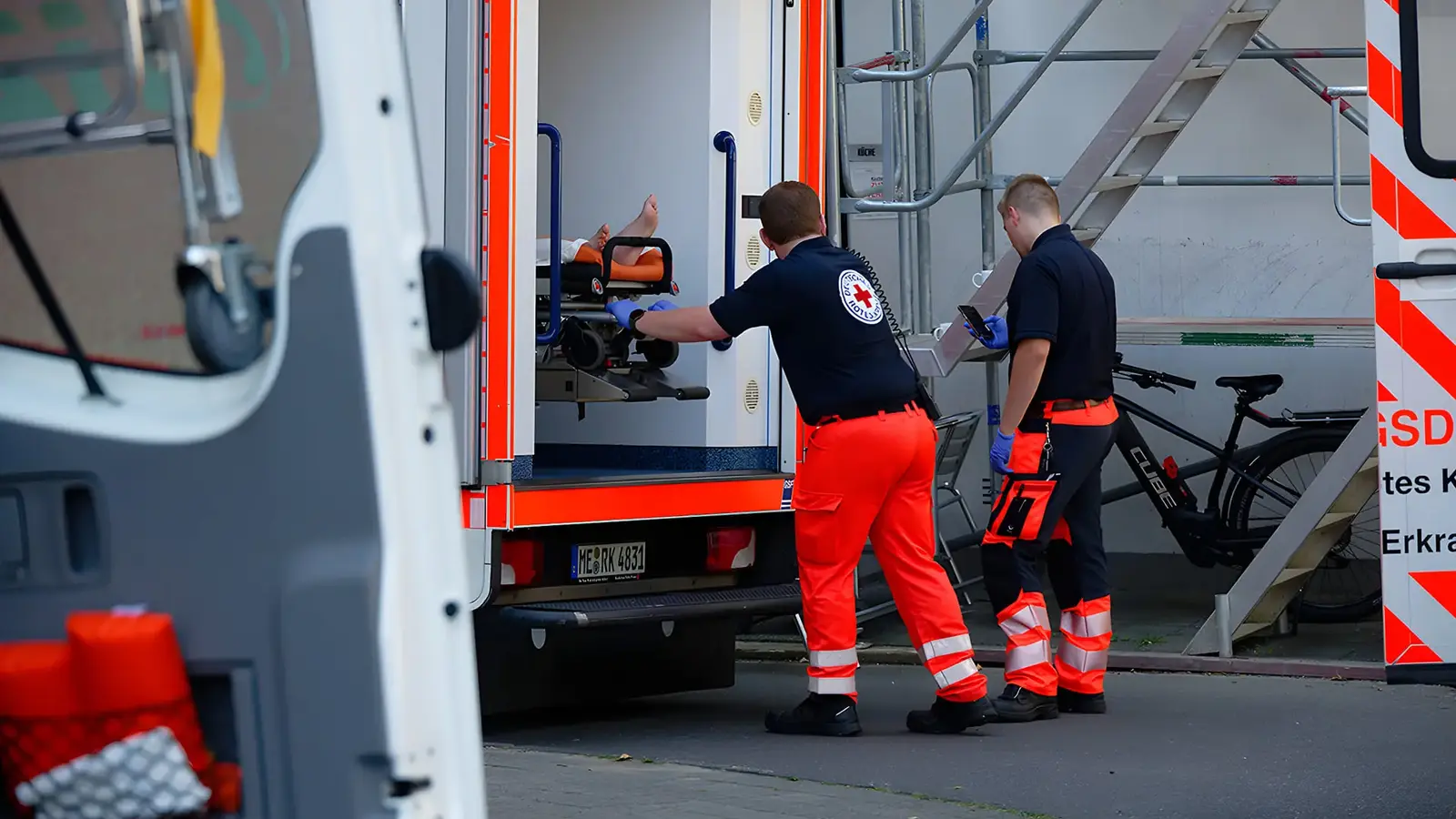
Cities across Europe melted under a summer heatwave in 2026 that researchers now say claimed more than 50,000 lives, and that global warming was responsible for roughly two thirds of those deaths. The toll is staggering—about twice the urban death estimates from Europe's heat crises in 2003 and 2022—and it exposes deep gaps in preparedness and protection for the continent's most vulnerable residents.
Temperatures climbed past 40 degrees Celsius in many places during late June and early July. Schools closed. Asphalt softened. Power demand surged and strained grids. Emergency call centers were overwhelmed. On June 27, staff evacuated a care home in Dormagen, Germany, after indoor temperatures reached dangerous levels.
How the researchers reached that number
A team from Imperial College London and the London School of Hygiene and Tropical Medicine took a different route than many national authorities. Rather than waiting for official death registries to be processed and compared with historical baselines, they built a model to estimate daily heat-related deaths across 854 European cities. The model relied on observed links between heat and excess mortality in 232 cities from 2000 to 2019 and then applied those relationships to weather during the 2026 event.
The advantage? Speed and coverage. Official processing of death certificates and excess-death calculations can take months. Modelled estimates give policymakers an early, continent-wide picture of the crisis—useful while final registries are still being compiled.
National reports have already flagged steep increases in heat-linked fatalities. Germany’s Robert Koch Institute recorded about 16,000 heat-related deaths from April through September. Spain’s mortality monitoring system registered 5,100 such deaths during July and August. The UK Health Security Agency estimated nearly 2,900 heat deaths in May and June.

Who suffered most
Deaths were concentrated among the elderly. Roughly 22,500 victims were aged 85 and older, and another 14,100 were between 75 and 84. Geographically, southern Europe bore the worst per-capita burden: about 380 heat deaths per million people. That compares with 277 per million in east and west regions, and 129 per million in northern Europe.
These differences reflect a mix of climate exposure and social factors. Air conditioning prevalence, building design, access to cooling centers, public-health messaging, and preexisting health conditions all shape local outcomes. A hot night in a poorly ventilated flat can be lethal to someone with heart disease or limited mobility.
Attribution: how much was climate change to blame?
To separate the role of human-caused warming from natural variability, the researchers ran a counterfactual climate simulation. They reconstructed how the heatwave might have unfolded in a world without industrial greenhouse gas emissions. In that scenario, peak temperatures during the event would have been up to 2.8 degrees Celsius lower. The model suggests that about 32,600 of the recorded deaths could have been avoided—hence the estimate that roughly two thirds of the fatalities were attributable to global warming.
"Just a few degrees matter," said Claire Barnes, lead author and statistician at Imperial College London. "A small change in temperature can be the difference between life and death for thousands of people." The phrase is simple. The implication is vast.

Limits and caveats
No model is perfect. Marcus Kichal Zamorano, an environmental epidemiologist at the University of Bern, praised the study’s approach but warned about extrapolation risks. Cities can change quickly; the model used baseline relationships from 2000 to 2019. Local conditions this year—recent heat adaptation measures, demographic shifts, or building changes—could make actual city-level estimates diverge from the model’s projections.
Another uncertainty: many models assume mortality rises at a steady rate as temperature increases. But some evidence suggests mortality may accelerate at extreme temperatures, producing steeper-than-expected rises in deaths. If that nonlinear behavior holds, conventional models might understate the true risk of unprecedented heat.
Public-health response and what worked
Authorities did deploy familiar measures: heat-health alerts, opening cooling centers, and targeted outreach to older adults and people with chronic conditions. Cooling centers offered temporary relief to those whose homes became dangerously warm during midday and afternoon peaks. In some countries, those interventions likely prevented additional deaths.
Yet despite greater awareness after prior crises, millions of Europeans remained exposed. The pandemic-era expansion of remote work left some older adults isolated. Urban heat islands—where concrete and asphalt store daytime heat—magnified nighttime temperatures that prevent physiological recovery. Infrastructure upgrades and social systems lag behind the scale of the threat.
Expert Insight
"Cities are living systems," said Dr. Elena Morris, a climate-health specialist at a European research institute (comment provided for context). "You can redesign them to be cooler: trees, reflective materials, and water systems help. But the fastest lever remains emissions reductions. The atmospheric heat load determines how often we cross dangerous thresholds." Her view underlines a dual strategy: immediate local protections plus global mitigation.
The new study echoes earlier work. Some of the same researchers previously estimated that extreme heat caused about 430,000 deaths in European cities between 2000 and 2025. And research on the 2023 heatwaves suggested more than 47,000 deaths, with safety measures preventing far larger losses.
Conclusion
The 2026 summer exposed a stark reality: heat is a silent killer whose reach grows as the planet warms. Models that combine urban mortality records with climate simulations give a clearer, faster view of human costs, and they make attribution possible. But numbers alone are not enough. They must motivate better planning—greener urban design, reliable cooling infrastructure, targeted outreach to at-risk populations, and, crucially, accelerated action on emissions.
If policymakers treat this summer as a final warning, lives can be saved. If not, the next heatwave could be worse, and the numbers will rise again.

“The cosmos has always fascinated me. I write about space missions, astronomy, and the technologies pushing humanity beyond Earth.”

Discussion
Leave a Comment
Comments (1)
This is heartbreaking. 50k+ lives... and most were elderly. Why are cities still unprepared? Feels like a final wake up call, but will anyone act?