
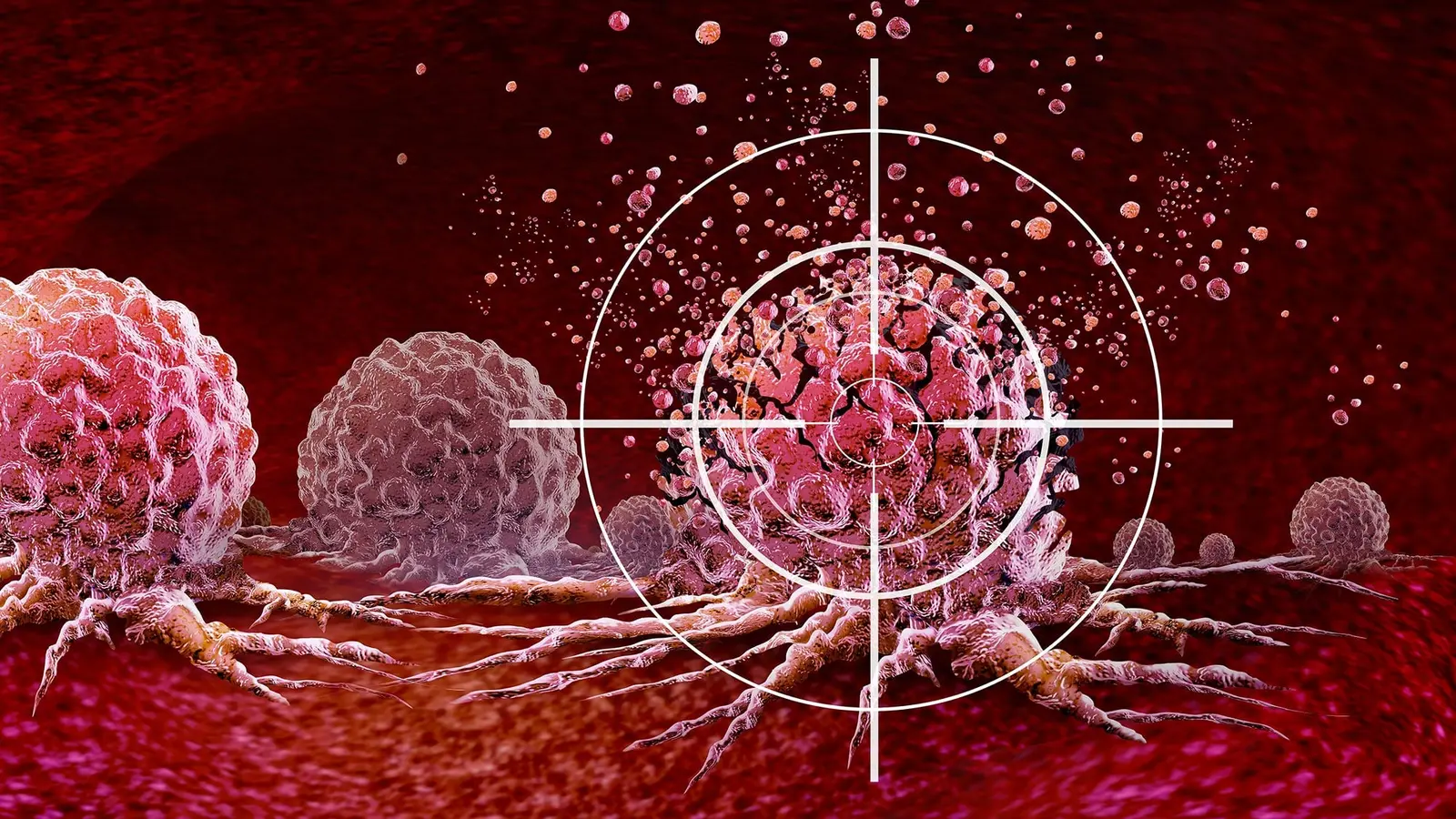
Imagine a drug designed to topple a cancer cell, but instead it trips healthy tissues at the starting line. That is the puzzle a team at the MRC Laboratory of Medical Sciences, together with colleagues at the University of Oxford and UCL, set out to solve when they reexamined the enzyme Wee1 and its place in the cell cycle.
Cell experiments revealed that the cancer drug target Wee1 also helps healthy cells copy DNA, a previously overlooked role that could explain treatment toxicity and guide safer therapies.
The conventional story has been straightforward. Tumor suppressor p53 is the first brake: it halts the cycle when DNA is damaged. About half of human cancers disable p53, allowing damaged genomes to persist. With p53 gone, cancer cells lean on a backup brake, an enzyme called Wee1, which prevents cells with damaged DNA from dividing. That dependency has made Wee1 an attractive target for drugs meant to exploit a cancer-specific weakness.
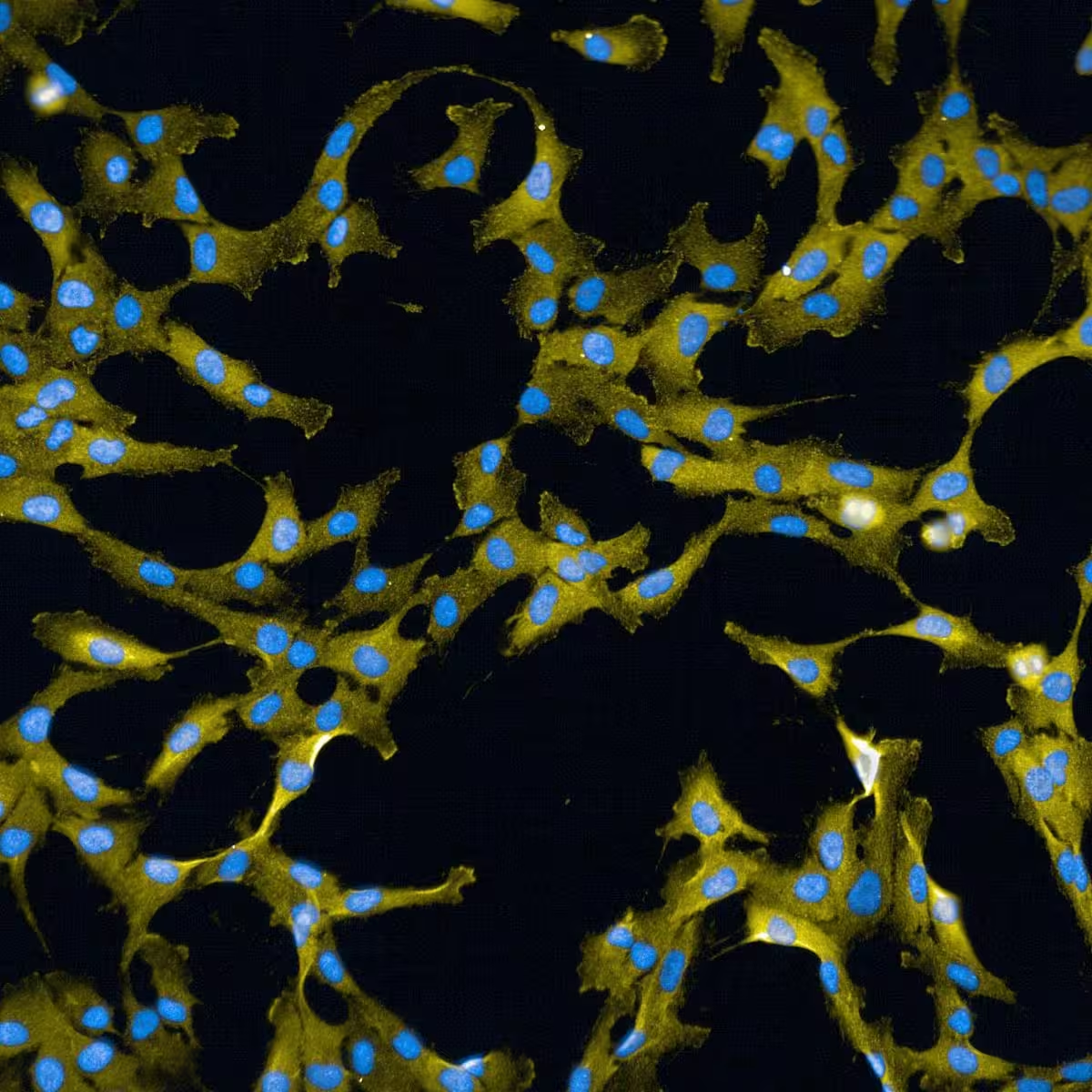
Human epithelial cells labelled for a Wee1 target (phosphorylated CDK; in yellow) and DNA (in blue).
When a backup becomes essential
But clinical trials of Wee1 inhibitors have stumbled. Patients experienced toxic side effects that clinicians struggled to explain using the established roles of Wee1 late in the cell cycle. So the researchers asked a simple but crucial question: could Wee1 be doing something earlier and different than anyone assumed?
They began with a mathematical model built from the literature. Models are blunt instruments when they encode assumptions that have never been tested under certain conditions. Experiments quickly revealed the mismatch. In both healthy and cancerous cells, Wee1 was doing more than just stopping damaged cells from dividing. It was helping to switch on the molecular machinery that starts DNA replication.
Specifically, the team found that Wee1 regulates a protein degradation complex that normally breaks down factors needed to begin replication. When Wee1 is present at the right time, it helps silence that degradation complex so replication proteins can accumulate and DNA copying can commence. Remove Wee1 with an inhibitor, and the degradation machine keeps running, delaying or preventing cells from entering S phase.
The practical effect is clear. Rapidly dividing, noncancerous tissues such as the lining of the gut and the blood-forming system rely on a steady cadence of replication. If Wee1 inhibitors block those cells from even starting to copy DNA, tissues stall. That stalling may underlie the toxicities observed in patients.
Matching drugs to the right tumors
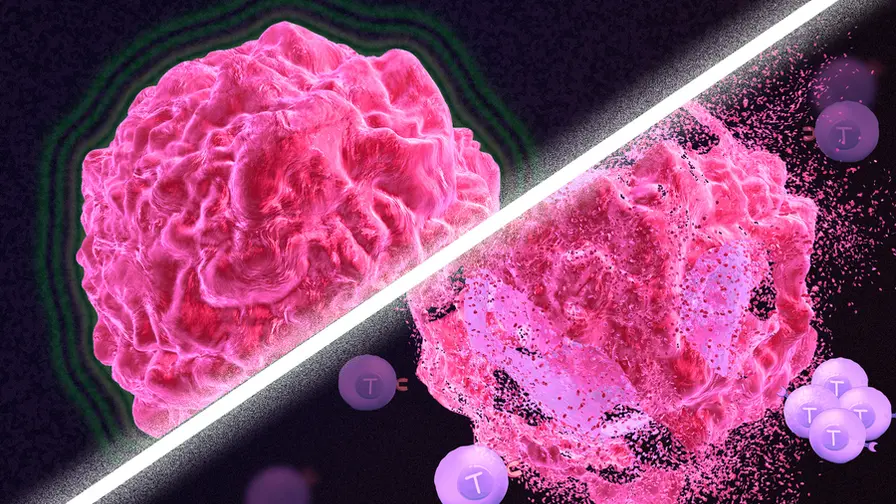
The discovery shifts how researchers should think about therapeutic windows for Wee1 inhibitors. If normal tissues need Wee1 to begin replication, but some cancers have alterations that make them less reliant on the degradation complex Wee1 controls, then certain tumors could still be vulnerable while healthy cells are spared at lower doses.
In other words, not all Wee1 targets are equal. Tumors with reduced activity of the degradation complex might be hyperdependent on Wee1 and therefore exquisitely sensitive to inhibitors. Identifying those tumors with biomarkers could let clinicians prescribe lower, more selective doses that kill cancer cells while reducing collateral damage.
"We suspect that when patients receive Wee1 inhibitors, normal fast-dividing tissues such as the gut lining and blood progenitors are prevented from initiating DNA replication," says Alexis, head of the Cell Cycle Control group at the MRC Laboratory of Medical Sciences. "Those cells get stuck and cannot replace themselves, and that could explain some of the toxic side effects."
The team also raised the possibility of designing inhibitors that avoid Wee1's early cell cycle function. That is a longer road. Blocking a single molecular function while leaving another intact requires exquisite chemistry or alternative strategies, such as targeting interacting partners or exploiting synthetic lethal relationships specific to cancer cells.
Expert Insight
"This study is a reminder that the timing of a protein's activity can be as important as the activity itself," says Dr. Maya Singh, a cancer biologist not involved with the work. "Drugs that target multifunctional enzymes need to be evaluated across the cell cycle. If we miss an early role, we risk unintended damage to normal tissues. Translating these findings into smarter trial designs and biomarker-driven patient selection is the right next step."
Moving forward, the researchers plan preclinical tests that mimic patient treatment contexts more closely and to analyze samples from ongoing Wee1 inhibitor trials. Those studies could confirm whether the newly identified early role of Wee1 explains the toxicities and whether biomarker strategies can rescue the therapeutic promise.
What this means for cancer therapy
The work reframes Wee1 from a late-stage cell cycle gatekeeper to a dual-role regulator that helps launch DNA replication while also policing entry into division. That duality complicates drug discovery but also opens new opportunities. Rather than abandoning Wee1 inhibitors because of toxicity, the pathway forward is smarter matching and molecular finesse.
For clinicians and drug developers, the message is pragmatic. Look for patient subgroups with the right molecular profile. Test lower doses or alternative modalities. And, crucially, broaden preclinical assays to probe cell-cycle stages that might have been overlooked.
Conclusion

Wee1 remains a promising cancer target, but this study highlights a hidden vulnerability in the strategy of wholesale inhibition. By revealing Wee1's unexpected role at the start of DNA replication, researchers can better explain clinical toxicities and chart safer, more selective therapeutic approaches. The next steps will determine whether that insight translates into treatments that keep their promise without compromising healthy tissue.

“My work centers on sustainability, energy, and environmental science — examining how innovation can lead to a greener future.”

Discussion
Leave a Comment
Comments
No comments yet. Be the first.