
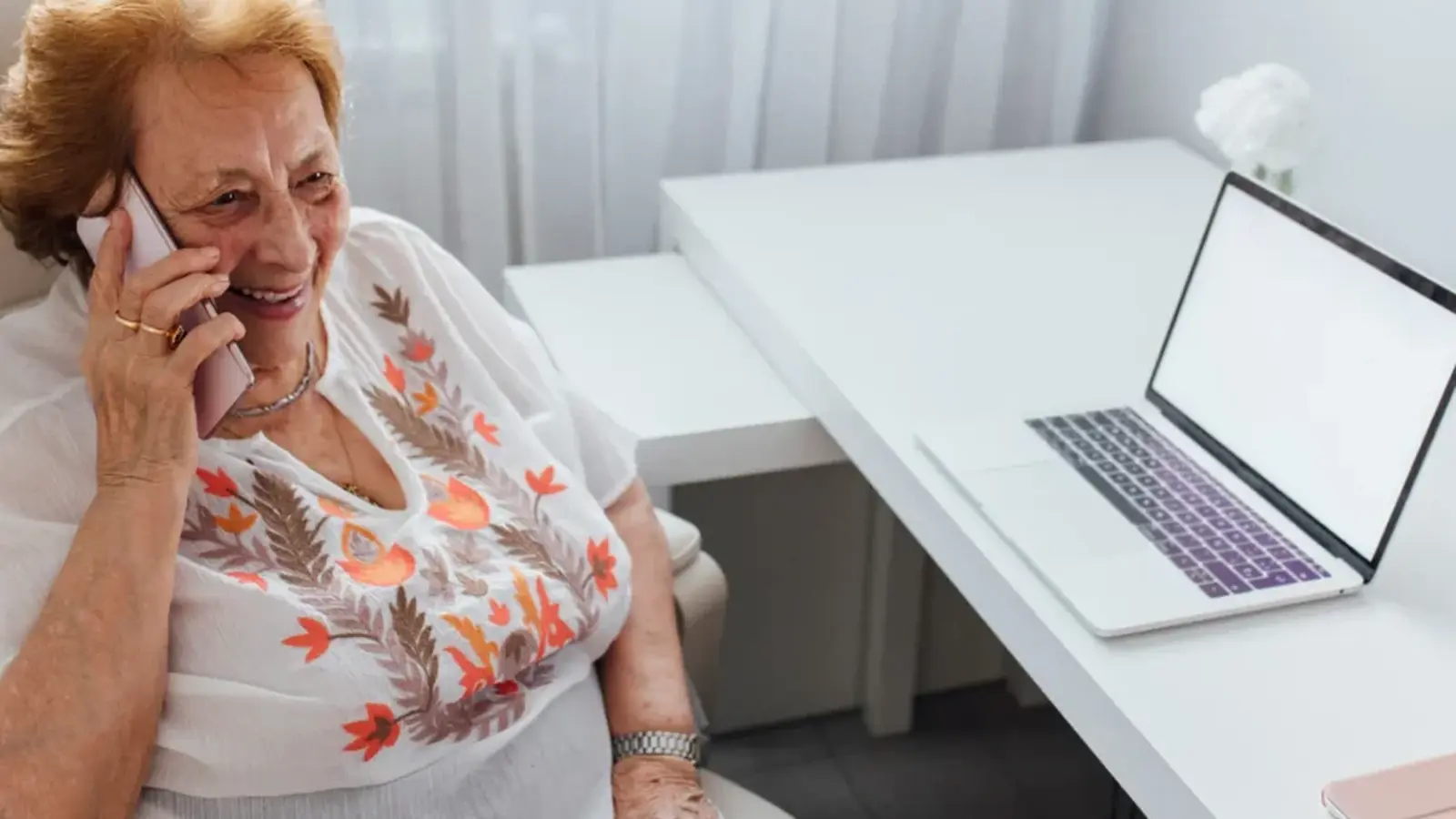
A clock that listens
You can often guess someone's age from the way they speak. What scientists have done now is turn that intuition into a measurable signal. A new artificial-intelligence tool called the "Speech Clock" analyzes spoken language to estimate a person's chronological age — and the gap between that estimate and their true age appears to track cognitive decline and early biological aging.
The study, reported in Science Advances and discussed by LiveScience, drew on nearly 2,900 Spanish-speaking participants from the ReD-Lat consortium, a large Latin American dementia research project. Researchers recorded short speech tasks and extracted hundreds of acoustic and linguistic features. From pauses and speaking rate to pitch, vocabulary range, and emotional tone, the model used more than 700 signal features to predict age from voice alone.
How the model was built and what it measured
Participants ranged from 18 to 88 years old and came from Argentina, Chile, Colombia, Mexico and Peru. Roughly half were cognitively healthy; the rest had mild cognitive impairment, Alzheimer’s disease, or frontotemporal dementia. Each person completed seven standard spoken tasks — for example, describing a short animated clip, naming as many animals or vegetables as possible in 60 seconds, and retelling a brief story immediately and again after a delay.
The machine-learning model was trained to predict chronological age from those speech-derived features. Researchers then calculated a Speech-Age Gap: the difference between the AI’s age estimate and the participant’s actual age. A larger positive gap meant the voice sounded older than the calendar age.
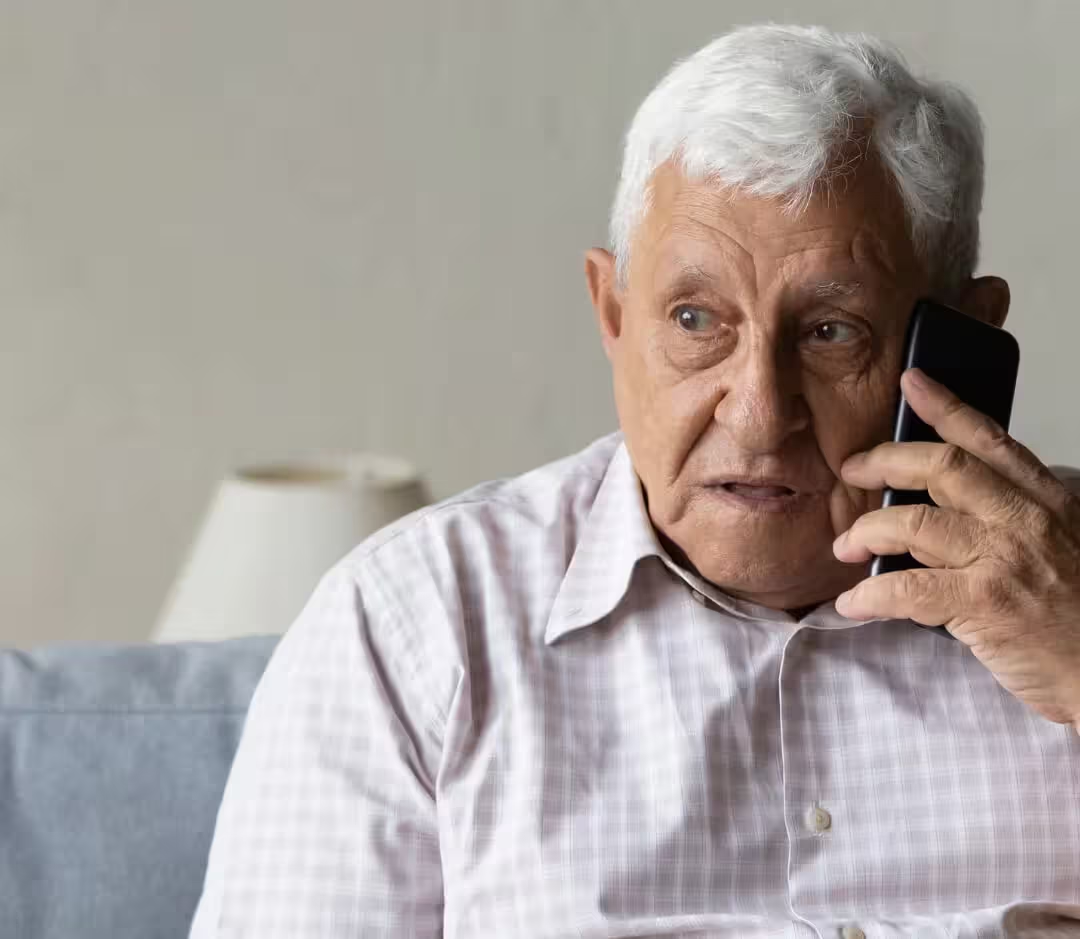
Crucially, the Speech-Age Gap correlated with clinical measures. Participants whose voices sounded older than their years tended to perform worse on memory, language and attention tests, and they reported more difficulty with daily activities. The largest gaps were found in people with frontotemporal dementia, a form of neurodegeneration that often impairs speech and communication early on.
Why this matters: low-cost screening and social context
There is growing interest in biological "aging clocks" that estimate physiological age using biomarkers. Many of those clocks rely on brain scans or blood tests; powerful tools, yes, but expensive and invasive for routine screening. Voice analysis is different: recordings are cheap to collect, noninvasive, and can be deployed remotely — useful for large-scale screening or telemedicine follow-ups.
The team also found that a larger Speech-Age Gap aligned with social and economic stressors associated with dementia risk: financial hardship, food insecurity, limited access to healthcare, adverse childhood experiences and lower education. That pattern suggests the voice signal carries not only neurobiological information but also the imprint of life-course stressors that influence brain health.
Still, the authors caution that the Speech Clock is not a diagnostic silver bullet. Human voice responds to many short-term states — depression, exhaustion, stress — which can make a person sound older without underlying neurodegeneration. The tool should be seen as a complementary biomarker, potentially flagging people for further evaluation rather than giving a definitive diagnosis.
Next steps and future prospects
Researchers propose several avenues for development: validation on larger and more diverse language groups, longitudinal studies that test whether an older-sounding voice predicts future cognitive decline, and integration with other inexpensive digital biomarkers such as typing patterns or passive smartphone data. Combining signals could boost specificity and help distinguish transient changes (a rough week) from progressive decline (a long-term trend).
Practical deployment would also require careful attention to bias. Voice models trained on one language or cultural group may not generalize to others. Ensuring representative datasets and testing across socioeconomic strata will be essential before any clinical rollout.
Expert Insight
"What makes this work promising is scalability," says Dr. Ana Martínez, a fictional cognitive neuroscientist familiar with digital biomarkers. "A voice sample is low-burden and easy to collect, especially where access to advanced imaging or lab tests is limited. The challenge now is to prove that signal is specific enough to guide clinical decisions and that it works equitably across populations."
Conclusion

The Speech Clock adds a compelling new tool to the aging-biomarker toolbox: an AI that listens and quantifies how old a voice sounds. Early results link older-sounding speech to cognitive impairment, dementia and social determinants of health. If validated and deployed carefully, voice-based screening could expand access to early detection and monitoring — but it will need rigorous, diverse testing and thoughtful integration into clinical workflows to avoid overreach or harm.

“My work centers on sustainability, energy, and environmental science — examining how innovation can lead to a greener future.”

Discussion
Leave a Comment
Comments (1)
Wait, so a phone call could flag dementia? hmm... sounds promising but is it biased by accent, mood, or background noise? Not convinced yet