
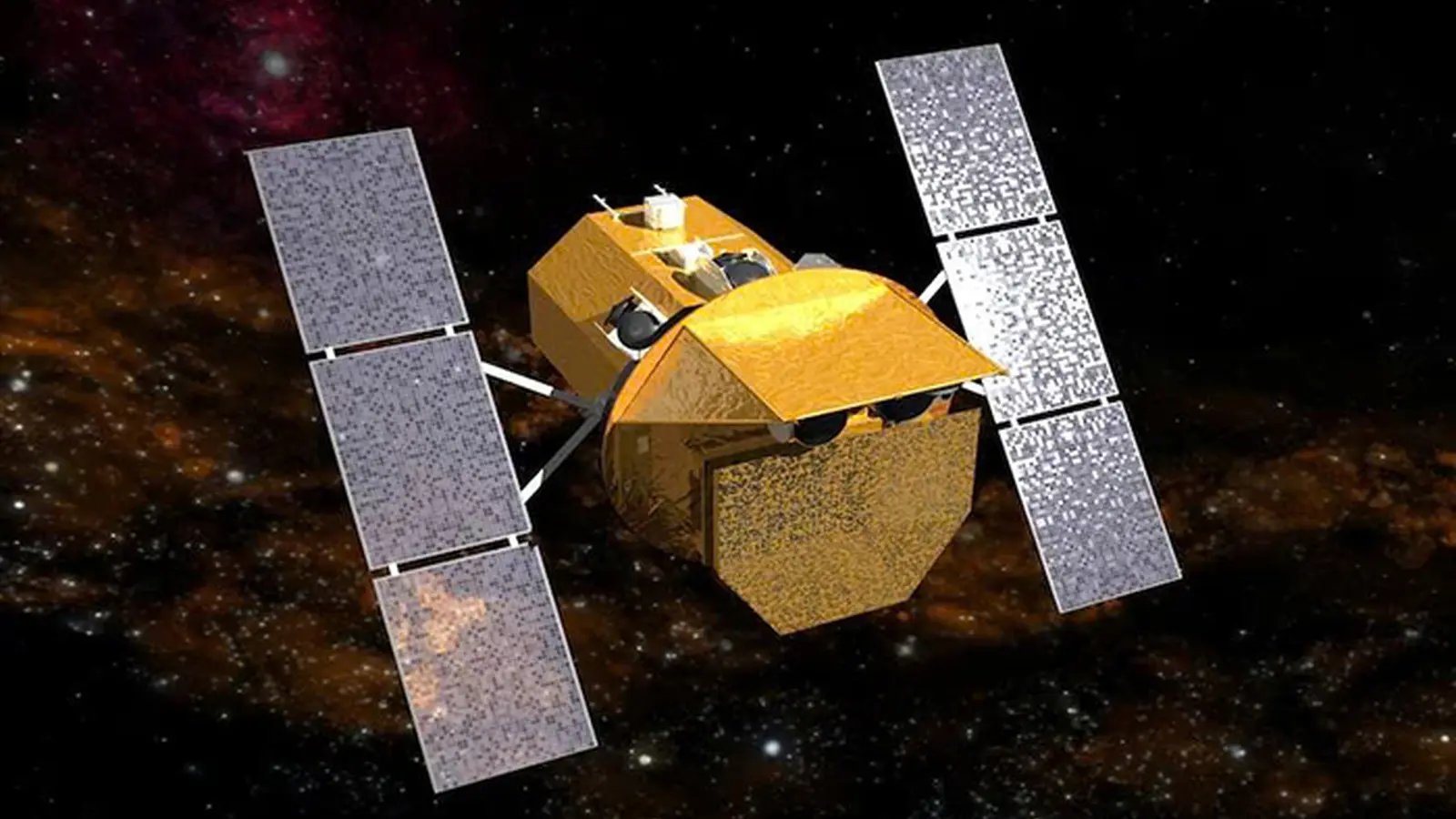
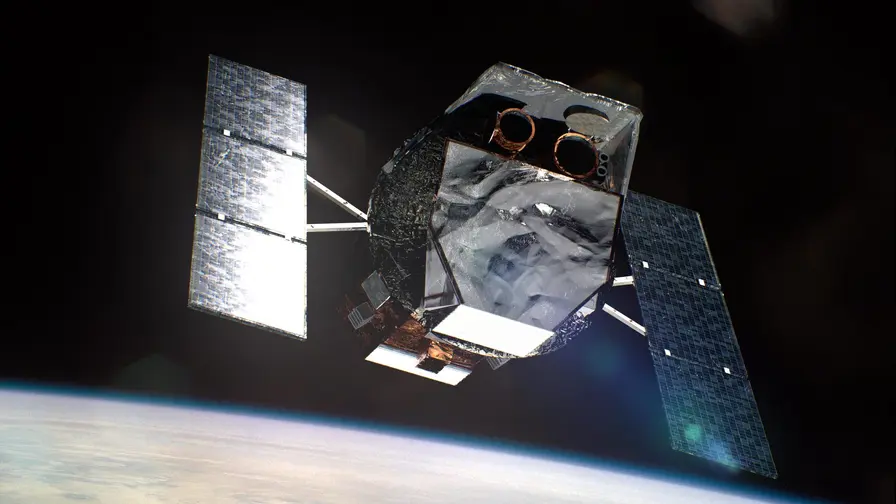
A nearly silent countdown in low Earth orbit: NASA's Neil Gehrels Swift Observatory, a workhorse of gamma-ray astronomy for almost 22 years, is now racing time. Engineers expect the spacecraft will be able to collect useful data for only a few more weeks before atmospheric drag ends its scientific life.
When thin air becomes the boss
Space is not a perfect vacuum close to Earth. Even at hundreds of kilometers altitude, faint traces of the atmosphere push against satellites. The resulting drag robs a spacecraft of speed, and losing speed means losing altitude. Left unchecked, this process culminates in reentry and burn-up in the denser layers of the atmosphere.
Swift was launched on 20 November 2004 to study gamma-ray bursts, the most energetic explosions in the universe. It was meant to operate for two years in a nearly circular orbit roughly 585 to 604 kilometers above Earth. Instead, the observatory delivered two decades of discoveries, hundreds of scientific papers, and a uniquely flexible rapid-response capability that transformed how astronomers follow transient events.
How a daring plan met rough physics
Unlike the International Space Station, whose orbit is periodically raised, Swift was not designed to have its altitude boosted. Over the past 21 years and 10 months its orbit has gradually decayed. By November 2025, mission planners estimated a 50 percent chance Swift would reenter by June 2026 and a 90 percent chance it would be gone before 2027.
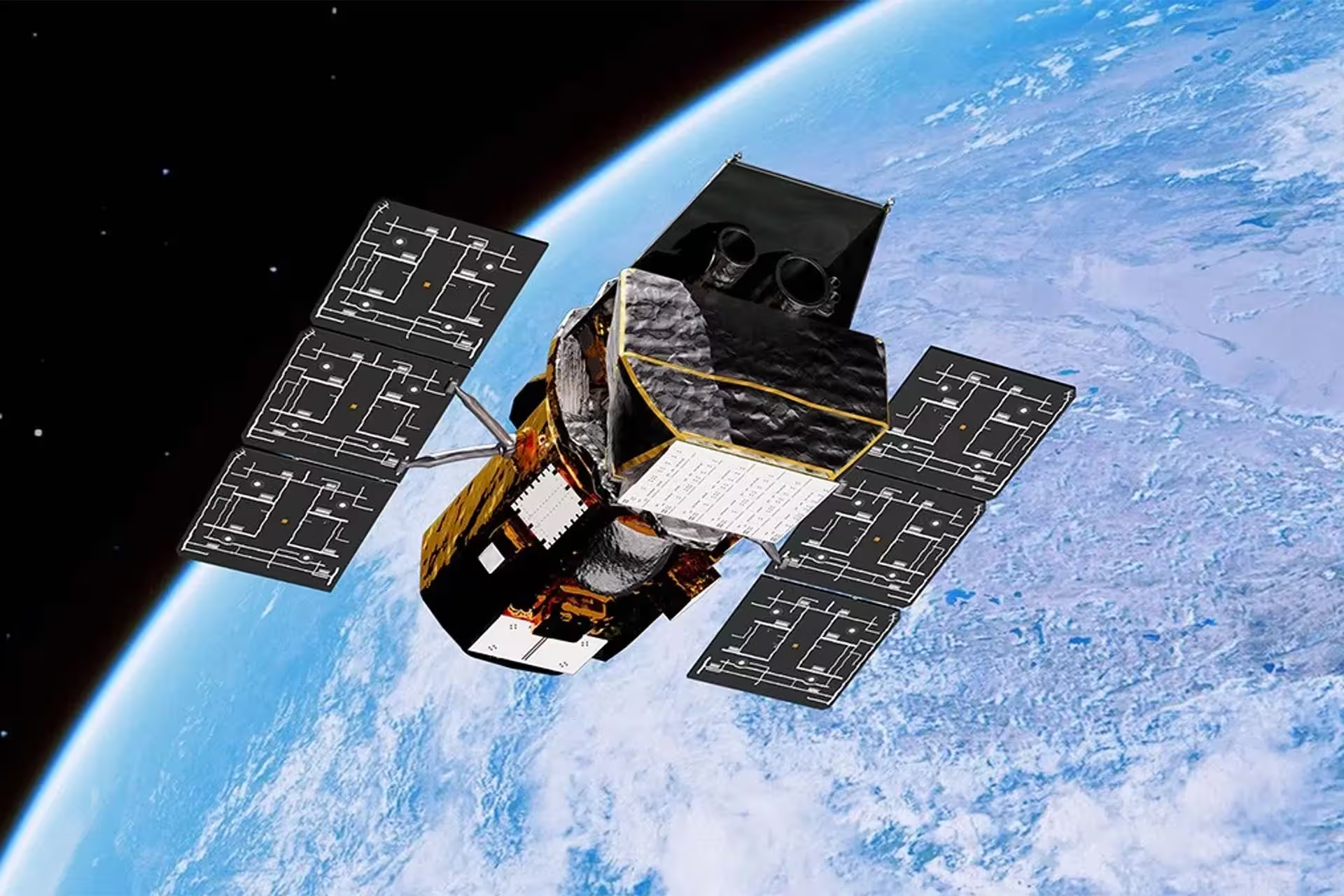
To push back that clock, NASA contracted the private firm Catalyst to attempt an unprecedented service mission: send a small spacecraft to rendezvous with Swift, dock alongside, and raise the observatory's orbit. Catalyst built and launched its servicing vehicle, named Link, on 3 July. In principle it was a high-risk, high-reward maneuver that could extend Swift's life and demonstrate rapid-response on-orbit servicing techniques for future missions.
At first the operation looked promising. Then unexpected failures surfaced on Link. Reaction wheels, the devices that spin to control satellite attitude, developed problems, and thrusters showed anomalies. Link began to tumble. Those faults could not be corrected in time, and the rescue attempt failed.
Shawn Domagal-Goldman, director of astrophysics at NASA headquarters, captured the mission's tight logic: "From the beginning, saving Swift was a high-risk effort with a high payoff." He added that attempting the service mission was valuable in itself, both for advancing satellite servicing technology and for testing how quickly a complex mission could be designed and executed.
With the rescue effort concluded, Swift's science team has taken a different tack. In August they reactivated two of the observatory's instruments and brought a third back online the following week. The goal: squeeze more high-value observations from the remaining weeks of operation, especially catching more gamma-ray bursts while the telescope still functions.
What Swift still offers
Even at a lower orbit, Swift remains capable. Its instruments cover gamma rays, X-rays, and ultraviolet/optical wavelengths, allowing rapid localization and follow-up of cosmic explosions. That multiwavelength agility is why the team prioritized reactivating key payloads rather than leaving them idle as the clock winds down.
Today Swift orbits at about 325 kilometers. NASA warns that once the observatory dips below roughly 300 kilometers, routine science operations will no longer be viable. Models predict that threshold will be crossed between early and mid-October. Until then, each detection could yield critical data about short-lived phenomena and help calibrate how transients evolve across bands.
Expert Insight
"Swift has been a cornerstone for transient astronomy," says Dr. Elena Martínez, an astrophysicist who studies gamma-ray bursts. "Even in its final weeks, the observatory can provide unique, rapid observations that other facilities cannot match. The attempt to service Swift was ambitious and taught the community vital lessons about on-orbit operations. Those lessons will shape future servicing missions and extend the lifetimes of other valuable assets in low Earth orbit."
Engineers also gained practical experience. Rapid design cycles, rendezvous planning, and contingency procedures were stress-tested. Those operational lessons, according to mission officials, will inform both government and commercial efforts aimed at keeping satellites on station longer or safely removing them when their useful lives end.
Conclusion
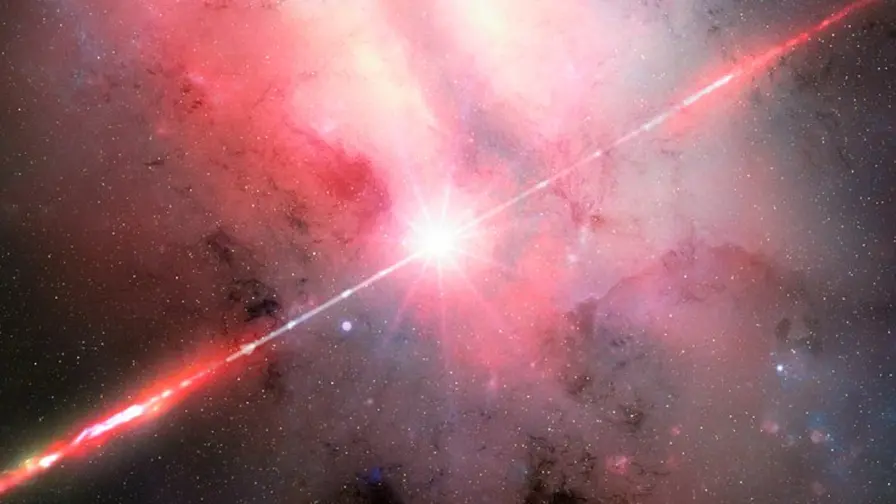
Swift's story is part scientific triumph and part operational experiment. Launched to run two years, it produced transformative science for nearly 22. The failed rescue does not erase the gains; it amplifies them by proving what is possible and by identifying where improvement is needed. For a few more weeks, astronomers will aim Swift at the brightest, fastest fireworks the cosmos offers, hoping to add final chapters to an already remarkable mission.

“My work centers on sustainability, energy, and environmental science — examining how innovation can lead to a greener future.”

Discussion
Leave a Comment
Comments (1)
wow, kinda heartbreaking. Swift lasted 22 yrs! The rescue was a wild gamble, failed but full of lessons. Still rooting, hope we get a few more bursts in its final weeks..