
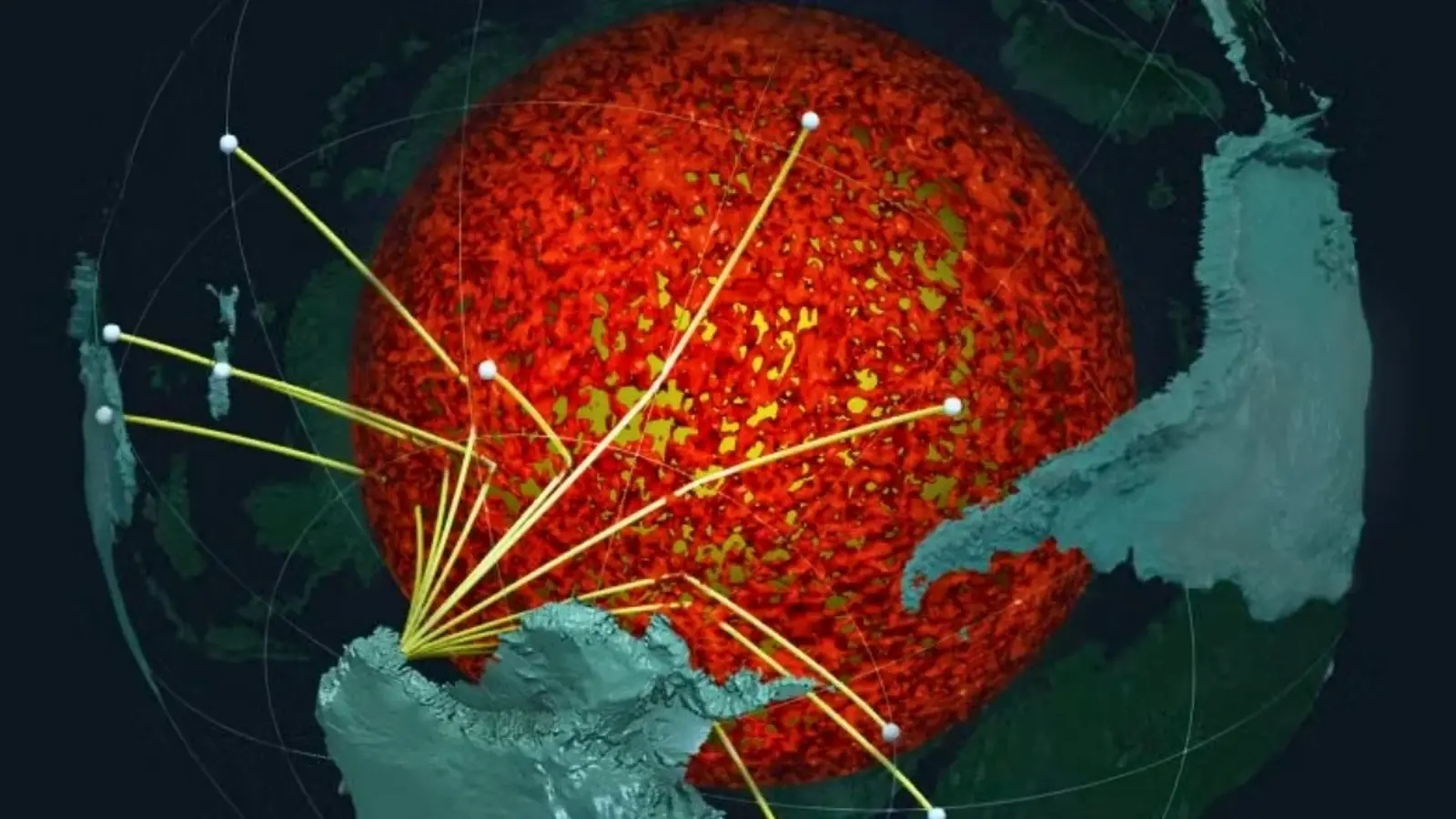
The image at first looks like a smear on a medical scan. But beneath that blur could lie a planetary relic: fragments of oceanic crust that have sunk so far inward they now rest where the molten outer core meets the rocky mantle. Seismologists using Antarctic stations say these thin, dense patches form ultralow velocity zones at roughly 2,900 kilometers in depth, and they may extend around a large portion of the core.
How the team read the planet's hidden anatomy
Seismic waves are the only practical X rays for the deep Earth. From 2019 to 2022, a team led by researchers including Samantha Hansen and Edward Garnero used 15 monitoring stations drilled into Antarctic ice to record thousands of earthquake signals traveling through the Southern Hemisphere. The arrival times and distortions of those waves reveal contrasts in composition and temperature inside the planet.
Where seismic waves slow dramatically, geophysicists call the feature an ultralow velocity zone, or ULVZ. These ULVZs show up as thin layers a few kilometers thick in some places and tens of kilometers in others. The variability is striking. In some locations the topography of those anomalies is the rough equivalent of towering mountains measured against the core, potentially five times the height of Mount Everest.

Researchers lower seismic equipment into place at one of the stations as part of research into the Transantarctic Mountains.
Why oceanic crust is the best candidate
There are multiple ways to make seismic waves behave oddly. Temperature differences can change speed. Partial melt will too. Composition matters even more. The team argues that the most coherent explanation for the pattern they mapped is recycled oceanic crust that sank into the mantle long ago and now sits smeared along the core-mantle boundary.
Why ocean floor? Because basaltic ocean crust is denser and chemically distinct from surrounding mantle rock. When such material is transported downward by plate tectonics and mantle convection, it can survive as a recognizable layer at depth. Numerical simulations run alongside the seismic analysis show convection currents are capable of shepherding patches of subducted basalt away from modern subduction zones and redepositing them near the core-mantle boundary.
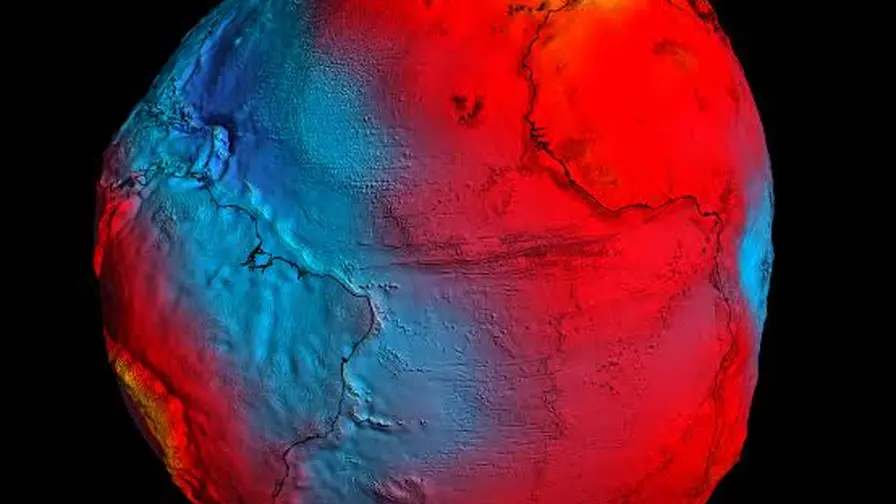

Rock movements in the mantle.
The authors are cautious. Deriving rock type from seismic speed is indirect. Alternative explanations, such as localized chemical anomalies or zones of partial melt, have not been eliminated. Still, the oceanic crust hypothesis explains the thin, dense, and laterally extensive nature of many of the ULVZs recorded beneath the Southern Hemisphere.
Implications for heat, magnetism and surface processes
If an ancient ocean floor does indeed wrap around the core, the consequences would ripple upward through Earth's systems. The core is hotter and denser than the overlying mantle. How heat escapes from the core into the mantle controls convective patterns there, which in turn influence long-term volcanic activity and the geodynamo that sustains Earths magnetic field. A chemically distinct layer at the core boundary would alter heat flow locally, potentially creating thermal hotspots or barriers that shape mantle plumes.
Practically speaking, a wrapped layer of ancient crust might help explain puzzling regional differences in mantle dynamics and provide a link between surface tectonics and deep-Earth processes. It opens a path for new experiments: denser seismic arrays, expanded Antarctic deployments, and refined waveform modeling that can better resolve the geometry and composition of ULVZs.
Expert Insight
Dr. Maria Ortega, a geophysicist not involved in the study, puts the finding into perspective. "This work uses one of the clearest seismic lenses we have beneath the Southern Hemisphere. The idea that fragments of old ocean floor can accumulate at the core-mantle boundary is plausible and exciting. If confirmed, it will force us to rethink how chemical layering and heat transport operate at the deepest levels, and how those processes feed back to the surface over geological time."
The discovery, published in Science Advances in 2023, is an invitation rather than a final verdict. Future seismic surveys and laboratory studies of high-pressure mineral physics will be needed to test whether these ULVZs are indeed recycled basalts or something more exotic. Either way, the deep Earth remains less uniform than early models suggested. It is a place of complexity, memory, and motion, with old ocean floors perhaps now playing a quiet role at the heart of our planet.

“My work centers on sustainability, energy, and environmental science — examining how innovation can lead to a greener future.”

Discussion
Leave a Comment
Comments (2)
is this even true? seismic data is cool but indirect, could be partial melt or weird chemistry. I wanna see tighter models, more Antarctic arrays. if that's real then...
wow, blew my mind. bits of ocean floor chilling at the core? wild idea. ULVZ “mountains” sound insane, and that heat shift could explain odd volcanism.. need more data tho