
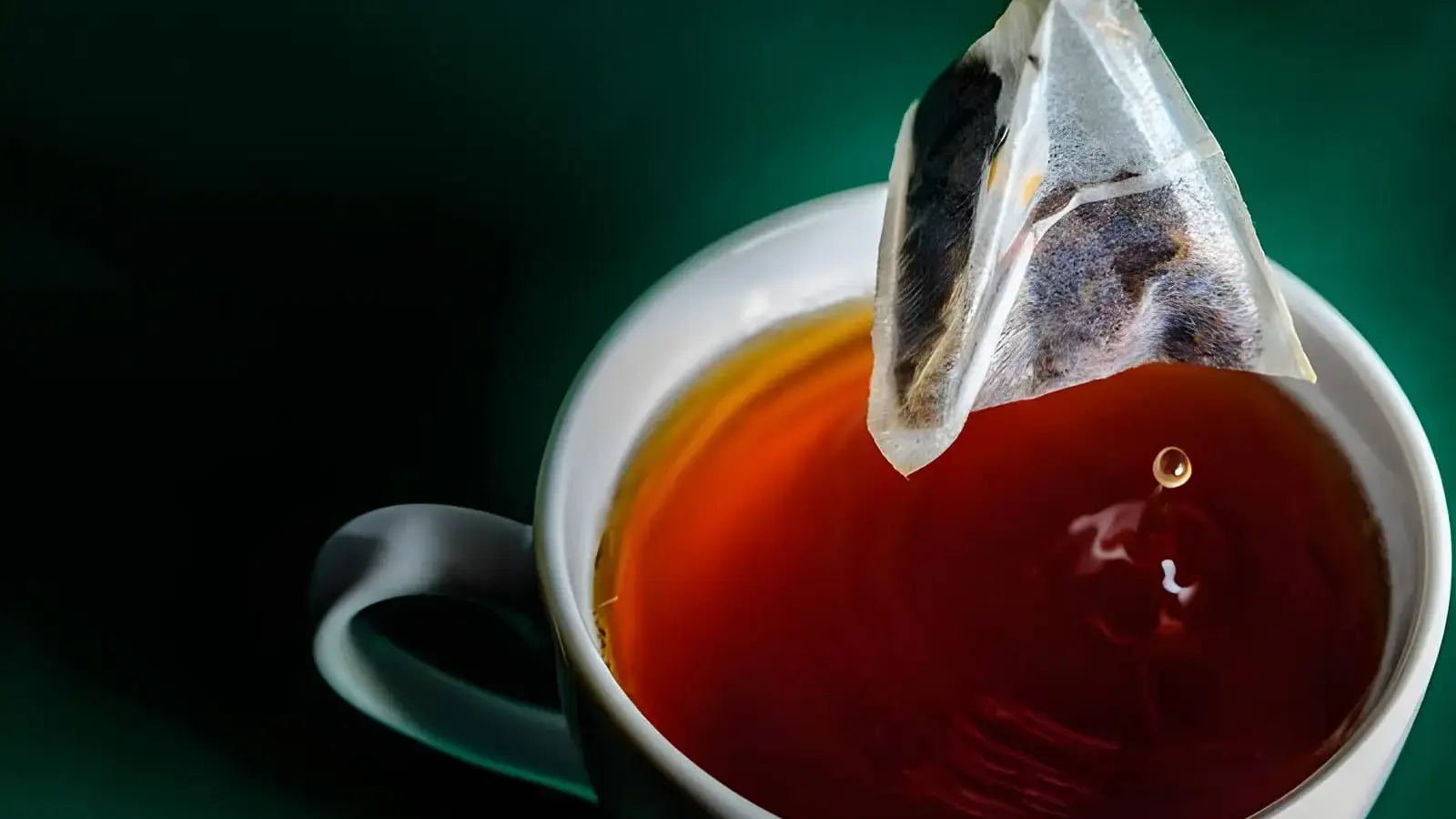
You drop a tea bag into a steaming mug and expect flavor, warmth, a quiet moment. What you may not expect is a cloud of tiny plastic particles dissolving into the brew. Recent lab work shows that certain commercial tea bags can shed thousands of microplastic fragments into a single cup when steeped in boiling water.
Scientists at Recep Tayyip Erdogan University tested 14 brands of tea bags alongside 14 loose-leaf samples to quantify particle release and chemical residues. The brands of tea bags fell into two groups: ten used paper or cellulose materials, while four used a synthetic polymer, polyamide, a type of nylon. To simulate typical preparation, each bag was steeped for three minutes in freshly boiled water and then analyzed for particles and chemical contaminants.
What the experiment revealed
The difference was stark. Plastic tea bags released between 555 and 2,498 identifiable microplastic particles per bag. Loose-leaf tea, in contrast, showed only about 0.3 to 2.4 particles per cup. Those counts are limited to particles larger than 100 micrometers, however, so they do not capture nanoplastics—particles smaller than 0.1 micrometers—which are harder to measure but may also be present.
Alongside physical fragments, every sample brewed from plastic bags contained residues of bisphenol A, commonly called BPA, and various phthalates. These chemical additives are used in the manufacture of some plastics. They can interfere with endocrine function in lab studies, meaning they have the potential to affect the body’s hormone systems. In one brand the researchers detected unusually high levels of benzyl butyl phthalate, BBP, which the team suspects originated from adhesive used to seal the bag.

The levels of BPA reported in this study were described by the authors as falling within a range they considered safe, but they cautioned that regular exposure could matter for vulnerable groups such as children, pregnant people, and heavy tea drinkers. Lab experiments on microplastics show possible inflammation and cell damage, yet the direct human health consequences of consuming microplastic particles and trace plasticizers through beverage consumption are not yet fully known.
Readers may recall a high-profile 2019 study that suggested a single plastic tea bag could release billions of nano- and microplastic particles. The newer work does not contradict the earlier warning so much as refine it. Methodology matters. The 2019 study measured particles at much smaller size ranges, including the nanoscale. The recent study intentionally limited detection to particles larger than 100 micrometers, which explains lower absolute counts but leaves open the likelihood that additional, smaller particles were released.
Why does material choice matter? Polyamide and other synthetic textiles can soften, fragment, or leach additives when heated. Paper and cellulose-based bags lack those synthetic polymers, and in this study they produced far fewer measurable particles. That difference points to practical options for consumers who want to reduce exposure.
Use loose-leaf tea or plastic-free bags to reduce the number of microplastic particles and plastic additives in your cup.
The study was published in the journal npj Science of Food and contributes to an unfolding picture about plastics in the food chain. It is not a final verdict on safety, but it is a clear signal to regulators, manufacturers, and consumers that material choices in food packaging matter for chemical and particulate exposure.
For now, swapping to loose-leaf tea, choosing brands that specify plastic-free bags, or allowing tea to cool slightly before steeping are simple practical steps. At the same time, the scientific community needs targeted research on nanoparticle release, long-term exposure in humans, and potential cumulative effects of plasticizers like BPA and phthalates. Only then will we move from laboratory signal to public-health guidance grounded in human data.

“My work centers on sustainability, energy, and environmental science — examining how innovation can lead to a greener future.”

Discussion
Leave a Comment
Comments (1)
Wait, so some tea bags shed thousands of plastic bits per cup? That sounds extreme, is detection reliable across sizes though… what about the nanos? feels like more nuance needed, right?