
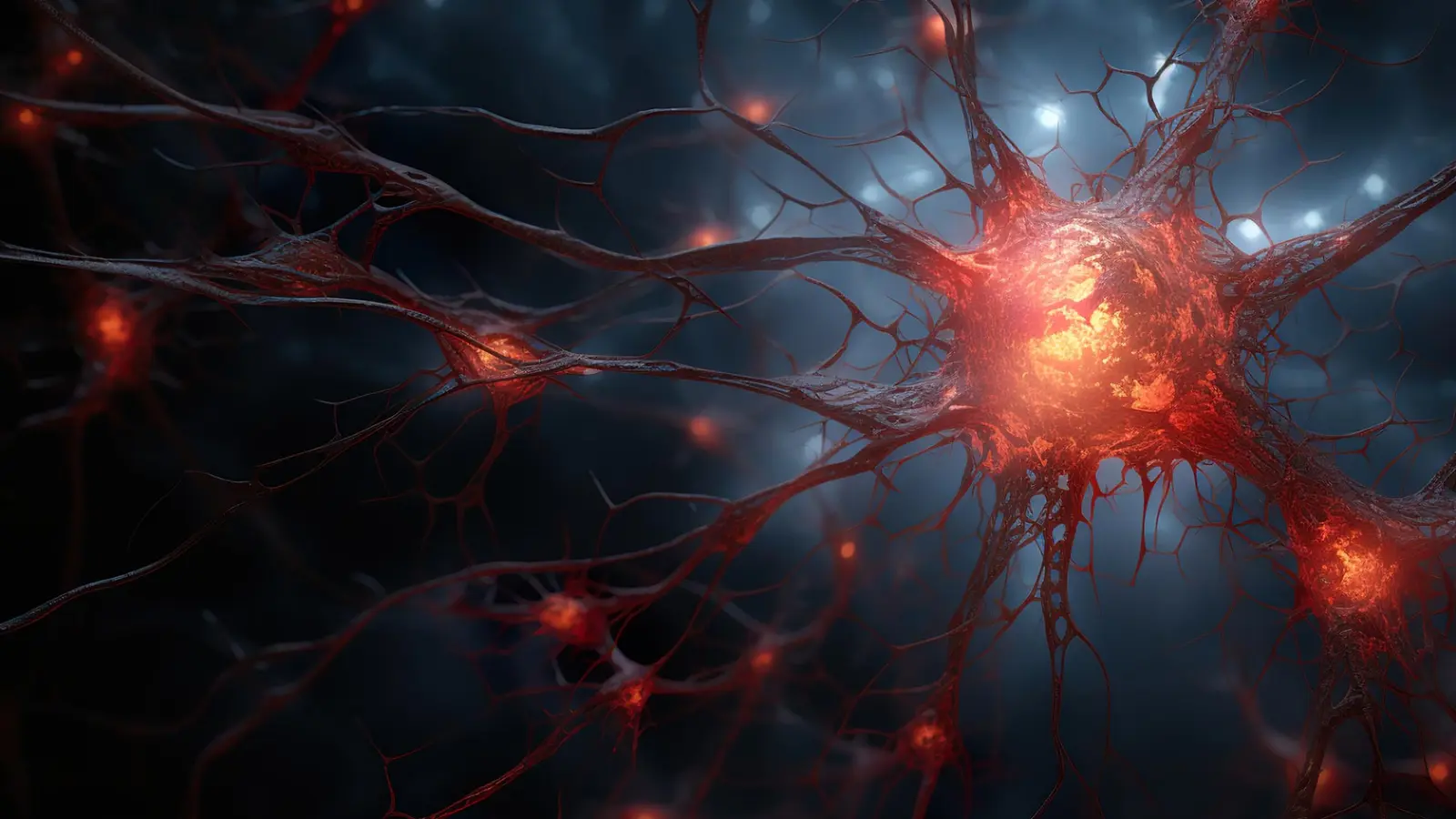
Imagine tiny parcels moving through the brain, crossing the microscopic gaps between neurons and delivering toxic cargo. That image is not science fiction. It is the working picture researchers are assembling after a new study implicates the neuronal protein Arc in ferrying pathological Tau between cells, a process that may drive Alzheimer’s disease progression.
The central player in Alzheimer’s pathology is Tau, a normally useful protein that stabilizes microtubules inside neurons. In disease, Tau misfolds, aggregates into tangles and forms smaller seeds that corrupt healthy Tau in neighboring cells. The new work, led by Jason Shepherd and colleagues at the University of Utah Health and published in Cell, shows that Arc packages itself into extracellular vesicles and can carry sticky Tau seeds along for the ride.

A neuron in a dish expressing human Tau protein.
The studies were done in a widely used mouse model of Alzheimer’s. By comparing animals that express Arc with those genetically lacking Arc, the team could follow how Tau moves through brain tissue. In Arc-positive mice, researchers identified extracellular vesicles that contained both Arc and aggregation-prone Tau. These vesicles could enter healthy neurons and promote new Tau tangles. Remove Arc, and the vesicles almost completely lose their Tau cargo and their ability to seed pathology in recipient cells.
Why this matters for neurodegeneration
Tau spread correlates with clinical decline in Alzheimer’s. As more brain regions acquire Tau pathology, cognitive symptoms worsen. The new finding suggests a specific molecular route by which Tau seeds bypass one neuron and infiltrate another. Arc, already known as a regulator of synaptic plasticity and intercellular messaging, repackages its normal signaling role into a conduit for pathological material.
In the simplest terms: Arc can be a helpful courier or an unwitting accomplice. When Arc packages and releases Tau-containing vesicles, a sick neuron offloads toxic protein. That offloading may temporarily reduce Tau burden inside the injured cell, slowing its demise. But the package travels, gets taken up by a neighbor and seeds fresh aggregation. The net effect across tissue is a spreading pathology.
The paradox of Arc
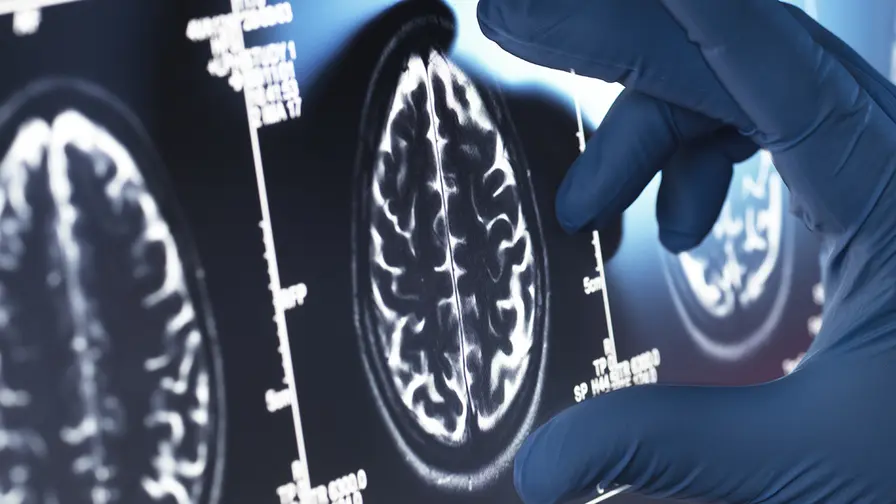
The paradox is stark. In mice missing Arc, diseased neurons accumulate higher intracellular Tau and die sooner. That suggests that blocking Arc outright could accelerate neuron loss because cells lose an escape valve for excess Tau. Yet in Arc-expressing brains, the disease propagates more widely because the extracellular route remains open. This duality points to a therapeutic dilemma: stop the messenger and risk killing the sender, or allow messaging and permit wider spread.
"I’m excited by the fact that we’ve identified a new way of potentially stopping the progression of Alzheimer’s disease," says Jason Shepherd, PhD, professor of neurobiology at University of Utah Health and senior author on the study. "Most of the work we’ve been doing is in mice, not in humans. We have some clues that whatever is happening in these mice could also be happening in humans, but we don’t know that yet."

Jason Shepherd, PhD, senior author on the study.
From mechanism to therapeutic ideas
Rather than attempting to stop Tau from leaving sick cells, the researchers propose targeting the vesicle-mediated uptake into healthy neurons. Think of it as intercepting a courier mid-route, preventing the harmful package from being delivered while still allowing the source cell to offload its toxic material. That strategy could limit spreading without increasing neuronal mortality from intracellular Tau overload.
Evidence that the same Arc-Tau vesicles exist in human tissue strengthens the clinical relevance, although the authors caution that the most robust data are still from mouse models. Translational work will need to confirm whether human neurons use identical vesicle pathways and whether blocking uptake is both safe and effective in complex human brains.
Mitali Tyagi, PhD, postdoctoral research associate at Washington University in St. Louis and first author on the paper, described Tau aggregates as "glue monsters" that break into smaller seeds able to corrupt healthy Tau. "When we removed Arc, we saw that the transfer of Tau was severely, severely reduced," Tyagi says. "It was almost gone."


Mitali Tyagi, PhD, first author on the study.
- Extracellular vesicles: membrane-bound parcels cells use to exchange molecules.
- Tau seeds: small assemblies of misfolded Tau capable of templating aggregation.
- Arc: an activity-regulated cytoskeleton-associated protein involved in synaptic communication.
The therapeutic concept born from these findings is to develop molecules—antibodies, small proteins or receptor blockers—that selectively prevent Tau-containing vesicles from binding to or entering healthy neurons. Such an approach would be different from therapies that aim to clear existing tangles; instead, it would seek to halt onward transmission and slow cognitive decline.
Expert Insight
"This study gives us a concrete molecular handle on a problem we have known about for years, namely how pathological proteins travel across neural circuits," says Dr. Elena Martínez, a neurobiology researcher at a European memory research center. "Targeting vesicle uptake is attractive because it focuses on the receiving cell, where you might protect a whole network rather than trying to repair dozens of dying neurons. The challenge will be to block pathological uptake without disrupting normal vesicle-based signaling."
Several hurdles remain. First, the identity of receptors or entry pathways that mediate Tau-containing vesicle uptake needs to be defined. Second, long-term consequences of interfering with extracellular vesicle signaling must be evaluated; these vesicles carry many physiologically important cargos. Third, translating mouse findings into human therapeutics requires confirmation that the same Arc-dependent packaging operates in people and contributes meaningfully to disease progression.
Despite those questions, this line of research opens realistic routes for drug development. If therapies can be designed to recognize molecular signatures unique to Tau-laden vesicles, they could selectively neutralize harmful transmissions while sparing normal intercellular communication.
Conclusion
The discovery that Arc can package and transport toxic Tau offers a refined view of how Alzheimer’s disease spreads through the brain. It reframes the problem from one of isolated intracellular accumulation to a tissue-level process of transmission. That reframing matters because it shifts possible interventions toward stopping propagation rather than only trying to reverse damage already done. As researchers push forward, the priority will be to translate these mechanistic insights into strategies that slow cognitive decline without compromising neuronal resilience.

“My work centers on sustainability, energy, and environmental science — examining how innovation can lead to a greener future.”

Discussion
Leave a Comment
Comments (3)
Feels a bit overhyped tbh, but intercepting vesicles is a neat angle. How do you block uptake without screwing normal signaling? not trivial
Is this even true? Mouse studies ok, but humans are different... Blocking Arc might kill neurons, tricky tradeoff. needs more proof.
wow that image of tiny parcels gave me chills... Arc as a double agent? wild. hope they test in humans soon, could change everything