
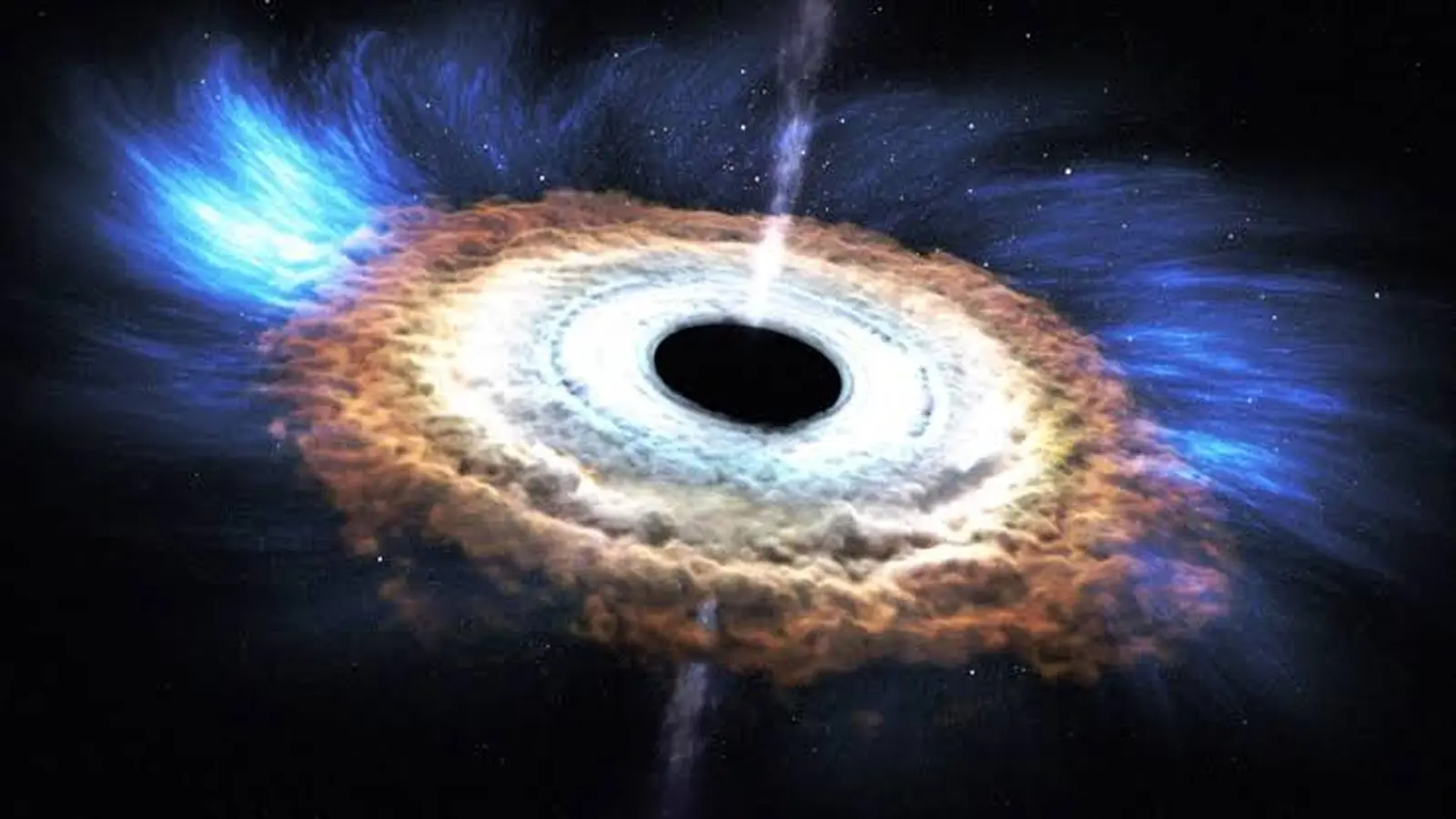
A black hole kept spitting out matter long after its bright flare had faded. Observers watched gas stream toward a compact object, then be ejected again in powerful jets and winds. The takeaway? These objects are not simple cosmic vacuums that gulp everything in sight.
A rare window on a full eruption cycle
In 2023 the transient source Swift J1727.8-1613 lit up the sky, rising to become one of the brightest X-ray objects visible from Earth. Telescopes across the globe turned toward the event, but it was the European Southern Observatory's Very Large Telescope that provided the most detailed optical record. Instead of a few isolated snapshots, astronomers collected continuous, time-resolved spectra and images that traced the system as it moved through rise, peak and decline.
What they found overturned a simplifying assumption. Yes, gas streamed from a companion star into the gravity well of a black hole. Yes, that gas formed a hot, rotating accretion disc. But much of the inflowing material did not simply vanish. Dense outflows persisted even when the system had dimmed to roughly one hundredth of its peak brightness. Jets and winds continued to push mass back into space long after the brightest fireworks were over.
How the feeding and the expulsion connect
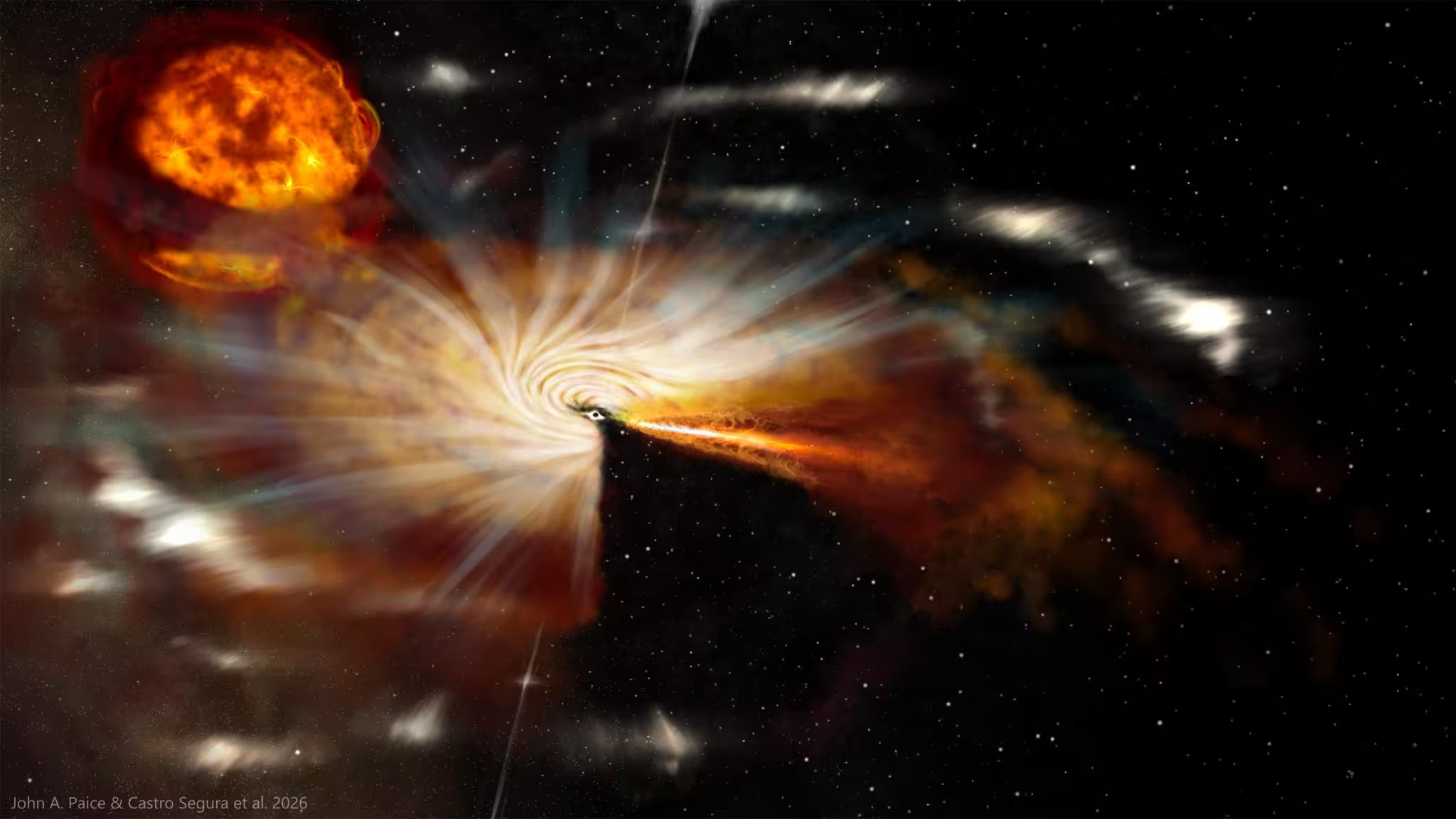
The observations reveal a dynamic relationship between the disc and the outflows. As the disc rearranged itself during the eruption, the system launched a powerful jet. Spectral signatures showed broad emission lines and shifted absorption features consistent with both a collimated jet and slower, dense winds. These signals evolved in step with changes in the disc, implying they are not independent phenomena but different ways the accretion flow sheds angular momentum and energy.
Why does this matter? If outflows remove a substantial fraction of the mass before it reaches the event horizon, the black hole's apparent accretion efficiency drops. In practical terms, the amount of matter that completes the plunge into the black hole may be a small fraction of the material transferred from the companion star. The rest is recycled into the surrounding environment.
Observational details
- Instrument: ESO Very Large Telescope provided high-resolution optical monitoring.
- Target: Swift J1727.8-1613, a black hole X-ray binary that erupted in 2023.
- Key signatures: evolving emission and absorption lines indicating jets and dense winds at low luminosity.
The continuous sequence of observations allowed researchers to see not a single instant, but an entire behavioral arc: feeding, disc transformation, jet launch, and sustained expulsion. That completeness is rare in studies of stellar-mass black hole eruptions.
What this implies for accretion physics and galactic ecosystems
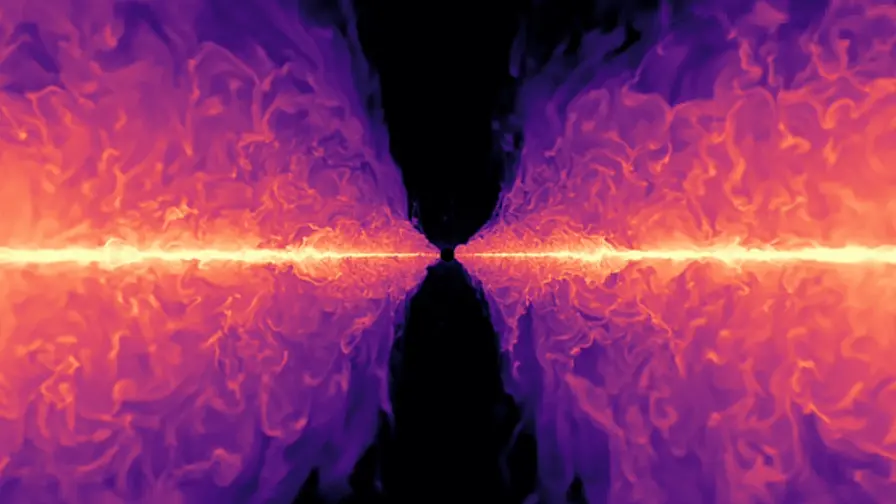
Astrophysicists model accretion as a competition between gravity pulling matter inward and processes that remove angular momentum and energy outward. Jets and winds are the mechanical outcome of that competition. The Swift J1727 event suggests that the outward leg may dominate more often than assumed, particularly at low luminosity. The implications ripple outward.
On a small scale, in a binary system, inefficient accretion alters mass transfer evolution. If a companion star loses mass but much of that mass never reaches the compact object, orbital evolution, spin-up of the black hole, and the long-term brightness cycles of the binary will differ from conventional predictions.
On a larger scale, repeated outflows inject momentum, heat, and chemically enriched material into the interstellar medium. Even modest stellar-mass black holes, if common and repeatedly active, can contribute to the feedback processes that shape gas clouds and influence star formation in their neighborhoods.
Dr. Noel Castro Segura, lead author from the University of Warwick, summarized the shift in perspective plainly: "People often imagine black holes simply swallowing everything around them. What we’re seeing is a much more complex process. Matter falls in, the system processes it, and a surprising amount is expelled again."
Kyle Solomons, a doctoral researcher at the University of Cape Town, added context: "We usually gravitate towards the dramatic fireworks when a black hole outburst begins, but our observations show that the finale can be just as intense. Even as the system’s X-ray emission dropped to a fraction of its peak, it still had enough power to generate a massive expulsion of gas."
Expert Insight
"This study highlights the importance of long-term, multiwavelength monitoring," says Dr. Amina R. Patel, observational astrophysicist. "Short campaigns capture the blaze; continuous coverage captures the bookkeeping. You need both to understand what fraction of transferred mass is actually accreted versus expelled. That ratio matters for models of compact-object growth and for predicting electromagnetic counterparts to gravitational-wave sources."
Dr. Patel notes that upcoming facilities with fast-response capabilities and coordinated radio-to-X-ray coverage will refine our estimates of mass-loss rates and the energy budget of outflows.
Conclusion
Swift J1727.8-1613 provided an unusually complete look at a black hole's feeding cycle. The key lesson is simple but profound: accretion is not purely consumptive. Jets and winds return a large portion of the inflowing material to space, even when the system appears faint. That changes how we measure black hole growth, how we model binary evolution, and how we account for small-scale feedback in galaxies.
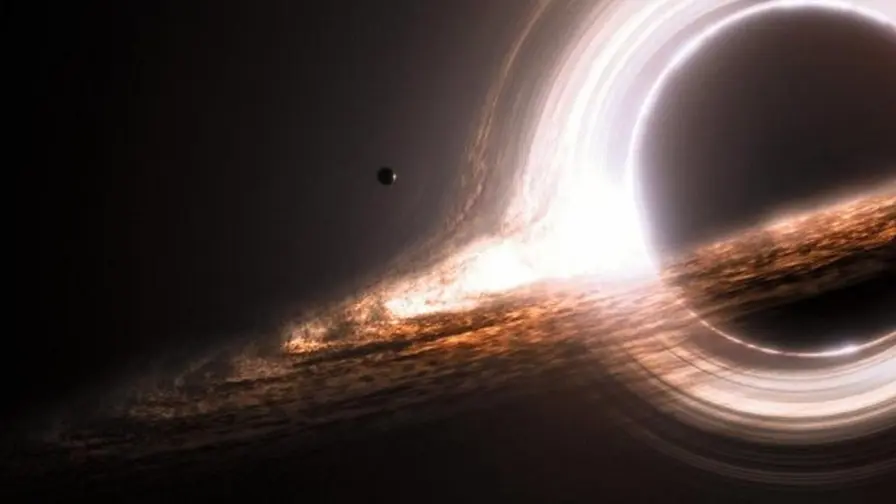
Future coordinated observations across optical, radio and X-ray bands will test whether Swift J1727 is typical or exceptional. For now, the image of black holes as indiscriminate, bottomless pits needs revision. They are processors. They transform a meal and give much of it back to the cosmos.

“The cosmos has always fascinated me. I write about space missions, astronomy, and the technologies pushing humanity beyond Earth.”

Discussion
Leave a Comment
Comments
No comments yet. Be the first.