

A little blood on the toothbrush is easy to ignore. But a decade-long study in Japan suggests that bleeding and receding gums may be more than a nuisance; they might be an early warning for cognitive decline.
From the mouth to the mind: what the numbers show
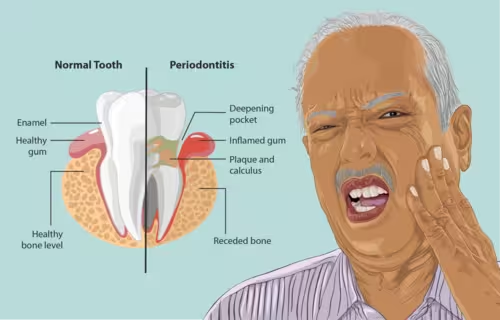
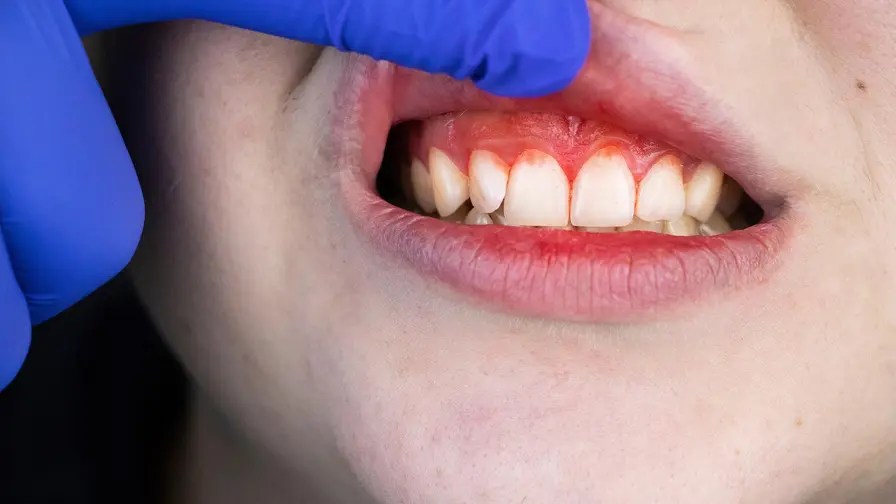
Researchers followed almost 1,400 adults for ten years, monitoring both oral health and neurological outcomes. The link was striking. People with the most gum bleeding had a 56% higher chance of developing any form of dementia over the following decade, and a 61% higher chance of being diagnosed with Alzheimer’s disease specifically. Those with severe gum recession faced a 59% greater risk of all-cause dementia, and participants with the deepest periodontal pockets—the gaps between teeth and gum tissue—saw a 72% increased risk.
These results appear in The Journal of Clinical Periodontology and are led by dental scientist Michiko Furuta at Kyushu University. The study is observational, so it cannot prove causation. Still, the long follow-up and consistent associations make the connection hard to ignore.
How could gum disease influence the brain?
Inflammation is a likely suspect. Active periodontal disease creates a persistent inflammatory state in the mouth. That inflammation can spill into the bloodstream. When inflammatory mediators circulate chronically they may weaken the blood-brain barrier, allowing immune signals or pathogens easier access to neural tissue. Once inside, they can trigger neuroinflammation and neuronal injury, processes increasingly implicated in Alzheimer’s pathology.
There is also evidence that mouth microbes themselves can travel. In animal experiments, oral bacteria have been detected inside the brain and associated with increased accumulation of sticky proteins that are hallmarks of Alzheimer’s disease. Those experiments do not prove the same sequence happens in humans, but they provide a plausible biological pathway.
The population-level implications are significant. More than 40% of people in the United States over age 30 have some form of gum disease. If the associations observed in this Japanese cohort hold more broadly, periodontal health could be an underappreciated lever for reducing dementia risk at scale.
Limits and the need for more data
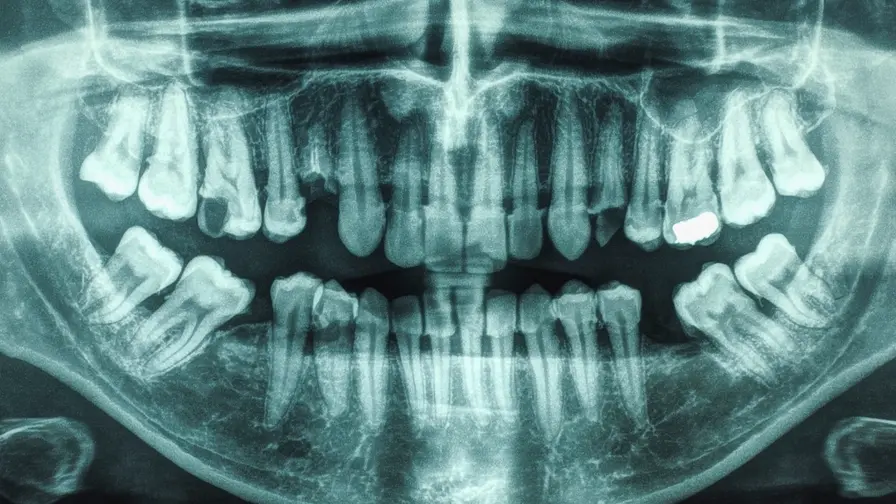
Still, the study leaves questions open. There were 267 cases of all-cause dementia recorded, but only 51 cases of vascular dementia, making it difficult to parse how oral health relates to different dementia subtypes. Confounding factors are another concern. Lifestyle, socioeconomic status, access to dental care, cardiovascular risk, diet—each could influence both gum health and brain health.
What the paper does offer is a call to action for larger, more diverse cohorts and for studies designed to test mechanisms directly. Randomized interventions that improve periodontal health and then measure cognitive outcomes would provide stronger evidence for causation. Until that data arrives, the prudent interpretation is that poor periodontal health is a marker of elevated dementia risk and, potentially, a modifiable risk factor.
Expert Insight
"This study adds to a growing body of work linking systemic inflammation and brain aging," says Dr. Emily Carter, a neurologist and researcher focusing on neuroimmune interactions at a European university. "It does not prove cause and effect, but it does suggest that maintaining good oral hygiene is a simple, low-risk strategy that might contribute to long-term brain health. From a public health perspective, promoting dental care could be an inexpensive way to reduce downstream cognitive burden."
Implications for patients and public health
Practical takeaways are straightforward. Regular dental check-ups, daily brushing and flossing, and timely treatment of periodontal disease are established means to protect oral health. If ongoing research confirms a causal role, those same measures could become part of dementia prevention strategies. Clinicians and public health planners may want to consider oral health screening as one element of midlife risk assessment for cognitive decline.
Neurologists increasingly recognize inflammation as a key player in neurodegenerative disease. As David Holtzman of Washington University has observed in recent discussions of neuroinflammation, scientists now view immune responses as an important target for future therapies in conditions driven by protein accumulation in the brain. Gum disease may be one source of that peripheral immune signaling.
Conclusion
The mouth and the brain may be more connected than previously assumed. While this study does not settle the question of cause and effect, it strengthens the argument that periodontal health deserves attention in the conversation about dementia prevention. Small changes in daily oral care are low risk and widely accessible. For now, flossing is worth remembering.

“My work centers on sustainability, energy, and environmental science — examining how innovation can lead to a greener future.”

Discussion
Leave a Comment
Comments
No comments yet. Be the first.