
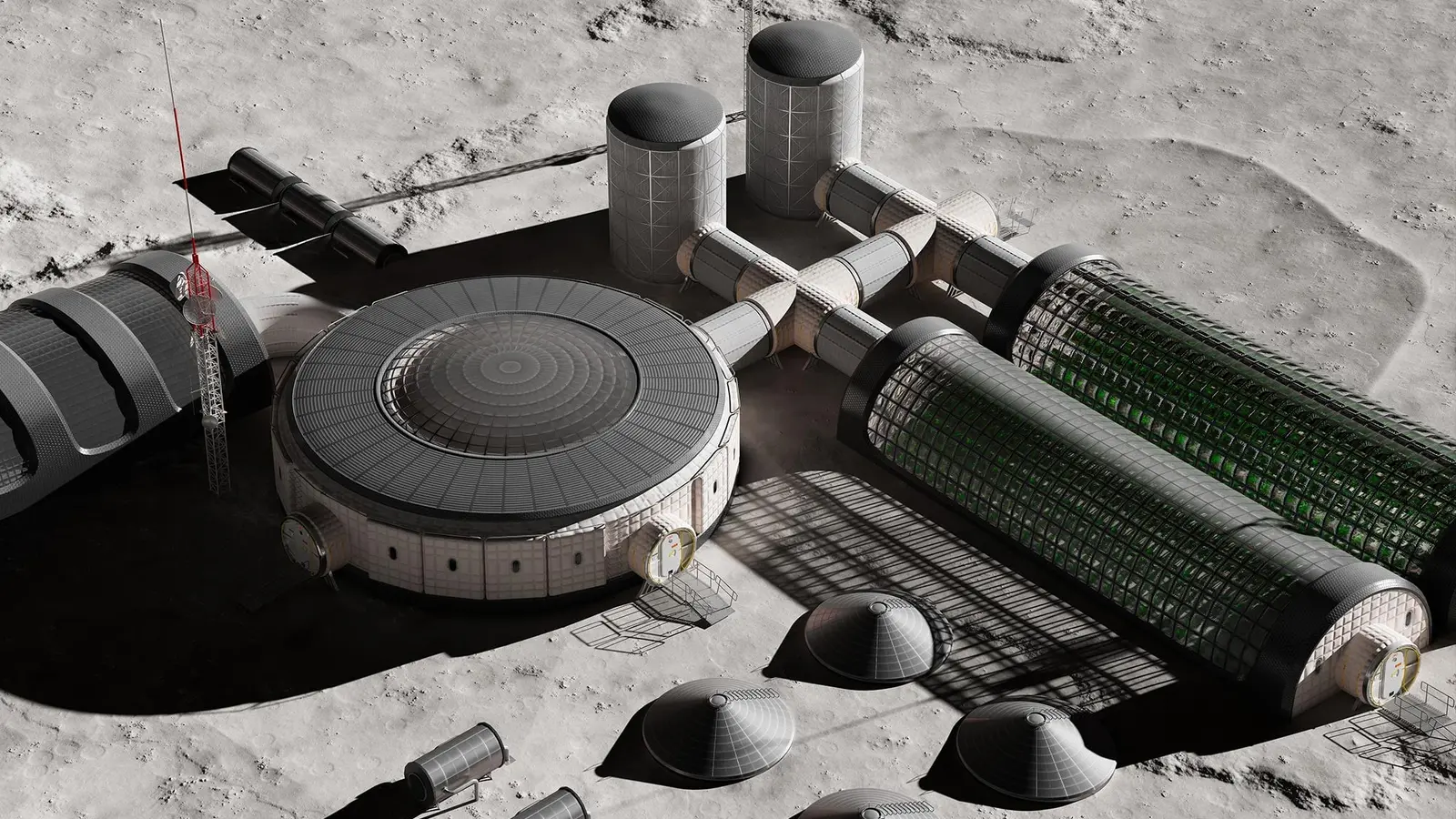
Imagine unrolling a familiar, lightweight plastic on the lunar surface and finding it keeps an entire habitat comfortable for years. It sounds improbable. Yet a research team at the University of Pennsylvania has shown that stacking thin sheets of Mylar in a precise way produces an insulating film that resists both extreme temperature swings and hard physical treatment.
Scientists have developed a surprisingly durable insulating material from a familiar plastic that could help protect future lunar habitats from extreme temperatures.
From a blanket to a barrier: the idea at work
Mylar is not exotic. It lines food packages and forms shiny emergency blankets that stop marathon runners from losing body heat. In its formal chemical name, biaxially oriented polyethylene terephthalate or BoPET, it is a durable polymer film with useful optical and mechanical traits. The Penn engineers harnessed those traits in a new geometry: hundreds of ultrathin films stacked into what they call hybrid layered insulating film stacks, or HyLIFS.
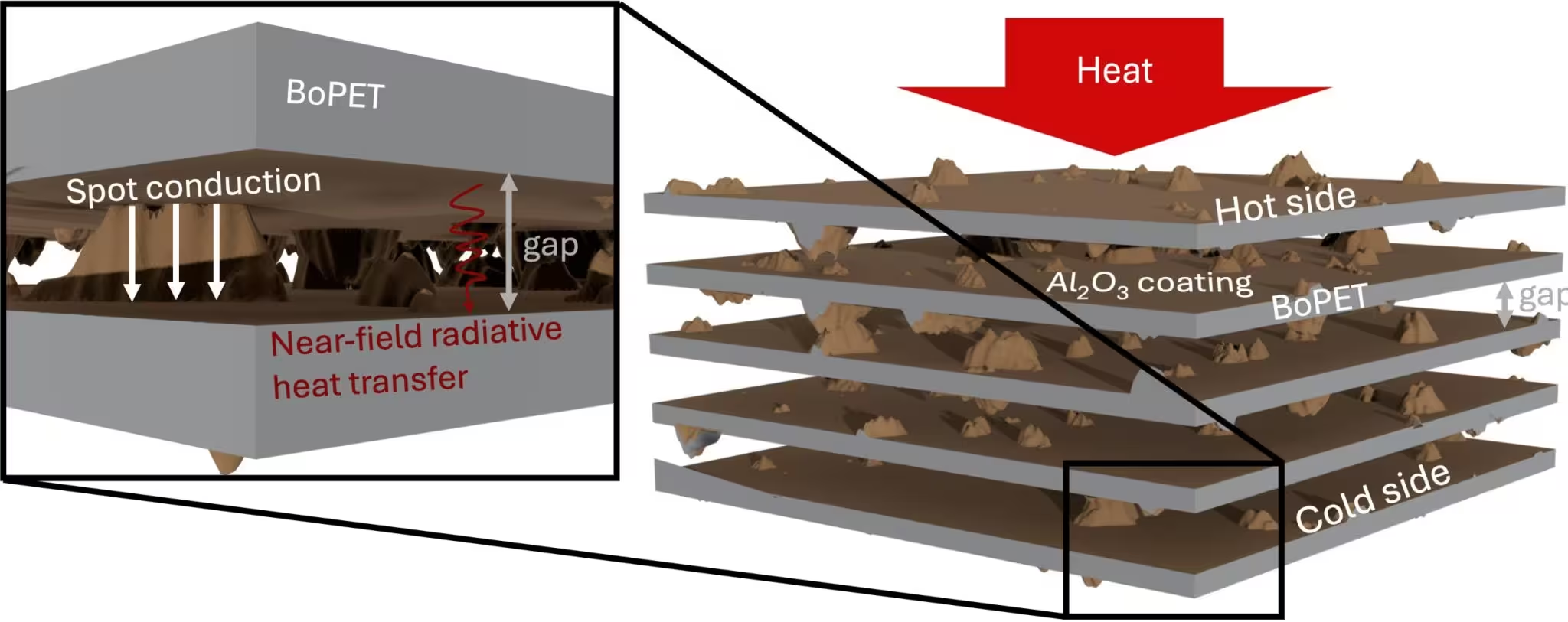
Stacking is simple to describe. The physics that emerges is not. In vacuum, heat transfer is dominated by radiation because there is no air to carry it. Multilayer approaches try to interrupt radiative exchange with reflective surfaces separated by spacers. Aerogels, by contrast, slow conductive heat flow through a very low-density solid. But both approaches have drawbacks when you also need toughness and reusability. Aerogels crush. Thin reflective foils tear. HyLIFS aim to combine good thermal performance with real mechanical resilience.
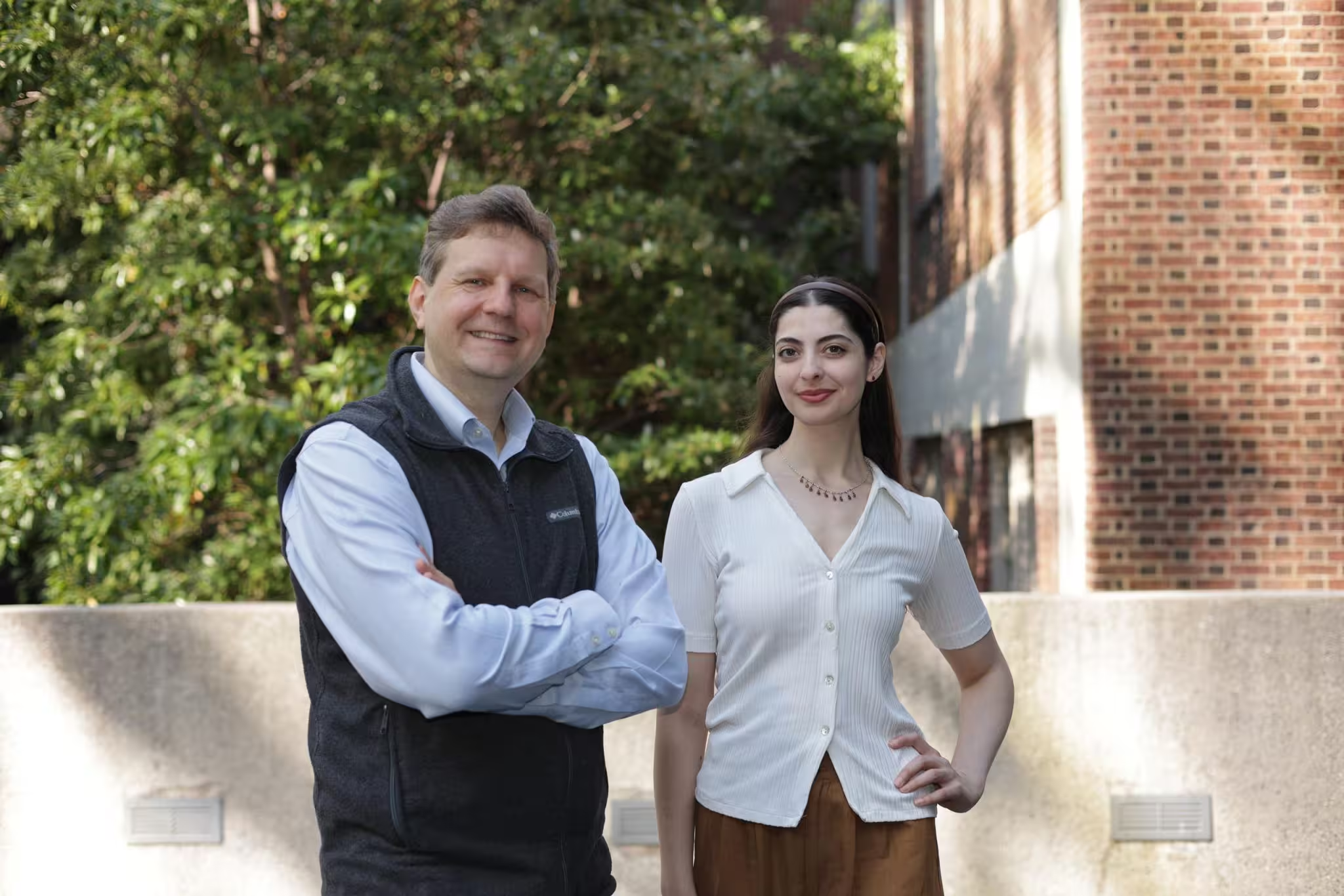
From left: senior author Igor Bargatin, Associate Professor in Mechanical Engineering and Applied Mechanics (MEAM), and first author Danielle R. Levin, a recent Penn doctoral graduate in chemistry, who also received a master’s in MEAM.
How the stacks are made and tested
The team experimented with Mylar sheets of different thicknesses. Some layers received a microscopic coating of alumina, aluminum oxide, to stiffen films without greatly changing their infrared reflectivity. Films were then stacked, separated by tiny antiblocking particles embedded in commercial Mylar to prevent sheets from sticking together. On paper, the particles were a manufacturing convenience. In practice, they became a structural variable that controls how heat crosses layer interfaces.
Building test samples required painstaking manual assembly. According to the paper, researchers use tweezers and small weights to place films one by one. The process is delicate enough that a stray breath can disturb the stack. Even so, the assembled specimens demonstrated unexpected toughness. In vacuum conditions representative of lunar exterior or habitat cavities, the best HyLIFS matched the thermal conductance of advanced vacuum insulators while maintaining bendability.
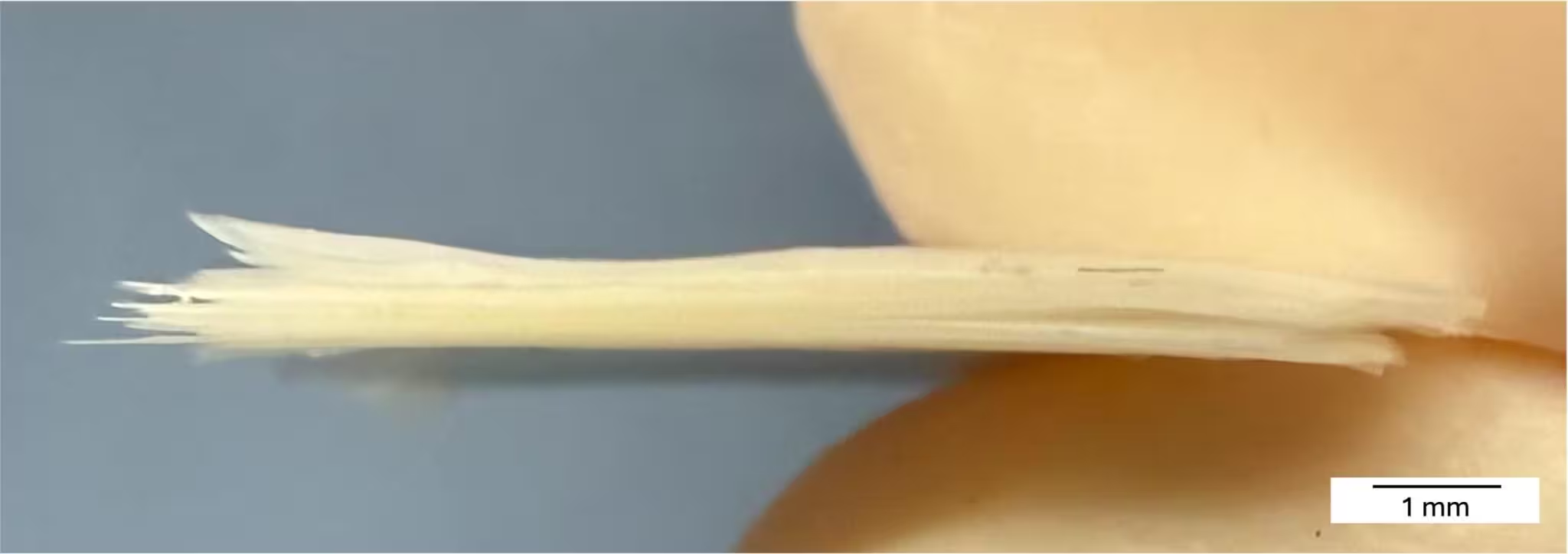
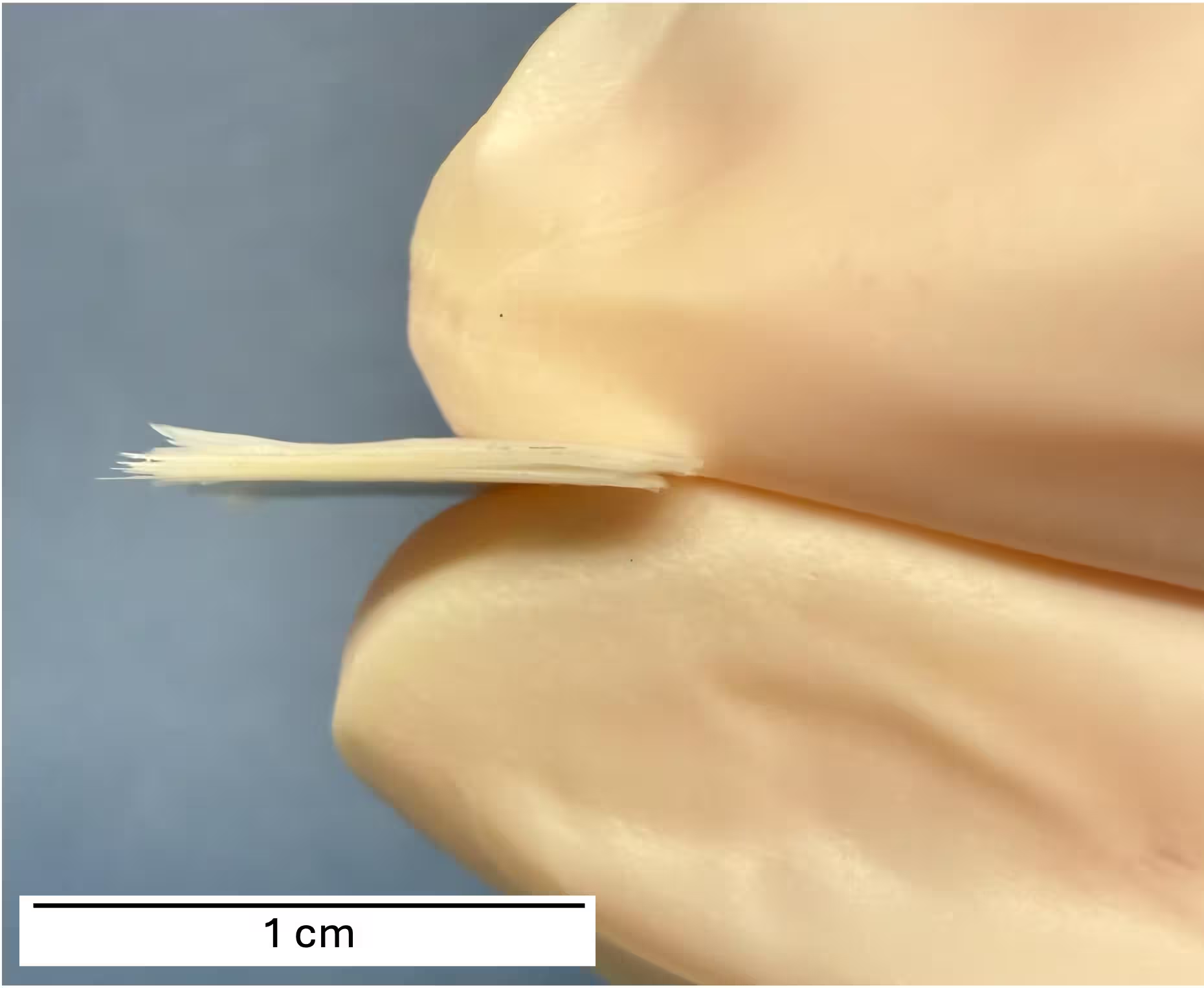
A sample of the stacked Mylar sheets the researchers created, which could one day provide insulation on the moon.
Compression resilience and repeated abuse
One of the most striking results comes from compression testing. The team compressed samples to roughly 20 megapascals, a stress comparable to concentrating 200 pounds on an area the size of a fingertip. The stacks not only survived a single such squeeze. They survived multiple cycles in succession. That combination of thermal stability and mechanical endurance is rare in materials designed for space use.
The researchers discovered that the particles manufacturers use to separate layers of Mylar also play a role in heat transfer.
Why does mechanical robustness matter? Launches jostle cargo. Modules get bumped during assembly. Micro-meteoroid impacts and thermal cycling over years change how materials conform to structures. An insulator that tears or crumbles under repeated handling loses more than its immediate thermal function: it forces expensive repairs or replacement missions. HyLIFS, by design, are intended to be forgiving.
A sample of the stacked Mylar sheets the researchers created, which could one day provide insulation on the moon.
Small contacts, big effects: the role of antiblocking particles
Commercial Mylar contains microscopic particles that prevent layers from sticking during manufacture. The Penn team discovered that these tiny particles, which protrude slightly from film surfaces, govern where heat actually crosses the stack. In vacuum, most conductive heat transfer happens at the minute contact points where two particles press together. Those contacts act like thermal bridges between otherwise reflective films.
That insight flips a design assumption. Rather than treating antiblocking particles as an inconvenient manufacturing artifact, the researchers propose they can be tuned. Particle size, number density, and spatial distribution become knobs engineers can adjust to control interlayer heat flow. In effect, a manufacturing aid becomes a performance lever.
Why thinner is not always better
At first glance, the straightforward strategy for improving insulation seems obvious: thinner films mean more layers in the same total thickness, and more interfaces should impede heat flow. The experiments contradicted that intuition. The thinnest films tested did not outperform medium-thickness films when both had alumina coatings. The explanation appears to be contact topology. Thinner films allowed more intimate contact between adjacent sheets through antiblocking particles, opening extra pathways for heat to move.
Pressure changes that occur during habitat pressurization, handling, or uneven loading alter this contact landscape. Sheets deform. Contacts multiply or vanish. Therefore material optimization requires a three-way balance among film thickness, stiffness, and the distribution of separating particles. You cannot simply make each sheet thinner and expect better insulation without accounting for how contacts evolve under load.
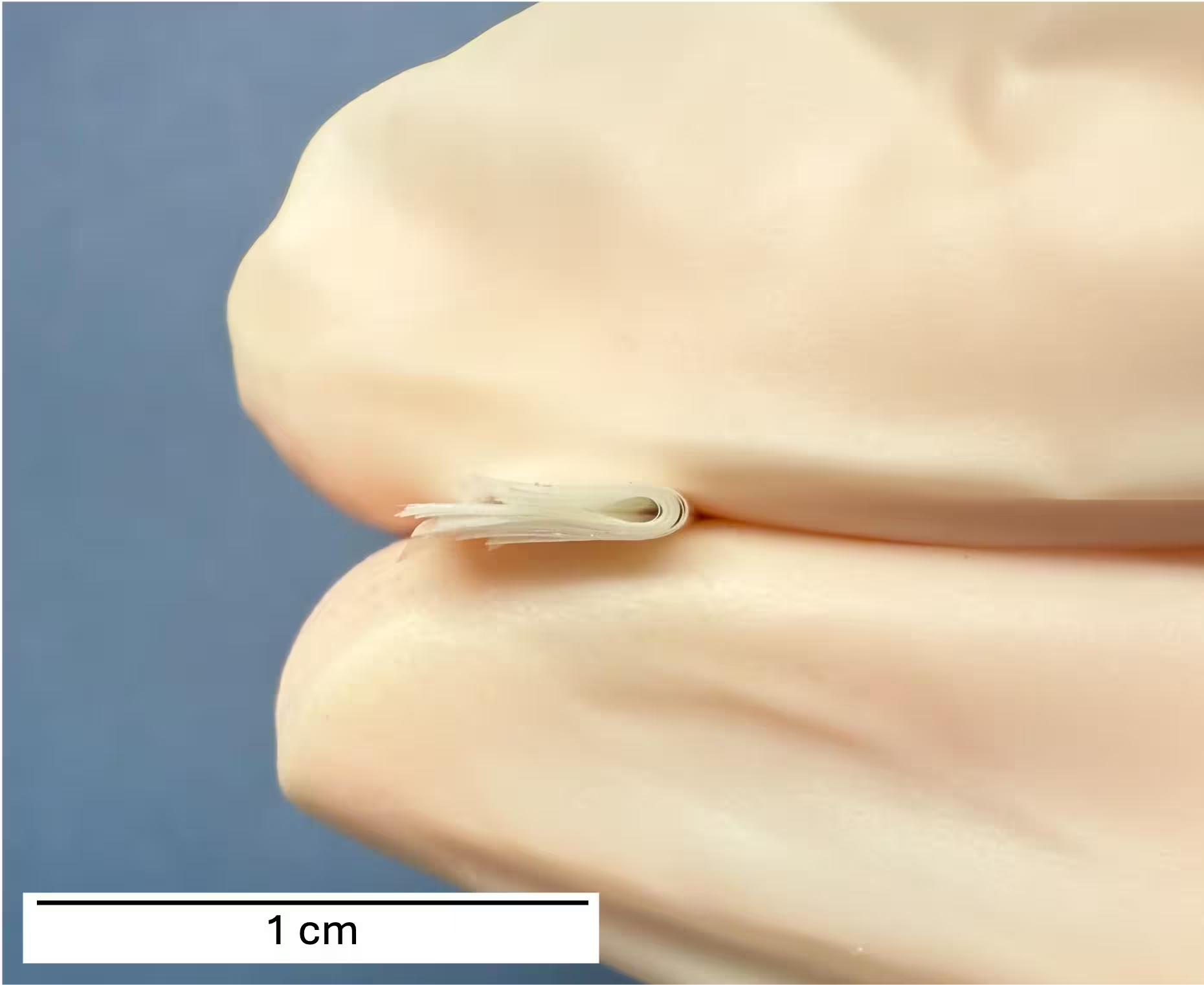
The researchers subjected the stacked layers to mechanical stresses to see how well they might hold up to the rigors of building habitats on the moon.
Scaling up from square centimeters to meters
The current laboratory samples cover an area of about one square centimeter. Manual stacking takes hours. To become useful for lunar bases, HyLIFS must be manufactured at meter scales and rolled or assembled quickly. The authors mention continuously coating large rolls of Mylar and then winding them into stacked assemblies as a plausible route. In that scenario, film thickness, coating layers, and particle dispersion could be tuned during roll-to-roll production to produce consistent, larger-area stacks.
But scaling introduces new challenges. Larger stacks must sustain bending, abrasion, and scuffing over time. They must interface with structural panels and seals. They must survive the thermal cycles experienced near lunar day-night boundaries, where surface temperatures swing by hundreds of degrees Celsius. Each of these conditions changes how layers contact one another and therefore how heat passes through the stack.

Potential applications beyond habitat walls
If HyLIFS maintain their properties at larger scales, applications extend beyond fixed habitat insulation. Flexible films could line rover instrument bays, wrap electronics, or form part of spacesuit thermal layers that need to compress and flex. Their reusability also matters. Materials that can be compressed, shipped, and then recover thermal performance after deployment reduce mission mass and logistics.
There is a financial angle as well. Mylar is inexpensive and widely produced. Adapting existing manufacturing infrastructure to produce tailored HyLIFS promises cost advantages versus highly engineered aerogels or custom multilayer blankets that require delicate handling. Cost matters for long-term lunar presence, where repeated resupplies from Earth will remain expensive for the foreseeable future.
Expert Insight
"What makes this work compelling is the marriage of simple materials science with practical engineering constraints," says Dr. Laura Chen, a mechanical engineer who works on thermal protection systems for planetary landers. "You can design for ideal thermal properties in the lab, but if the material tears when you touch it, it is effectively unusable in field conditions. The HyLIFS approach recognizes that tradeoff and offers a path to reconcile it. The next step is proving the concept in larger panels and in thermal cycling experiments that mimic the lunar environment."
Scientific context and implications
In space engineering, thermal control is as critical as structural integrity. On the Moon, temperatures swing from roughly -173 degrees Celsius at night to about 127 degrees Celsius in direct sunlight on the surface. A habitat must insulate occupants and equipment from both extremes while keeping mass and volume low. Traditional multilayer insulation reduces radiative heat flow efficiently but can be fragile. Aerogels provide astonishing low thermal conductivity but are brittle. HyLIFS aim to sit between these extremes: effective thermal resistance combined with flexibility and damage tolerance.
The study makes two conceptual contributions. First, it demonstrates that a widely available polymer, arranged into many thin layers, can achieve thermal performance comparable to established vacuum insulators. Second, it reframes how interfacial contacts affect thermal transport in stacked thin films. That reframing turns an industrial manufacturing choice into a tunable design parameter for space applications.
Conclusion
Simple ideas often yield the most practical advances. The Penn team took a common material, Mylar, and asked how its microstructure and mechanical behavior might be combined to produce insulation that is both thermally effective and mechanically robust. They found that tiny antiblocking particles, often overlooked, directly shape how heat flows across stacked films. They also showed that a stack of coated and uncoated films can survive repeated high compression while maintaining insulating performance.
Challenges remain. Manufacturing at scale, long-term resistance to lunar dust abrasion, and behavior under repeated thermal cycling will determine whether HyLIFS move from promising lab samples to mission-ready panels. Still, this work points to an economical, adaptable route for protecting habitats, instruments, and suits on the Moon. It suggests that some of the materials we already mass-produce on Earth may become key parts of sustainable off-world infrastructure.

“My work centers on sustainability, energy, and environmental science — examining how innovation can lead to a greener future.”

Discussion
Leave a Comment
Comments (1)
Whoa, Mylar stacks actually resisting 20 MPa and thermal swings? wow, didn't expect cheap plastic to behave like that. If scale works, big deal