

Before the needle ever breaks the skin, your blood may already be telling a story. Short histories of past infections, tiny molecular footprints left by bacteria and viruses, assemble into a pattern that can hint at how strongly you will mount an antibody response to a new vaccine. Some of those clues do not target the vaccine virus at all.
Pre-existing antibody patterns may reveal how strongly a person will respond to vaccination, helping identify individuals at risk of a blunted immune response.
Researchers at Arizona State University and collaborators screened thousands of blood samples to look for these hidden signatures. The idea is simple in concept and complex in execution. Instead of waiting to measure antibodies after vaccination, why not read the immune system’s readiness beforehand? The work points to a future where a quick blood test could tell clinicians who might need extra doses, closer follow-up, or alternative protective strategies.
Health status gives only part of the picture. Age, genetics, chronic illness, and immune-suppressing treatments matter. But they do not explain all variation. In the ASU study, some people with immunosuppressive conditions still produced robust vaccine antibodies. Conversely, roughly 5 to 6 percent of ostensibly healthy participants had weak responses. The mismatch suggested something more nuanced was at play.
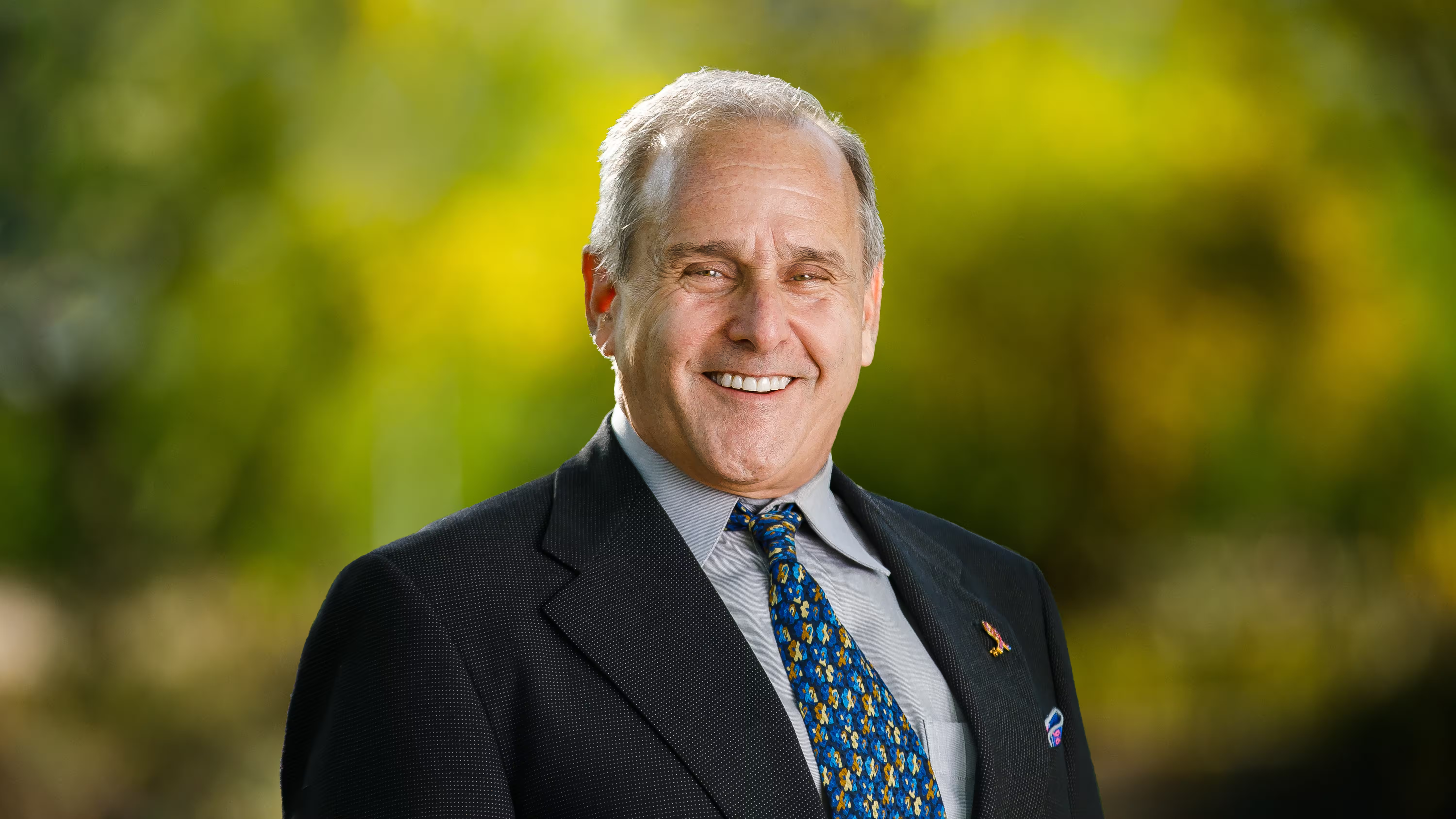
Joshua LaBaer is the director of the Biodesign Institute at ASU and the Biodesign Virginia G. Piper Center for Personalized Diagnostics.
Reading the immune fingerprint
Here is how the team went about it. They analyzed 8,687 blood samples drawn before and after COVID-19 vaccination. Using a broad panel of 185 antigens, the assay measured antibodies not only to SARS-CoV-2 but also to common respiratory viruses, bacteria, and targets linked to autoimmune conditions. Those measurements form an antibody fingerprint, a composite portrait of past immune encounters.
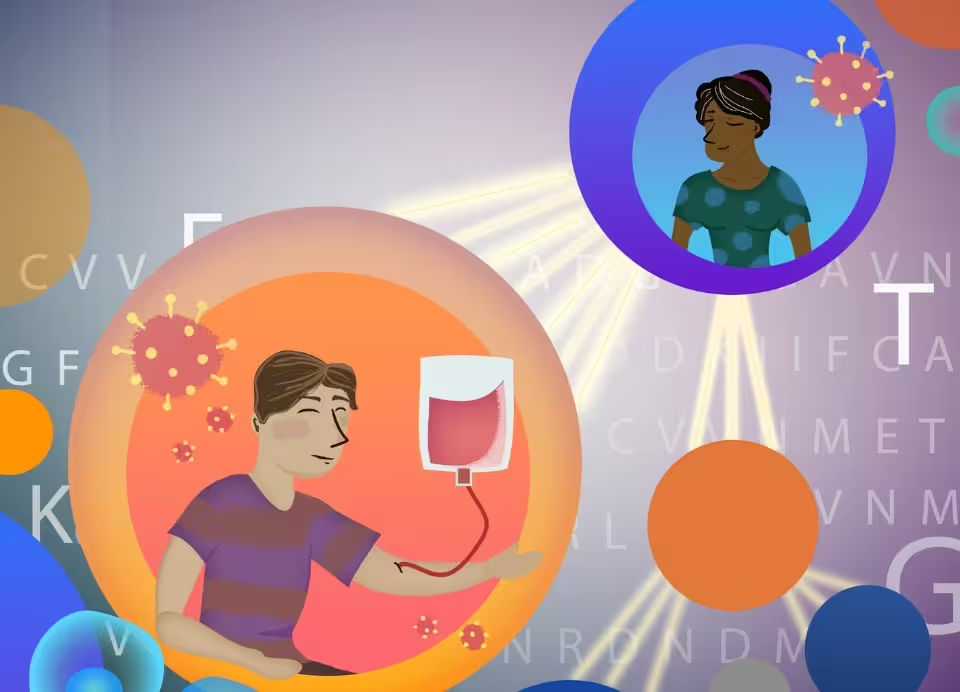
Some individual antibodies emerged as informal sentinels. Elevated levels of antibodies against Staphylococcus aureus and respiratory syncytial virus correlated with stronger vaccine-induced responses. The term sentinel captures the idea: these antibodies are not necessarily attacking the vaccine antigen. Instead, their presence signals how ready the antibody-producing arm of the immune system may be to react.
The researchers then trained a deep-learning model to sift patterns across the full panel. Rather than depending on one or two markers, the algorithm evaluated subtle combinations and relationships among many antibody measurements. The model identified broad immune profiles that separated likely strong responders from those at risk of a weak response.
“Analyzing broad biomarker patterns gives us a way to predict who will mount a strong antibody response before vaccination,” says Joshua LaBaer, who led the effort. “This suggests some people enter vaccination in a more immune-ready state than others.”
Why this matters for vaccine design and care
Predictive antibody profiling could change how we run vaccine trials and deliver vaccines in the clinic. Currently, clinicians assess protection by measuring vaccine-specific antibodies after immunization. That is reactive. A pre-vaccination profile is proactive. It could highlight individuals who would benefit from altered dosing schedules, booster prioritization, or adjunctive therapies to boost response.
There are practical advantages. The approach relies on blood antibody patterns rather than genetic sequencing, making it more straightforward to adapt for clinical settings. High-throughput assays already exist that can measure many antibody responses in parallel. Combined with predictive models, these platforms could be integrated into personalized vaccination strategies.
Still, caution is required. The findings need replication in other populations and across different vaccines. What predicts response to one vaccine may not apply universally. And complex models can hide biases if training datasets are not diverse. Validation across age groups, ethnicities, and varied health conditions will determine clinical utility.
Expert Insight
Dr. Laila Moreno, an immunologist not involved in the study, offers perspective. "Think of the immune system as a landscape shaped by prior storms. Antibody fingerprints map that landscape. When we understand its contours, we can predict how new weather will behave. This is not a final answer, but it is a powerful tool for tailoring vaccination on an individual level."
What next? Larger studies should test whether sentinel antibody profiles predict responses to influenza, HPV, or other vaccines. Researchers will also examine how recent infections or microbiome changes alter fingerprints. Technology will evolve too. Multiplex serology panels and improved computational models could shorten the path from sample to clinical decision.
Conclusion
The ASU-led work opens a practical window into immune readiness. By treating the immune system like an archive of past encounters, scientists can extract predictive signals that matter for future protection. The promise is pragmatic: better-targeted vaccination strategies and a clearer way to protect people who otherwise slip through the cracks. Questions remain. But the message is clear. Your blood may carry more than a record of past illness. It may hold a forecast for how you will respond to the next vaccine.

“My work centers on sustainability, energy, and environmental science — examining how innovation can lead to a greener future.”

Discussion
Leave a Comment
Comments
No comments yet. Be the first.