
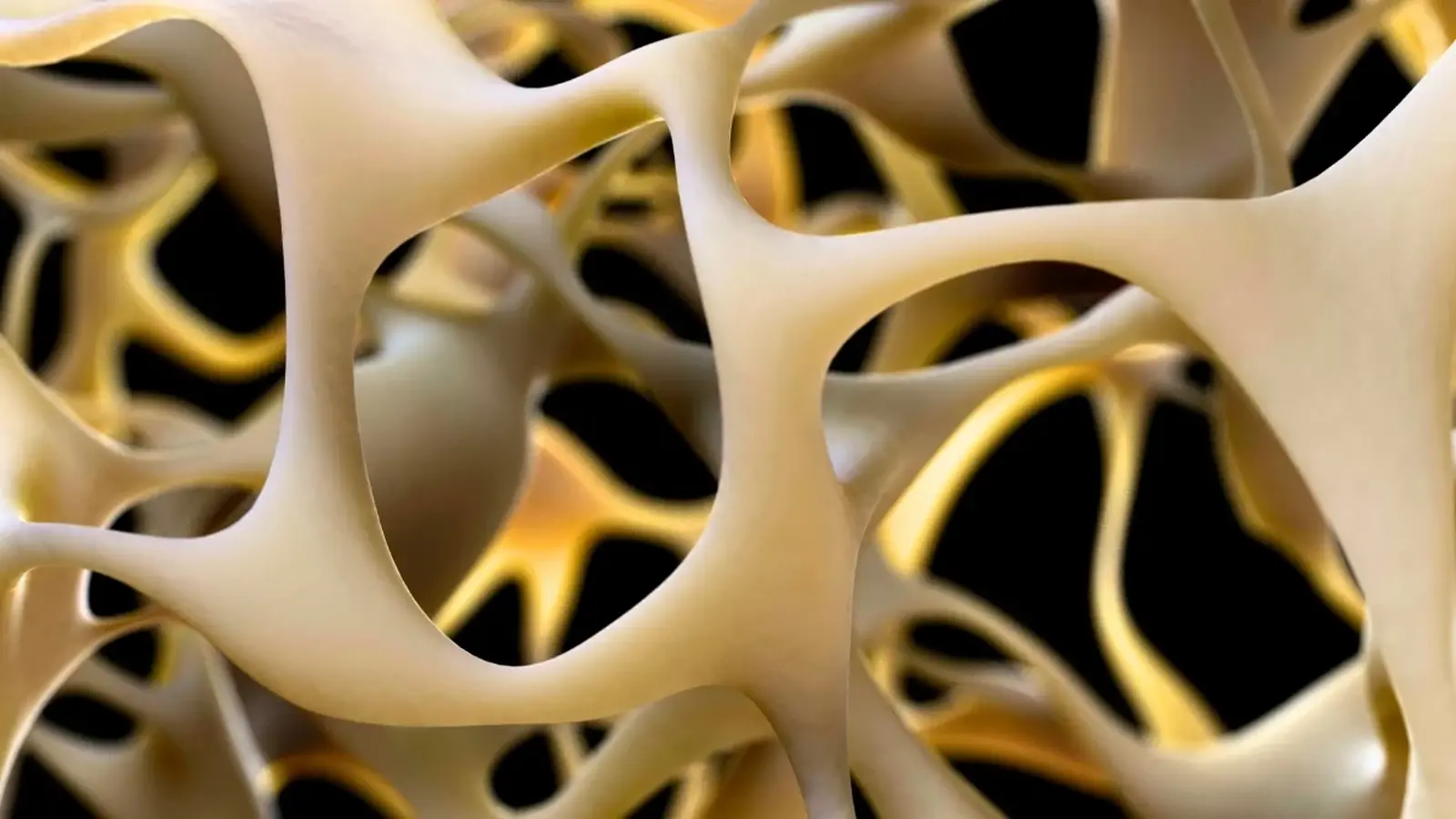
What if a living treatment could actually reverse severe bone loss? Ten women with advanced osteoporosis have offered a striking hint that the answer may be yes. In a small first-in-human study published in Cell, researchers used patients' own mesenchymal stem/stromal cells with a precise surface edit to encourage those cells to home back to bone and catalyze repair.
From a laboratory tweak to bone repair
Osteoporosis wears away bone in a slow, relentless way, leaving fragile skeletons and a high risk of fractures. The disease is endemic, affecting hundreds of millions worldwide and causing millions of fragility fractures each year. Current drugs can slow decline. They rarely rebuild what's already gone. That has driven interest in cell-based regenerative strategies that might restore bone architecture rather than only altering metabolism.
Mesenchymal stem/stromal cells, abbreviated MSCs, are a natural candidate. Found in bone marrow and other tissues, MSCs can mature into osteoblasts, the cells that lay down new bone. But clinical efforts to use cultured MSCs have struggled because the cells lose a surface molecule called sialylated Lewis X, or sLeX, when grown outside the body. Without sLeX, MSCs are poor at returning to the marrow after intravenous infusion.
The team led by hematologist José M. Moraleda at the University of Murcia in Spain applied a targeted glycocalyx edit to autologous MSCs, enforcing sLeX expression to restore what they call osteotropism, a directed tendency of cells to migrate to bone. The edited cells were labeled Fuc-autoBM-MSCs in the report. After isolation and culture from hip marrow, each patient’s modified MSCs were infused intravenously and then followed for roughly six years in total monitoring.
Trial signals safety and unexpected clinical benefit
The primary aim of the phase 1 study was safety. On that front the results are reassuring: no treatment-related adverse events were reported in these ten participants, women aged 51 to 72 who had advanced, high-risk osteoporosis. That safety profile matters. If a therapy is to move beyond early trials, tolerability is a prerequisite.
But the outcomes went beyond mere tolerance. The investigators recorded a dramatic drop in fragility fractures. Comparing two years before infusion to two years after, fracture events fell from 8 per year to 0.5 per year, a 94 percent reduction in observed refractures. Biopsies taken 120 days after the infusion showed increased bone tissue area for seven of the ten patients. Blood biomarkers of bone formation and imaging of trabecular bone density also moved in directions consistent with new bone formation.
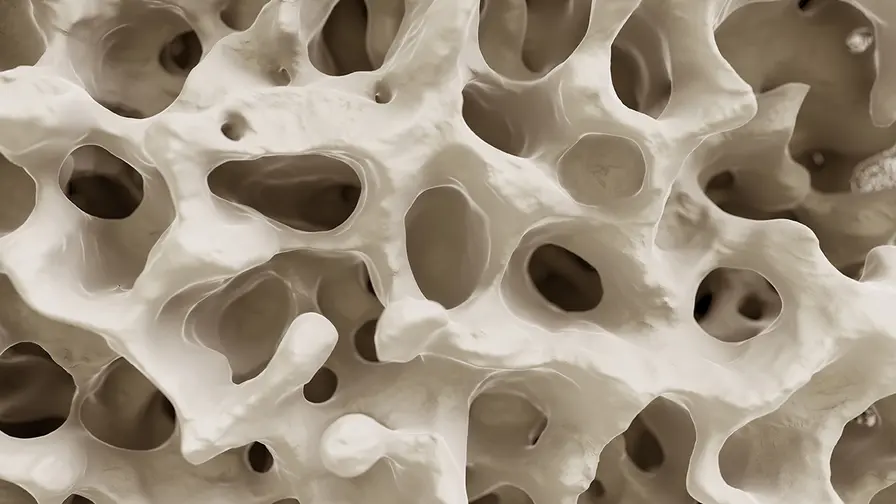
In the authors' words, the therapy produced an osteoregenerative effect predominantly in trabecular bone. That is important because trabecular bone, the spongy inner network found at the ends of long bones and in vertebrae, is metabolically active and is typically the first tissue to disintegrate in osteoporosis, with cortical bone loss following later.
Key findings at a glance
- No treatment-related adverse events during follow-up.
- 94 percent reduction in fragility fractures comparing 2 years pre- and 2 years post-infusion.
- Increased bone tissue area in 7 of 10 patients on biopsy at 120 days.
Biomarkers and imaging consistent with trabecular bone regeneration.
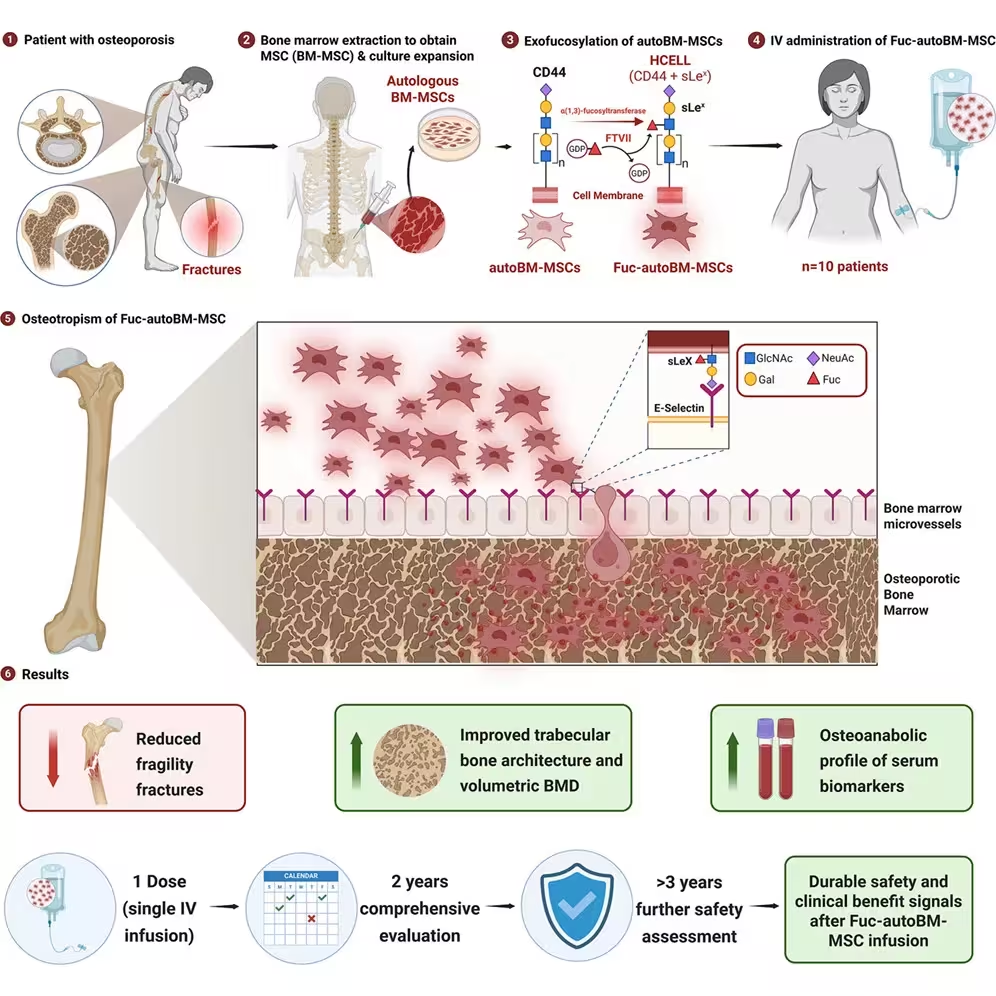
A graphical summary of the trial and its findings.
Why the glycocalyx matters
Cells are more than DNA and cytoplasm. Their surface layer, the glycocalyx, carries sugars and glycoproteins that dictate interactions with the environment. Adding sLeX back onto cultured MSCs is a targeted fix that restores a homing signal. Preclinical animal studies suggested this manipulation would send MSCs to marrow niches where they can contribute to bone formation; the new human data provide a first glimpse that the approach can translate into patients.
That does not mean the mechanism is fully mapped. Do the edited MSCs differentiate into long-lived osteoblasts? Do they act by paracrine signaling, secreting factors that recruit native progenitors? Likely there is a mixture of direct and indirect effects. The study’s authors note radiographic and histomorphometric evidence of new bone in trabecular regions, but larger studies with controls will be required to parse cellular mechanisms and to quantify the magnitude and durability of benefit.
Expert Insight
"Seeing a durable reduction in fractures in a safety trial is rare and encouraging," says Dr. Elena Ruiz, a fictional regenerative medicine specialist and former clinician-scientist who has followed cell therapies for bone disease. "This study shows that fine-tuning the cell surface can change where cells go and what they do. The next steps are replication and randomized trials with diverse populations so we can be confident this is real and broadly applicable."
Limitations and the road ahead
Several caveats matter. The study enrolled only ten women and lacked a randomized control arm, which makes it impossible to exclude placebo effects, selection bias, or chance as explanations for some observations. The participant pool was limited in diversity and size, and follow-up assessments, while encouraging, do not replace larger Phase 2 and Phase 3 trials that measure efficacy formally.
Still, the data point toward a shift in therapeutic thinking. If subsequent trials confirm safety and show robust, reproducible restoration of bone mass and architecture, clinicians could move from solely prescribing antiresorptive or anabolic drugs to deploying regenerative cell therapies that rebuild bone. That would be a major change in the treatment landscape for osteoporosis.
Conclusion
The Cell report by Moraleda and colleagues opens a door. Editing the glycocalyx to restore sLeX on autologous MSCs appears safe in this small cohort and is associated with marked reductions in fractures and signs of trabecular bone regeneration. Those findings are preliminary but promising. The logical next steps are larger, controlled trials that confirm the effect, clarify mechanisms, and test reproducibility across broader patient populations. For millions living with fragile bones, the prospect of a living, regenerative treatment is a compelling new chapter.

“The cosmos has always fascinated me. I write about space missions, astronomy, and the technologies pushing humanity beyond Earth.”

Discussion
Leave a Comment
Comments (1)
Whoa, bone regrowth in people? Sounds promising but ten patients and no control... is this legit or just luck/selection bias? curious but skeptical.