
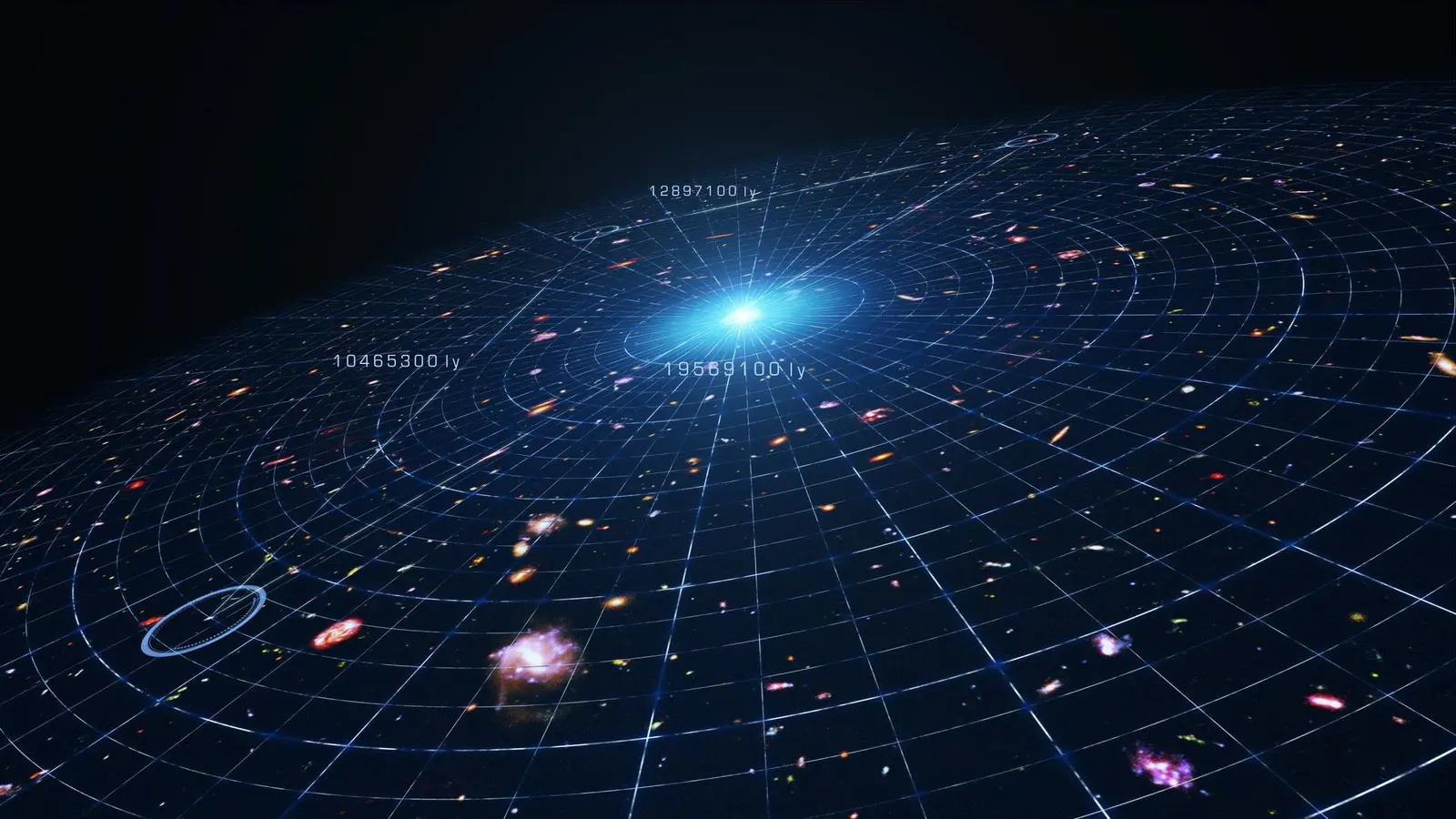
The debate over cosmic expansion flared up last year when a study suggested the universe might be easing off its gas pedal. That claim raised a simple but enormous question: could dark energy, the enigmatic driver of accelerating expansion, be losing strength? A multinational team of astrophysicists has now pushed back, arguing that the evidence still strongly favors continued acceleration.
The universe is still speeding up, scientists say, keeping dark energy and its mysterious role in cosmic expansion firmly in play.
What changed and why it matters
The original challenge came from a South Korean group that proposed a subtle effect: Type Ia supernovae might not have had the same peak brightness across cosmic history. If true, those brightness shifts could masquerade as acceleration when none existed. The implication would have been seismic; the standard cosmological picture relies heavily on supernovae as reliable distance markers.
But the new analysis, led by researchers at the University of Southampton and coauthored by several prominent figures in observational cosmology, shows that the earlier result depended on problematic assumptions about stellar ages and host-galaxy properties. In short, the dispute boiled down to calibration.
How supernovae anchor our view of the cosmos
Type Ia supernovae act like standardizable candles. They are not perfect, but by measuring light-curve shapes and adjusting for host-galaxy characteristics, astronomers convert observed brightness into distances. Do that accurately and you can trace how fast the universe has expanded at different epochs. Get it wrong and the inferred history of expansion shifts.
Researchers who first demonstrated cosmic acceleration in the late 1990s did so by comparing distant and nearby Type Ia explosions and finding distant ones were dimmer than expected for a decelerating universe. That dimming matched what you would expect if a repulsive component—dark energy—was accelerating expansion.
The Southampton-led team revisited the contested study’s methods and found two main issues. First, the earlier paper effectively equated the age of a host galaxy with the age of the specific progenitor star that later exploded. Those two ages are not identical and treating them as the same can skew results. Second, the team says the South Korean work undercorrected for host-galaxy mass, a recognized and widely used adjustment that affects supernova brightness measurements.
Why the correction matters for cosmology
Small systematic errors multiply when you use many distant measurements to infer cosmic history. The Southampton team shows that when supernova calibrations properly account for host environment and population differences, the acceleration signal remains robust. The conclusion: dark energy remains the simplest and best-supported explanation for the observed acceleration.
That does not mean the mystery is solved. Far from it. Dark energy’s nature is still unknown. Is it a constant energy density permeating space or a dynamic field that changes over time? Precise, carefully controlled observations are the route to answers, and this episode reaffirmed why attention to subtle astrophysical effects matters.
Implications for future measurements
Calibration is the unsung hero of precision cosmology. Surveys that map supernovae, baryon acoustic oscillations, gravitational lensing, and the cosmic microwave background all depend on minimizing systematics. The paper published in Monthly Notices of the Royal Astronomical Society reinforces the community’s view that current methodologies remain valid, while also prompting refinements in how stellar populations and host properties are modeled.
Instrumental upgrades and new facilities are coming online that will tighten constraints. The Vera C. Rubin Observatory, the Euclid mission, and the Nancy Grace Roman Space Telescope will deliver vastly larger samples of supernovae and improved redshift coverage. Those projects will bring the statistical power to probe whether dark energy is a true constant or hides subtle evolution.
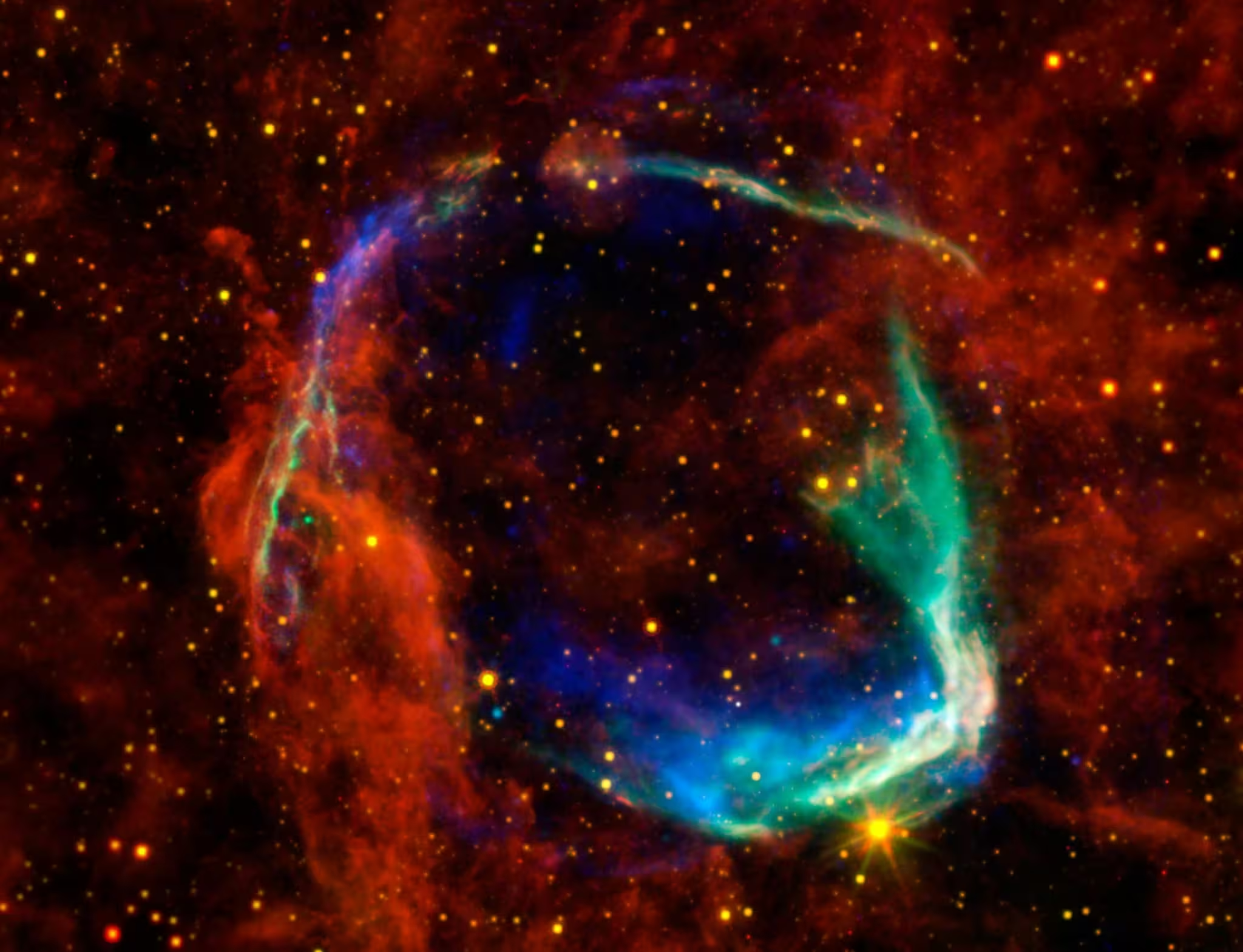
Studying Type Ia supernovae – violent, luminous white dwarf star explosions – led to the Nobel Prize-winning discovery that the universe’s expansion is accelerating. This image combines data from four space telescopes to create a multi-wavelength view of all that remains of RCW 86, the oldest documented example of a supernova.
Expert Insight
"When an extraordinary claim appears, the first step is methodical verification," says Dr. Elena Márquez, a fictional but representative observational cosmologist. "This episode is healthy for the field. Teams rechecked assumptions about progenitor ages and environment corrections, and that exercise strengthens confidence in our measurements. The hunt for what dark energy actually is continues, but the evidence for acceleration stands."
The tone among researchers is measured. Many welcome scrutiny because it forces better models and cleaner data. Questions about progenitor evolution, metallicity effects, and host-galaxy bias are now active research areas precisely because they matter to cosmological inference.
Conclusion
The recent reanalysis does not return cosmology to square one. Instead, it underscores the discipline’s iterative nature: hypotheses are proposed, tested, and either revised or reinforced. For now, dark energy remains the leading explanation for an accelerating universe. The next decade of observations will probe whether that acceleration is steady or hints at deeper physics. Either outcome promises a profound shift in our understanding of the cosmos.

“The cosmos has always fascinated me. I write about space missions, astronomy, and the technologies pushing humanity beyond Earth.”

Discussion
Leave a Comment
Comments
No comments yet. Be the first.