
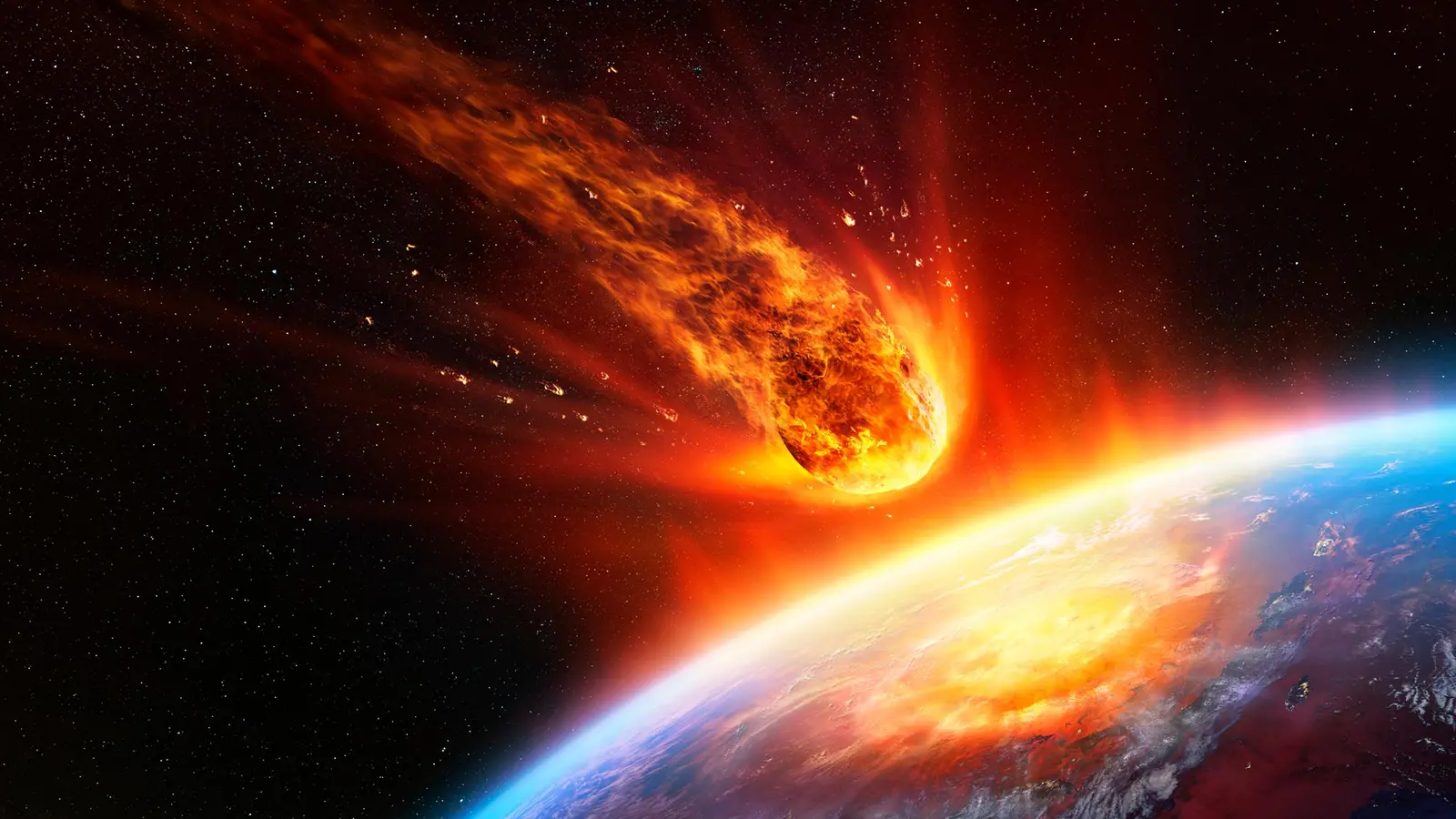
Imagine a single, uncommon rock altering the fate of life on Earth. That is the idea reshaping how scientists read the Cretaceous-Paleogene boundary: the object that made the Chicxulub crater may have been a far rarer kind of meteorite than anyone suspected.
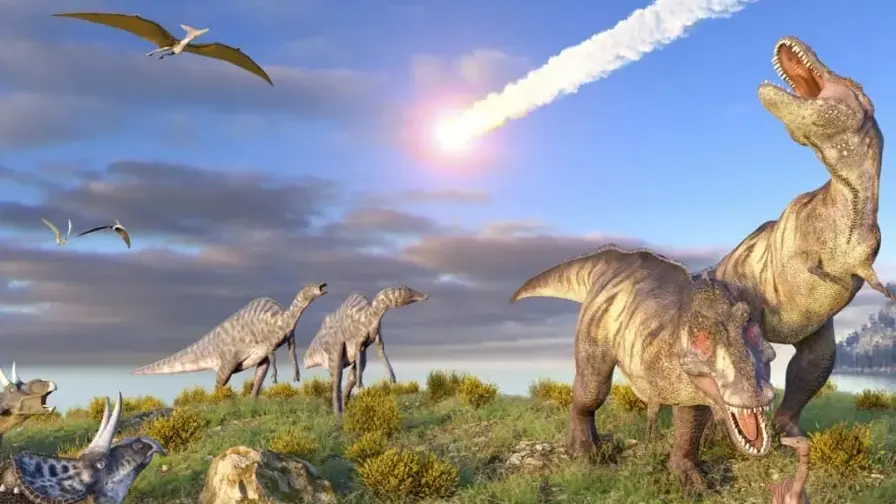
The Chicxulub impactor punched into what is now Mexico roughly 66 million years ago, unleashing energy that vaporized the projectile and carved a crater hundreds of kilometers across. The global fallout from that collision is tied to the extinction event that removed about three-quarters of species from the planet, including the non-avian dinosaurs.
Tracing the identity of something that no longer exists requires a forensic approach. When the rock itself turned to vapor, it left behind microscopic chemical fingerprints trapped in a thin clay layer deposited worldwide at the time of the Cretaceous–Paleogene (K–Pg) boundary. By reading those fingerprints, researchers can reconstruct what hit the planet and why the aftermath proved so lethal.
Clues in the dust: metal isotopes and a rare family of meteorites
A multinational team analyzed K–Pg clay samples collected over decades, using ultra-sensitive isotope measurements to search for telltale ratios of nickel atoms. Nickel isotopes act like a genetic marker for different classes of meteorites because each class preserves a distinct mix inherited from early solar system processes.
The result narrows the suspect: a carbonaceous chondrite of the Ornans, or CO, class. Carbonaceous chondrites are primitive, volatile-rich rocks that account for a small share of meteorites on Earth; CO specimens are even rarer within that family. If the isotope signal is correct, the Chicxulub impactor belonged to a lineage of space debris that shows up only rarely in collections and samples.
Nickel fingerprints are not the only line of evidence. The impactor’s scale and violence are already well constrained: roughly 10 to 15 kilometers across, striking at an estimated 64,000 kilometers per hour (40,000 mph). That energy erased the body itself, but the ejecta—the fine dust and spherules launched into the atmosphere—settled globally and preserved chemical remnants that modern labs can detect.
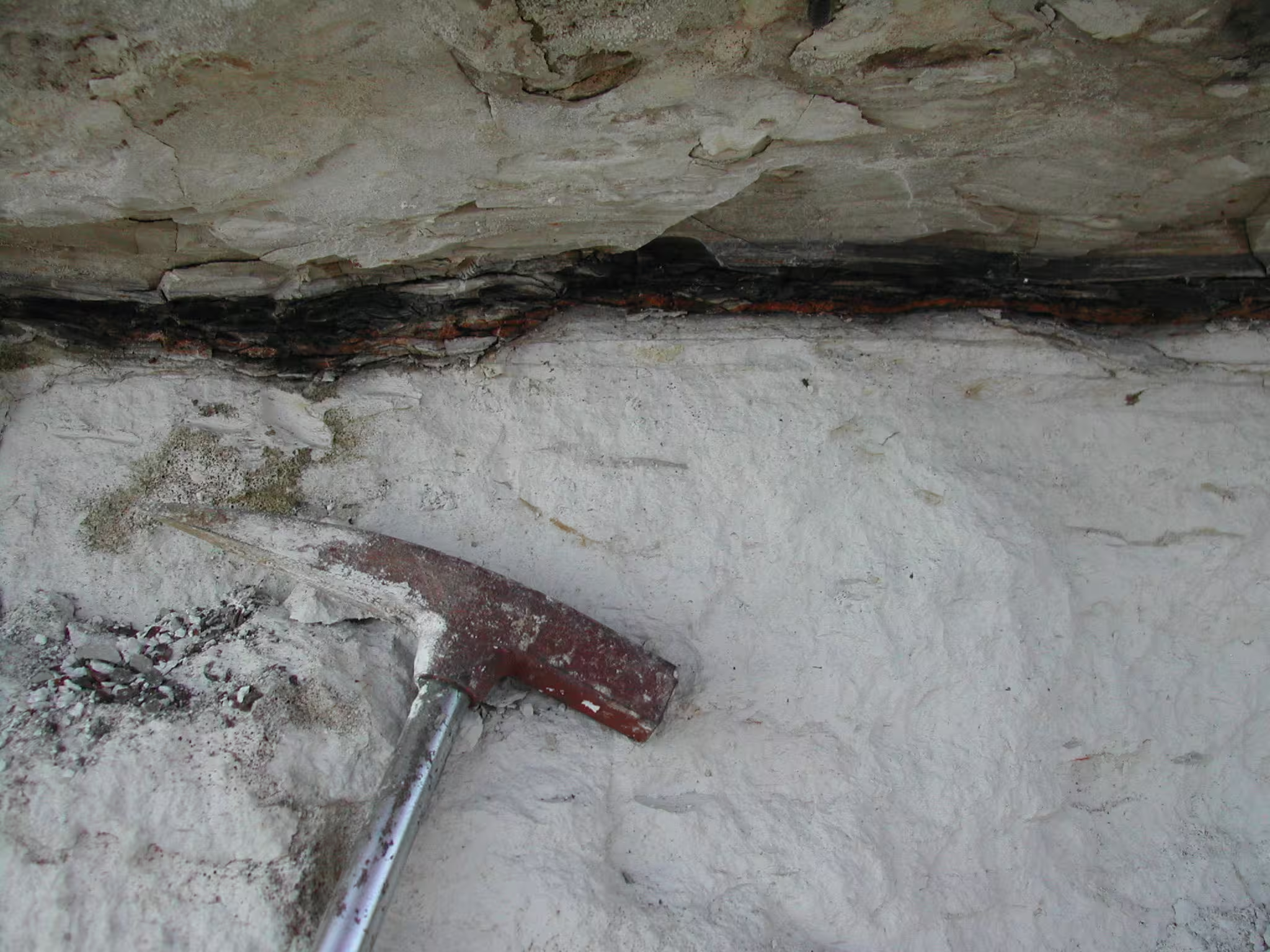
Residue of the Cretaceous-Paleogene impact. Dark clay-rich KT boundary layer in Stevn’s Klint, Denmark used in the study.
Identifying the rock’s class changes how researchers weigh possible extinction mechanisms. CO chondrites contain relatively low amounts of volatile elements such as sulfur compared to some other meteorite classes. That detail matters because sulfur injected into the stratosphere could have caused rapid cooling by forming aerosol clouds, a scenario often invoked to explain large-scale die-offs.
With a CO-type impactor, the idea that the rock’s own sulfur load was the primary kill mechanism becomes less convincing. Instead, the focus shifts toward the enormous volume of fine-grained debris the impact produced—soot, pulverized target rock, and tiny glassy droplets—that would have darkened skies and choked photosynthesis for years.
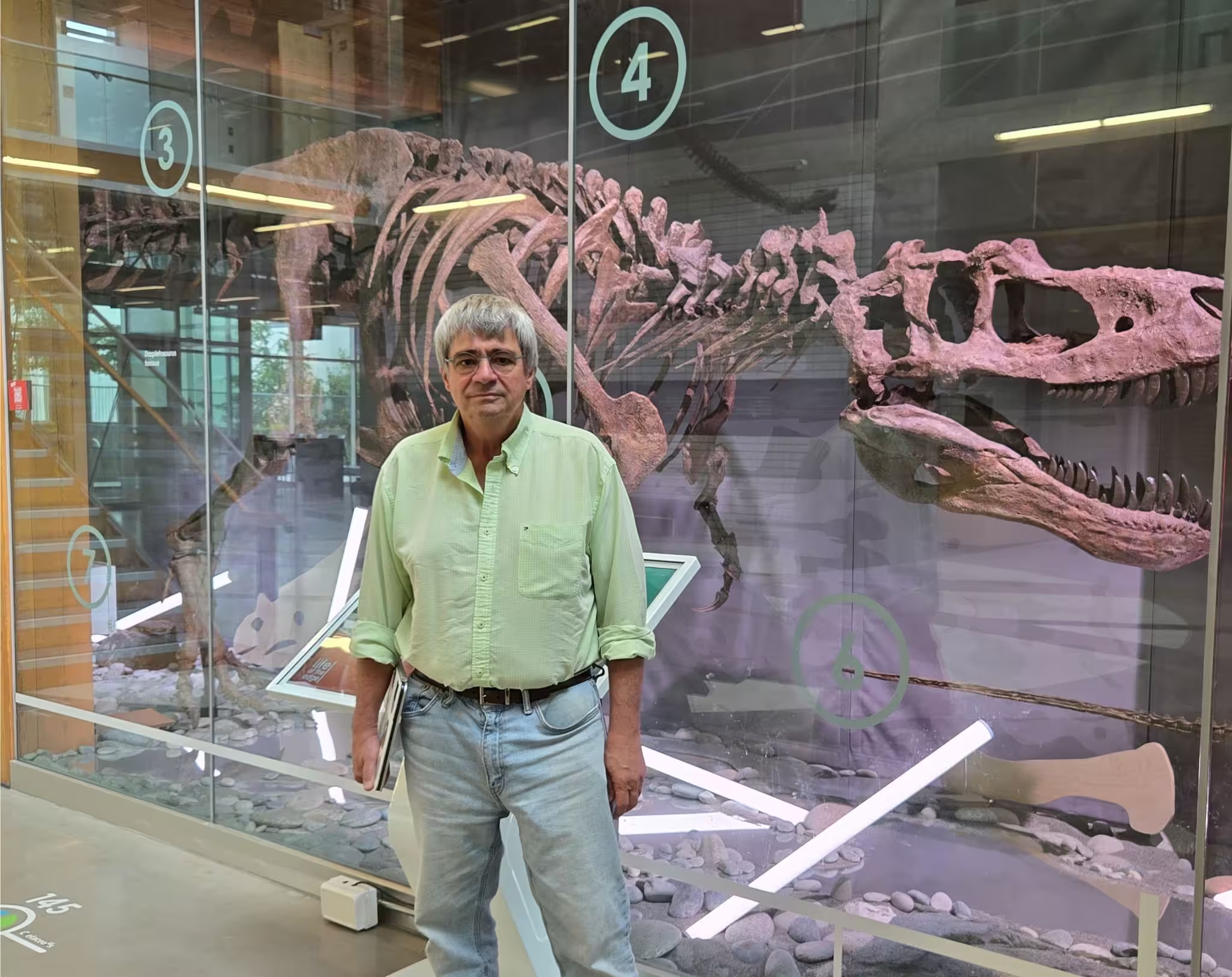
Dr. Philippe Claeys, a visiting professor at the University of British Columbia, in front of an exhibit at the Pacific Museum of Earth.
“Only a minute fraction of the projectile is preserved in the planet’s K–Pg clay layer because the entire meteorite vaporized upon impact,” says Dr. Philippe Claeys, one of the co-authors involved in the analysis. That scarcity makes the isotope work technically demanding but also rewarding: the more precise the measurement, the tighter the constraint on what the impactor could have been.
What the identification means for extinction scenarios
Put bluntly: if the incoming rock carried less sulfur, then the animal and plant die-offs likely owed more to a prolonged collapse of sunlight and food chains than to an instant, sulfate-driven winter. Tiny particles in the stratosphere can linger for years and scatter sunlight; plant starvation cascades up the food web. The team’s interpretation redirects modeling efforts toward aerosol optical depth, duration of sunlight blocking, and how that would vary with geographic climate zones.
Where did such a rare rock come from? The provenance remains speculative. Candidates include the outer reaches of the asteroid belt near Jupiter or farther-out regions of the solar system rich in primitive debris. Either way, being struck by an object of this pedigree highlights the role of rare, stochastic events in Earth history.
Expert Insight
“Finding a CO signature in K–Pg sediments forces us to be more precise about the sequence of climatic responses after the impact,” says Dr. Elena Martinez, a planetary scientist who was not part of the study. “It doesn’t change the fact that an extraordinary collision occurred. It sharpens our view of the mechanisms—soot, dust, and long-lived aerosols—most likely responsible for ecosystem collapse.”
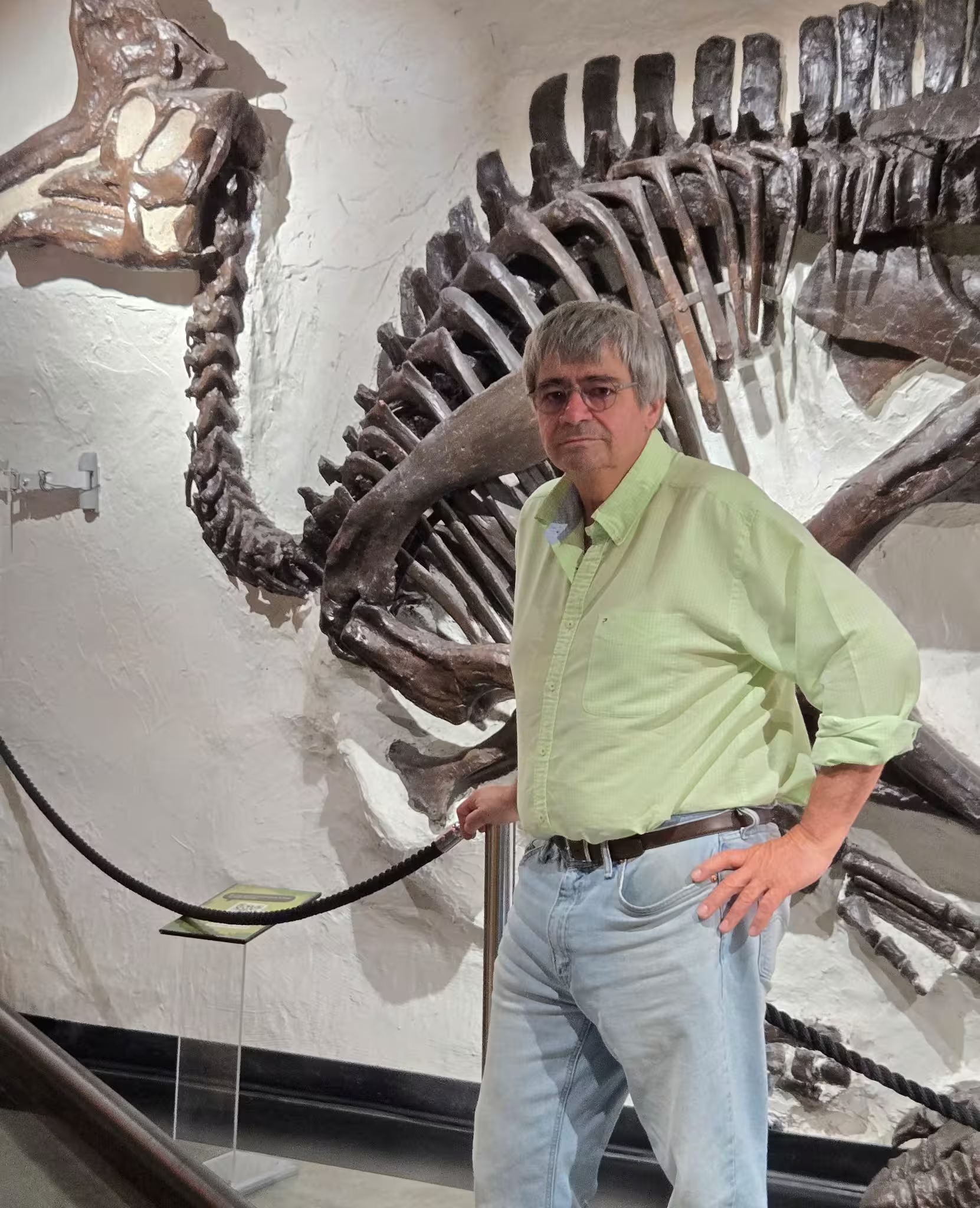
Dr. Philippe Claeys, a visiting professor at the University of British Columbia, in front of an exhibit at the Pacific Museum of Earth.
Conclusion
Pinpointing a CO chondrite as the likely Chicxulub impactor does not close the book on the end-Cretaceous extinction. It does, however, change the chapter headings. By shifting emphasis away from the impactor’s own volatile inventory and toward the global blankets of dust and soot it lofted, the new interpretation refines models of post-impact climate and helps target future field sampling and laboratory experiments. The dinosaurs’ fate seems less a single chemical smoking gun and more a complex, planetary response to an extraordinarily unlucky strike.

“My work centers on sustainability, energy, and environmental science — examining how innovation can lead to a greener future.”

Discussion
Leave a Comment
Comments
No comments yet. Be the first.