
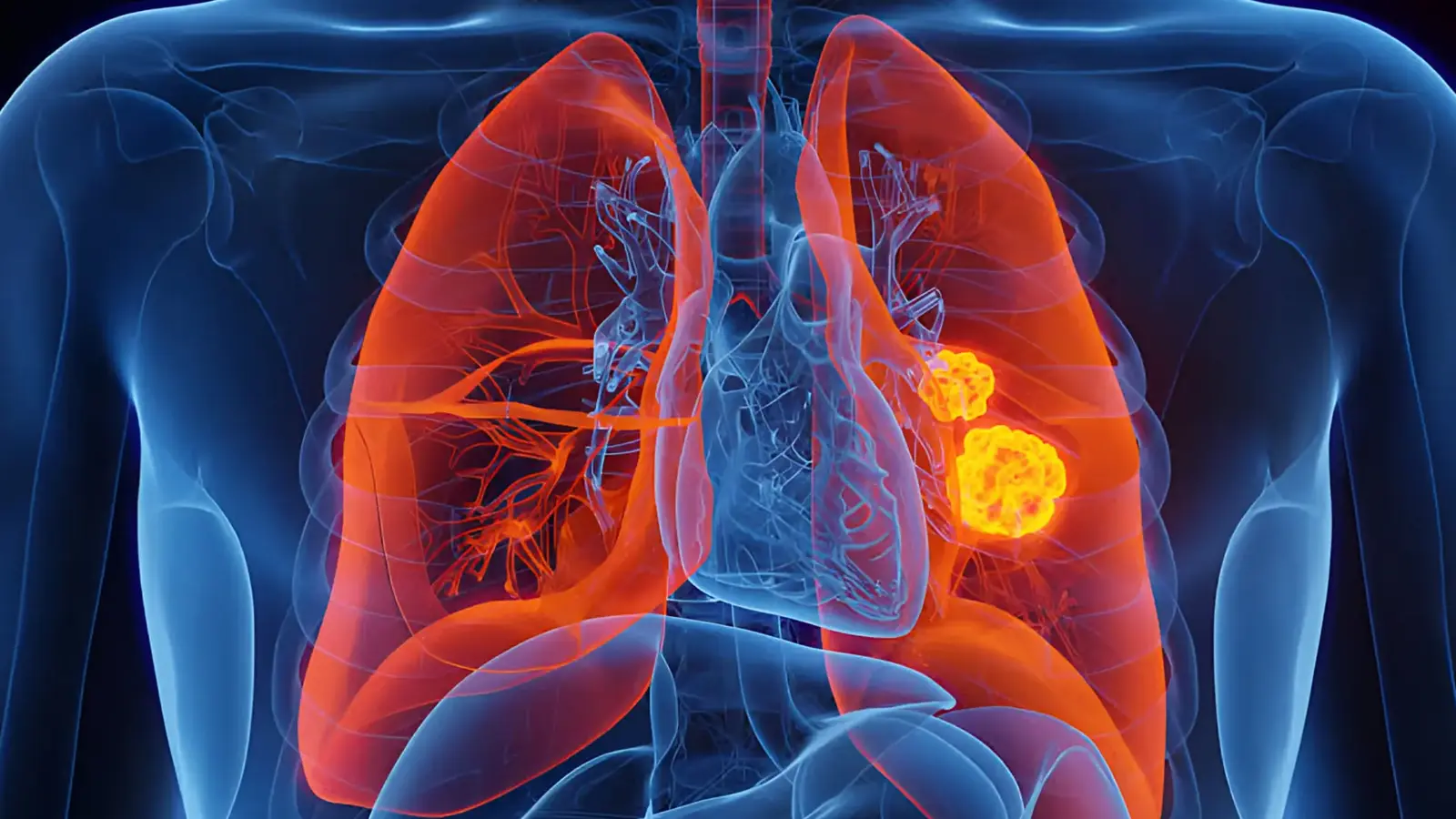
He never touched a cigarette. Yet one routine scan turned his life into a question: why lung cancer? That question has long bothered clinicians and researchers. Smoking explains many cases, but not all. New genetic sleuthing now points to a very rare inherited change that dramatically raises the odds for some people who never smoked.
How one tiny change can shift cellular behavior
Scientists analyzing DNA from millions of people have identified the T790M alteration in the EGFR gene as a potential inherited risk factor for lung cancer in never-smokers. EGFR normally issues growth instructions to cells. When EGFR is altered, those signals can become overactive and push cells toward uncontrolled division, a hallmark of cancer. The T790M change has been known for years as a mutation that tumors sometimes acquire after targeted drug therapy, where it contributes to treatment resistance. What is new and striking is that T790M can exist in a person from birth, present in every cell as a germline variant, and carry a much higher risk of developing lung cancer later in life.
The scale of the analysis gives weight to the finding. Researchers examined genetic records from roughly 3.3 million people and found 641 carriers of the T790M change. Among people of European ancestry in this dataset, the mutation appeared in about 1 in 15,850 individuals. Although rare, carriers showed a marked increase in lung cancer risk, reported as roughly 62 times higher than noncarriers in the study cohort. That magnitude is staggering but must be interpreted cautiously: a high relative risk does not always translate into high absolute chances of disease for a given individual.
What this means for patients and clinicians
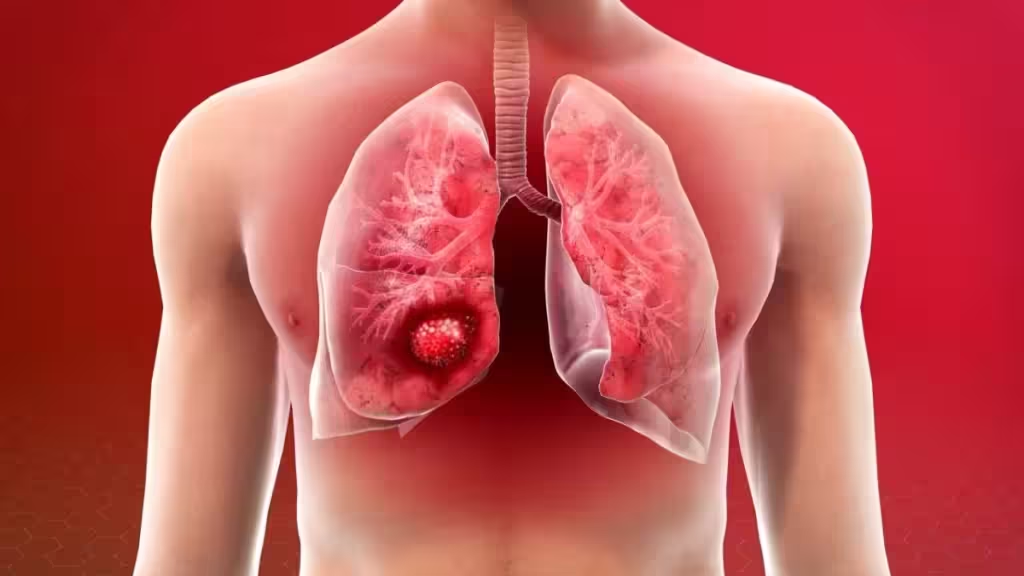
So where does this leave a person who learns they carry T790M? First: carrying the mutation is not a diagnosis. It raises probability, but it is only one piece of the puzzle. Lifestyle, age, overall health, environmental exposures such as radon and air pollution, and other genetic factors all influence whether cancer will develop. Clinicians will need to weigh the mutation alongside these variables when advising patients.
For the medical community, the discovery creates new questions and new possibilities. Should carriers receive tailored screening? Could targeted therapies be used preemptively or at earlier stages? And how should genetic counseling be handled for family members who may also carry the variant? At present the study points toward more personalized risk assessment, not immediate changes to population screening policy.
Environmental and biological context
Approximately 10 to 20 percent of lung cancers occur in people who have never smoked. In that group, researchers have long suspected a mix of causes: inherited genetic variants, long-term exposure to pollutants, radon gas in homes, and other unknown environmental triggers. Tumors in never-smokers often display different biological patterns than those linked to tobacco, including a higher frequency of EGFR-related changes. Finding an inherited EGFR variant helps explain some of those cases and highlights how diverse the disease can be.
Published in Science, the new analysis complements previous clinical observations that associated T790M with resistance to EGFR-targeted drugs. Now it appears the same molecular change can also be part of someone’s inherited genetic landscape, changing how researchers think about risk and treatment timing.
Expert Insight
"Discoveries like this reframe a question we thought we understood," says Dr. Elena Morales, a clinical geneticist who researches hereditary cancer syndromes. "This mutation is rare, but rare things can have outsized clinical impact when they clarify why disease appears in people who lack the usual risk factors. The challenge is translating that knowledge into practical guidance: whom to test, how often to screen, and how to support families facing uncertainty."
The quote underlines the careful balance clinicians must find between acting on promising genetic signals and avoiding overmedicalization. Research teams now plan follow-up studies to determine how often carriers actually develop lung cancer, whether specific environmental exposures interact with the mutation, and whether surveillance strategies can detect tumors at more treatable stages.
Conclusion
This finding does not overturn the central role of smoking in lung cancer prevention, but it adds important nuance. For a small group of people, an inherited EGFR T790M change may substantially increase risk and guide more personalized approaches to monitoring and care. The path from a genetic clue to clinical practice will require replication, longitudinal data, and careful ethical consideration about testing and counseling. Still, the study is a meaningful step toward explaining why lung cancer sometimes strikes those who have never smoked.

“My work centers on sustainability, energy, and environmental science — examining how innovation can lead to a greener future.”

Discussion
Leave a Comment
Comments (1)
Is this even true? 62x sounds insane, maybe confounders or selection bias. What’s the absolute risk tho, how many carriers actually get sick? hmm