
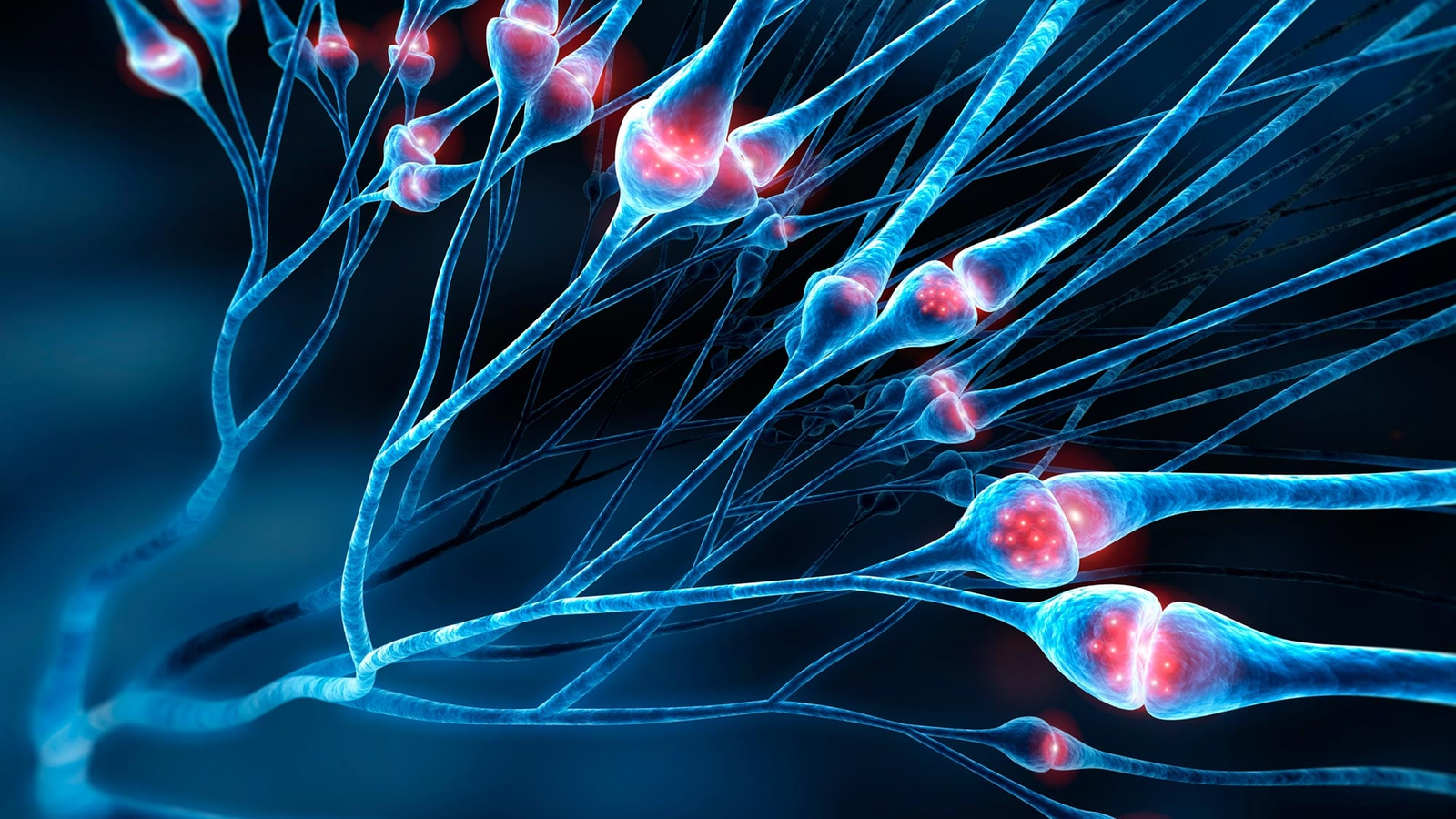
Imagine a molecule famous for fueling tumors quietly helping to keep people in pain. It sounds unlikely. Yet researchers at The University of Texas MD Anderson Cancer Center have found evidence that BRAF, a protein most clinicians associate with cancer biology, plays a central role in the molecular cascade that can turn an acute nerve injury into chronic, hard-to-treat pain.
Researchers have uncovered a surprising role for BRAF, a protein better known for driving certain cancers, in the molecular changes that follow nerve injury.
BRAF is best known as a switch inside cells that controls growth and survival. In tumors, the switch is often stuck in the on position. In the nervous system, the new work suggests BRAF can reroute signaling in injured sensory neurons so that pain messages arriving at the spinal cord become amplified and persistent.
How a cancer protein hijacks pain circuits
Neuropathic pain arises when nerves are damaged by trauma, disease, or treatments such as chemotherapy. It can manifest as hypersensitivity to touch, pressure, or heat. Standard analgesics often fail to restore normal sensation. That failure makes understanding the biochemical triggers essential.
The MD Anderson team focused on NMDA receptors, ion channels in the spinal cord and brain that regulate excitability between neurons. When NMDA receptors become hyperactive after nerve injury, they strengthen the pathways that carry pain. The investigators asked whether BRAF contributes to that pathological strengthening.

Shao-Rui Chen, M.D.
In animal models of nerve injury, the researchers observed BRAF protein moving from peripheral sensory neurons toward their terminals inside the dorsal horn of the spinal cord. Once there, BRAF activated a signaling chain that increased NMDA receptor activity. The molecular profile seen in injured animals also showed overlap with patterns found in human spinal cord tissue samples, suggesting the mechanism may translate to people.

Microscopic image showing sensory neurons co-labeled with BRAF (green) and CGRP (red, a marker for small neurons).
Existing cancer drugs cut pain in preclinical tests
The team tested whether drugs developed to block BRAF-driven cancer growth could blunt pain signals. Two clinically available inhibitors, vemurafenib and selumetinib, reduced sensitivity to mechanical and thermal stimuli in injured animals. Importantly, in animals without nerve damage these drugs did not change normal sensory responses. That suggests the effect is specific to pathological signaling rather than blanket numbness.
Genetic experiments added independent support. Deleting the Braf gene lessened the duration of pain hypersensitivity after injury. Conversely, forcing BRAF activity produced pain-like sensitivity even in the absence of overt nerve damage. Those opposing manipulations strengthen the case that BRAF is a driver, not merely a bystander, in neuropathic pain.
What this means for therapy
- Drug repurposing could speed timelines because BRAF and MEK inhibitors are already approved for oncology indications.
- Critical questions remain, including optimal dosing, routes of administration, and safety when the target is in the nervous system rather than a tumor.
- Researchers must also determine why BRAF relocates from peripheral fibers to the spinal cord after injury.

Hui-Lin Pan, M.D., Ph.D.
The findings are preclinical. That phrase matters. Animal models are powerful tools for revealing mechanisms and pointing to candidate therapies. They do not guarantee that drugs will be safe or effective in human neuropathic pain. Still, the advantage here is pragmatic. A therapeutic class that already exists for cancer could be repurposed more quickly than developing a novel compound from scratch.
Expert Insight
"The idea that an oncogenic signaling node like BRAF can be co-opted by injured neurons is striking," said Dr. Elena Rossi, a neuropharmacologist at the University of Cambridge. "If further work confirms a safe therapeutic window, repurposing BRAF or MEK inhibitors could offer a new path for people whose pain is resistant to common treatments. The biology is elegant. The clinical translation will demand careful dose finding and monitoring."
Beyond immediate therapeutic potential, the study provides a conceptual bridge between cancer biology and neurobiology. Signaling pathways that drive cell growth can also alter synaptic function. That overlap may reveal additional drug targets shared across disciplines.
Conclusion
MD Anderson investigators have mapped a plausible route by which BRAF amplifies pain signals after nerve injury, linking peripheral nerve changes to increased NMDA receptor activity in the spinal cord. Preclinical blockade of this pathway reduced pain sensitivity, and genetic manipulations yielded complementary results. The work opens a promising avenue for repurposing BRAF and MEK inhibitors to treat neuropathic pain, but human trials and mechanistic follow-up are essential before clinicians can consider these agents for pain management.
The research was published in Science Signaling and co-led by Shao-Rui Chen, M.D., and Hui-Lin Pan, M.D., Ph.D. Further studies will need to define dosing strategies, delivery methods, and safety profiles in people.

“The cosmos has always fascinated me. I write about space missions, astronomy, and the technologies pushing humanity beyond Earth.”

Discussion
Leave a Comment
Comments (2)
If this is true in humans, cool, but animal models lie. How safe are BRAF inhibitors longterm for the nervous system? curious, not sold yet
Wait what, a cancer protein causing chronic pain? wild. If BRAF inhibitors work that'd be huge, but nervous system dosing/safety sounds tricky… hope they follow up fast