
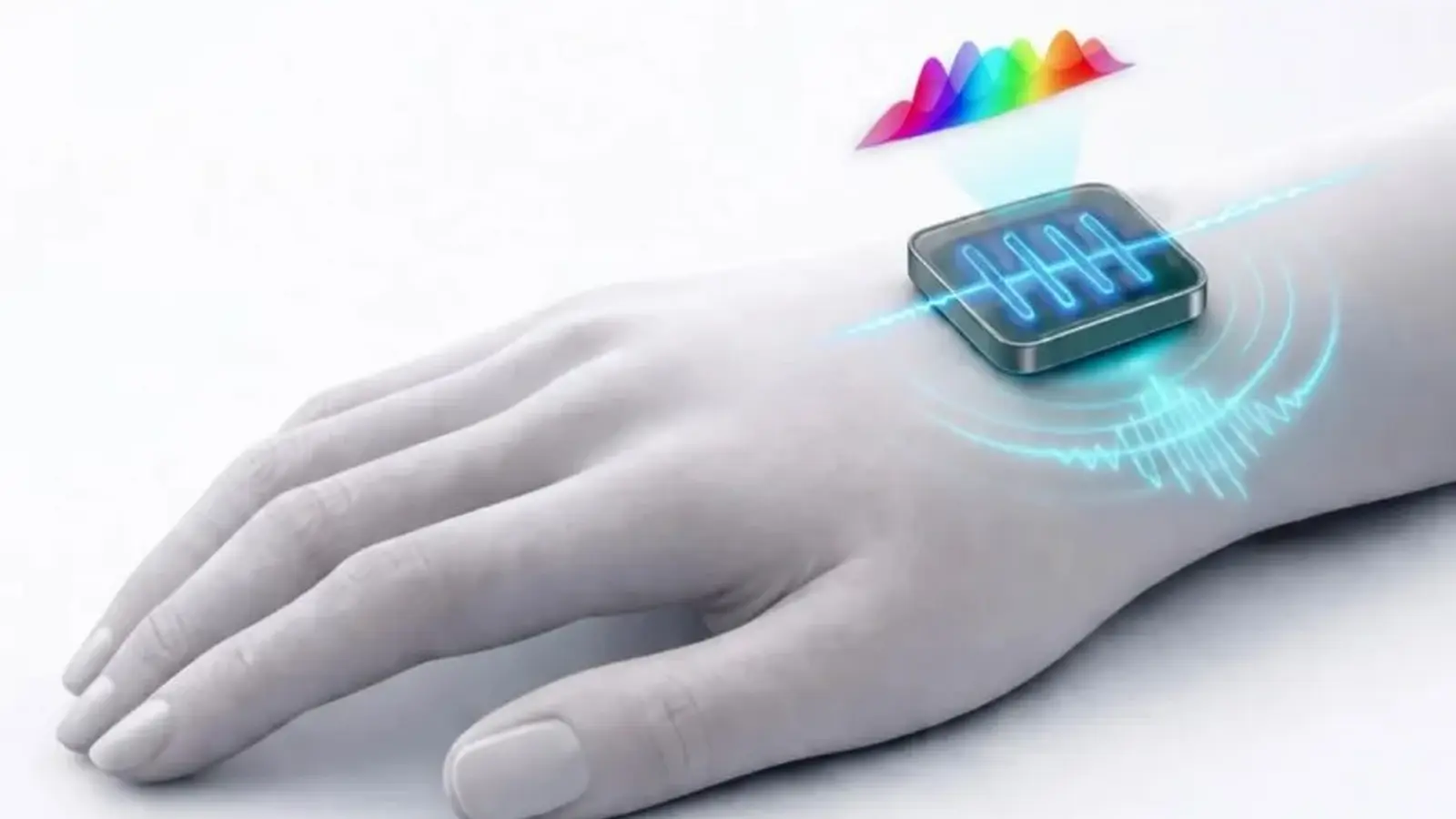
Imagine a wristwatch that can read the chemistry of your skin and blood without a needle. Small, affordable, and almost laboratory-accurate. That is the promise behind a new optical spectrometer sensor developed by researchers at the University of Cambridge.
A small chip with big accuracy
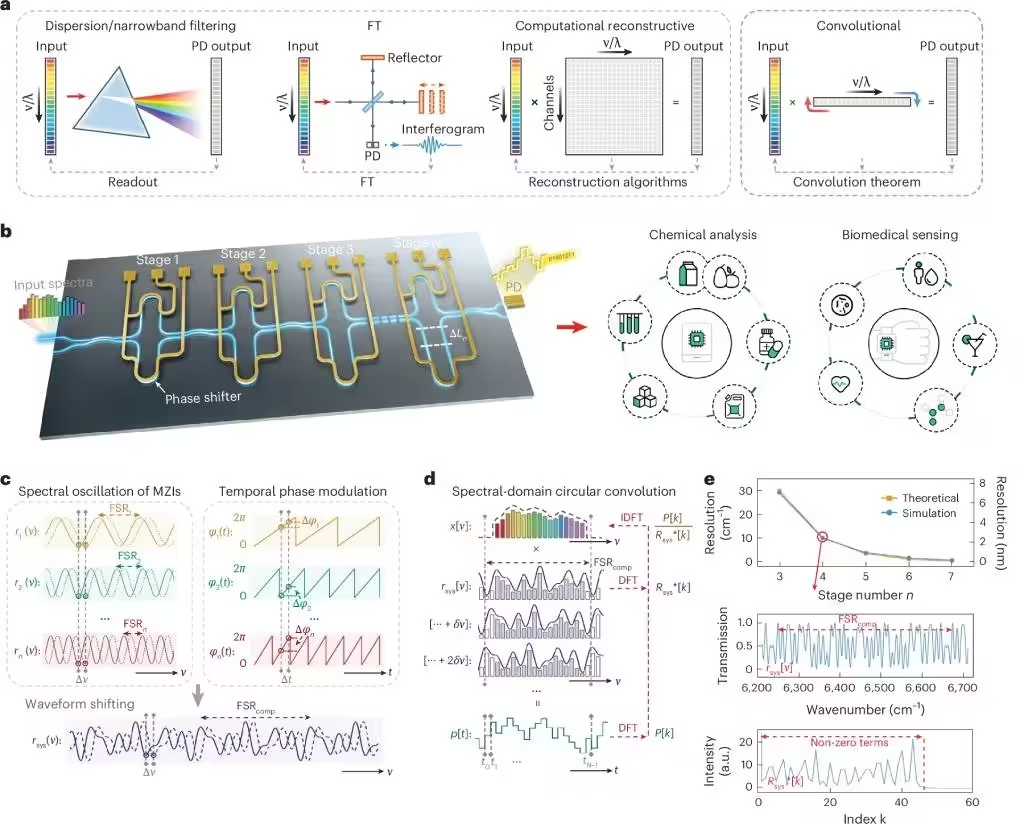
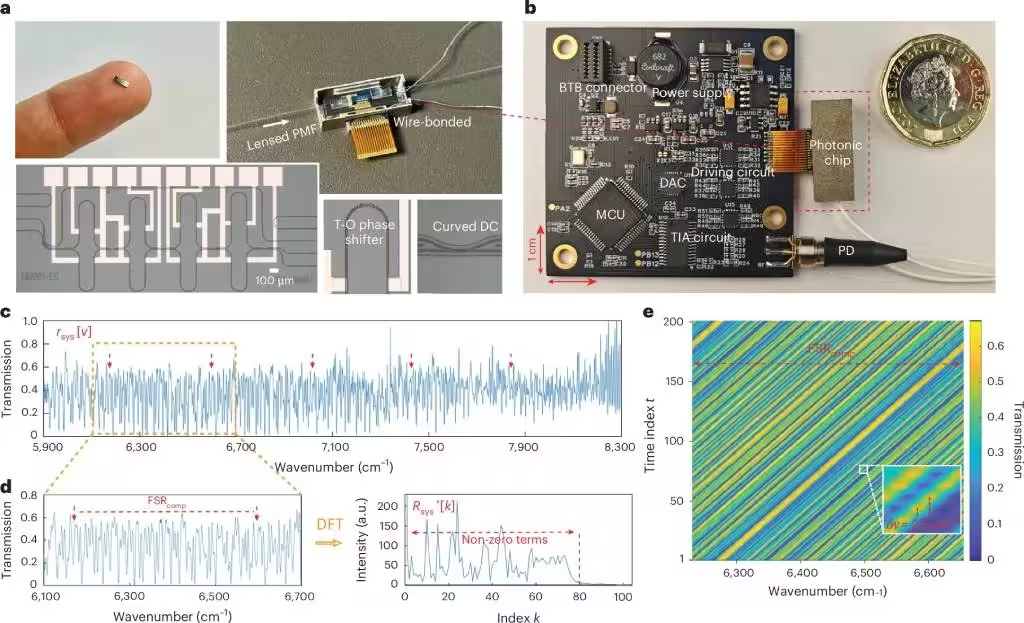
The team engineered the device on a silicon nitride photonics platform, packing light-guiding components and simple electronics into a compact footprint. The sensor measures near-infrared light across roughly 1200 to 1700 nanometres and converts those spectral fingerprints into biochemical readings in fractions of a second. In laboratory tests the device identified different materials with near-perfect accuracy and showed only a 0.01 percent discrepancy versus much larger professional spectrometers.
Why does that matter? Because miniaturizing optical spectrometers has historically meant trading performance for size. Small devices often struggle to spot subtle fluctuations in concentration or to separate overlapping signals. Cambridge researchers tackled that trade-off by redesigning the on-chip photonic elements to retain spectral resolution while cutting component count. Fewer parts. Lower processing demands. Less power draw. Simpler fabrication.
Practical scans: what it can detect and where it helps
The sensor has already demonstrated reliable measurements of skin moisture and of several blood-borne markers including alcohol, glucose and lactate. Those are the exact signals wearable makers and clinicians want to monitor continuously and non-invasively. Continuous glucose tracking without implanted sensors or finger pricks has been a long-sought goal. This new approach does not claim an immediate clinical product, but it opens a realistic pathway toward long-term, needle-free monitoring for people with diabetes.
Temperature resilience is another practical advantage. The device maintained stable performance from minus 20 up to 80 degrees Celsius, a range that outperforms many competing miniaturized spectrometers. That kind of robustness matters for consumer wearables that must work in different climates and in industrial or home environments where temperature swings are common.
Cost is striking as well. The researchers estimate a per-unit fabrication cost on the order of €9 when produced at scale. That low material cost combined with reduced power needs suggests manufacturers could place such sensors into smartwatches, fitness bands, and dedicated medical patches without dramatically raising price points.
There are clear caveats. Clinical-grade validation, long-term stability tests, and regulatory approval remain necessary steps. Real-world wearables present additional challenges: motion artifacts, skin contact variability, and the need for robust signal-processing algorithms to convert spectral data into medically meaningful values. The Cambridge work addresses the hardware bottleneck, but software and clinical pathways will determine how quickly the tech reaches patients and consumers.
In the context of related technologies, this sensor sits among a growing wave of on-chip photonic solutions that leverage silicon-compatible materials to bring optical sensing out of the lab. Unlike bulky bench-top spectrometers, integrated photonics enables volume manufacturing and tighter integration with existing consumer electronics. That integration will be critical if the aim is continuous, ubiquitous health monitoring rather than periodic, clinic-only testing.
"Our goal was to shrink the spectrometer without shrinking its capabilities," said a lead researcher at the University of Cambridge. "We wanted lab-level precision in a package that could realistically appear in everyday devices." The statement captures an important point: the device is not merely smaller. It is designed to preserve the measurement fidelity that clinicians and scientists need.
Next steps will focus on extended clinical trials, refining algorithms for real-world motion and skin variability, and partnering with manufacturers for pilot products. If those pieces fall into place, this chip could become a quiet revolution in how we monitor health—turning spectral light into timely, actionable biometric insight.


“The cosmos has always fascinated me. I write about space missions, astronomy, and the technologies pushing humanity beyond Earth.”

Discussion
Leave a Comment
Comments (1)
If it's really that accurate and cheap, why no trials yet? sounds promising but motion artifacts and different skin types will wreck readings imo. curious to see clinical data