
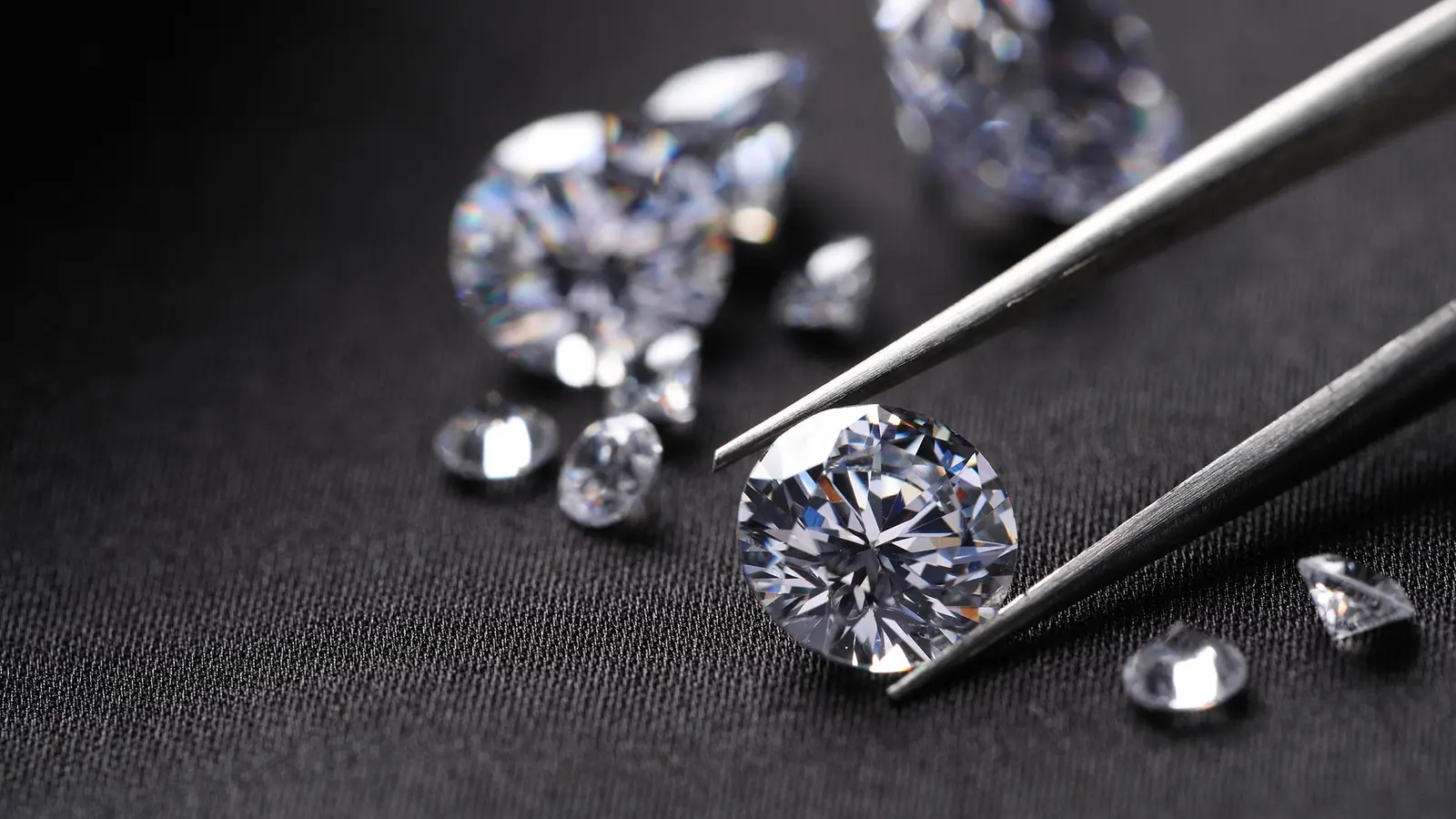
Imagine fragments smaller than a virus being born in a flash of light, hurled outward at speeds rivaling meteorites, and then gently plucked from a vacuum like jewels from thin air. That is close to what researchers at the Helmholtz-Zentrum Dresden-Rossendorf and the University of Rostock have accomplished: converting everyday plastic into nanometer-scale diamonds using intense laser pulses and catching those crystals intact for study.
Recreating planetary extremes in a laboratory
The experiment begins with a thin film of PET plastic, just one hundred micrometers thick. Short, high-energy laser pulses strike the film repeatedly. Each pulse launches a compression wave that forces carbon atoms into arrangements they would otherwise only adopt under pressures millions of times greater than Earth’s atmosphere and temperatures of several thousand degrees Celsius. Under those transient conditions carbon reorders into diamond in a matter of picoseconds.
The diamonds produced by this method are astonishingly small: roughly three nanometers across, which corresponds to about three thousand carbon atoms per particle. That scale is significant. The small size, high purity, and narrow size distribution achieved here are difficult to reproduce with conventional approaches such as detonation synthesis or high-pressure anvils.
Capturing diamonds that move like micrometeorites
Forming diamonds is one challenge. Catching them is another. When the compression wave exits the plastic into vacuum, the nascent nanodiamonds accelerate to velocities exceeding ten kilometers per second, comparable to small meteorites entering an atmosphere. To avoid destroying the particles on impact, the team designed a soft catcher: a water-soluble ionic gel that performs in vacuum and cushions the shot.
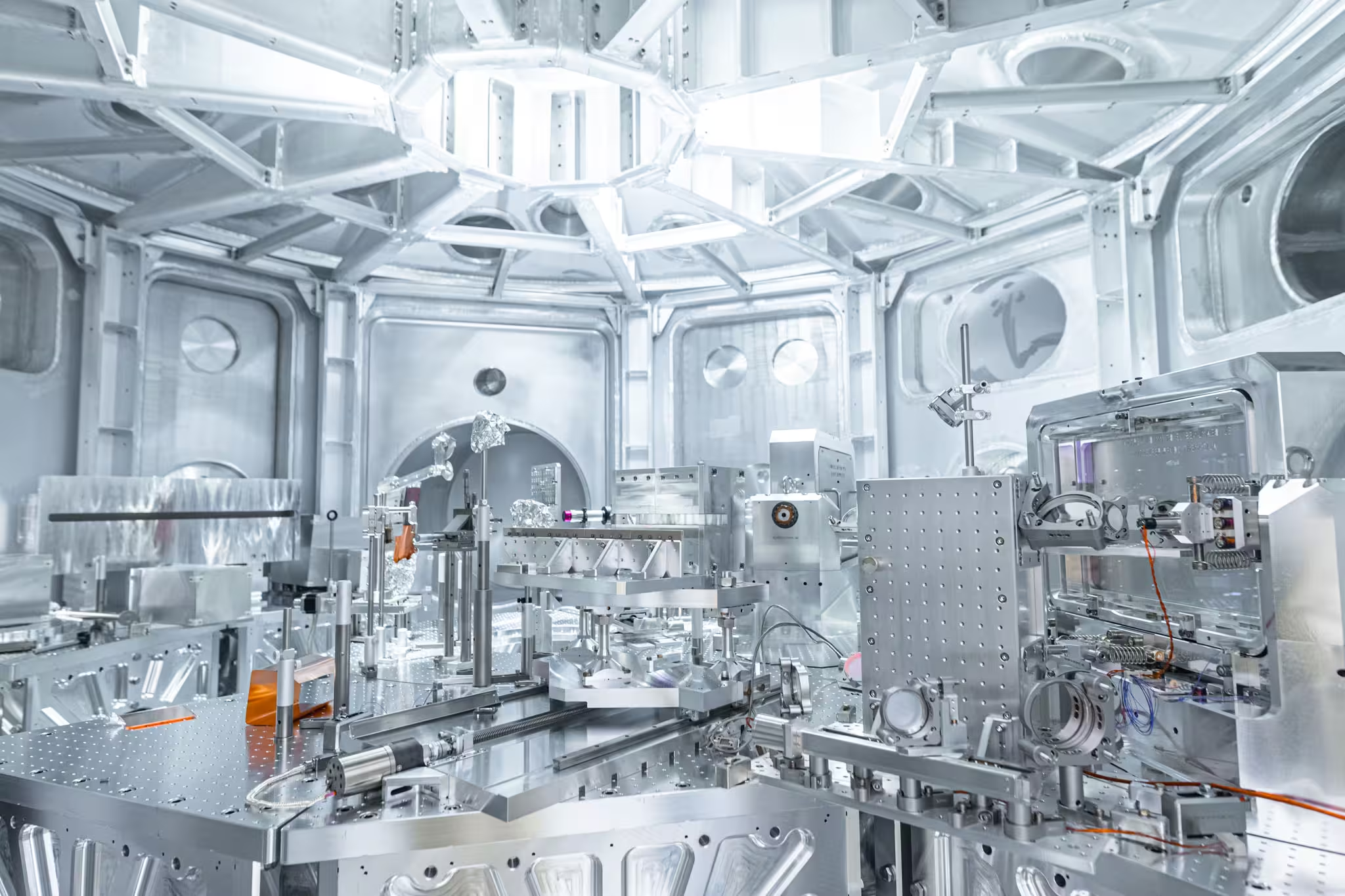
Experimental setup at the L4n-P3 experimental station of the ELI Beamlines facility south of Prague, where the nanodiamond production experiments were carried out.
Even though each laser shot can generate on the order of ten trillion individual nanodiamonds, collecting a usable sample still required dozens of pulses. The group fired the laser roughly three times per minute and combined about one hundred shots to recover a few hundred micrograms of material. That small mass was nonetheless sufficient for in-depth structural analysis with instruments capable of resolving individual atoms.
Why size and purity matter
Nanodiamonds already find use in polishing and abrasives, but their promise extends far beyond grit. At sizes of a few nanometers the fraction of atoms on the surface becomes large, which increases available reactive area and creates opportunities for chemistry and functionalization. More surface area means more sites for catalytic reactions per unit mass. That makes ultrafine diamonds attractive as catalysts or catalyst supports for processes such as splitting carbon dioxide with sunlight.
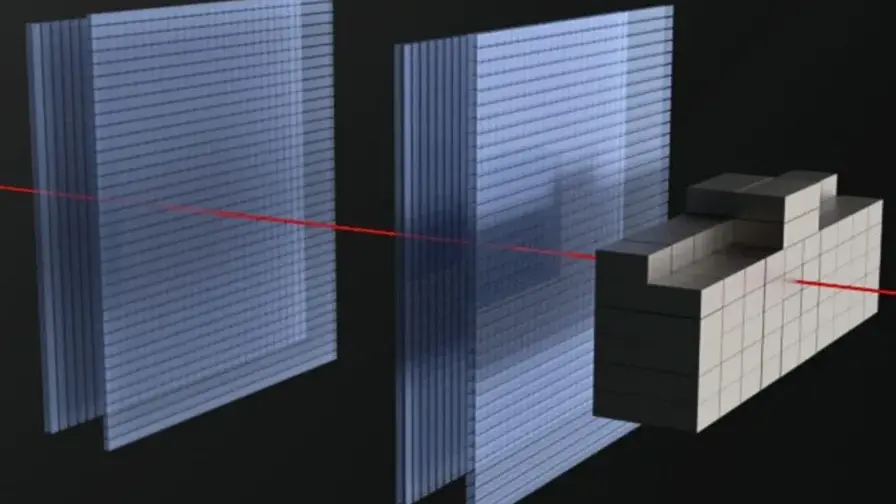
There is also a materials-science angle: small, uniform diamonds make better platforms for incorporating other atoms, a process known as doping. Adding nitrogen, silicon, or other impurities into the diamond lattice can produce color centers or spin defects that serve as highly sensitive quantum sensors. In medicine, doped nanodiamonds could become contrast agents for imaging or carriers for targeted drug delivery, owing to their stability and tunability.
Scaling up: lasers, fusion research, and manufacturing
One obstacle to broader use is production volume. The present experiments were conducted at the Extreme Light Infrastructure Beamlines facility, where high-energy pulses can be delivered at a modest repetition rate. Advances driven by fusion research and other large-scale physics projects are producing lasers that combine higher pulse energy with much higher repetition frequencies. If those technologies make their way into nanodiamond fabrication, output could rise from micrograms to milligrams and beyond, bringing the technique closer to industrial relevance.
Using plastic as the feedstock has additional advantages. The starting material is inexpensive and easy to handle, and it permits introduction of dopants directly into the precursor film. That simplifies the route to engineered nanodiamonds with tailored electronic, optical, or magnetic properties.
Putting the findings in context
This research sits at the intersection of high-energy-density physics and materials engineering. It borrows tools developed to probe the deep interiors of ice giants such as Uranus and Neptune and repurposes them for nanomaterials synthesis. The experiment demonstrates that diamond-forming processes under extreme compression can be fast, reproducible, and controllable enough to merit technical follow-up.
Beyond practical applications, the team also has scientific ambitions. They plan to push laser-driven compression to even higher pressures to attempt synthesis of BC8 carbon, a theoretically predicted carbon allotrope that would be denser than diamond and potentially combine hardness with reduced brittleness. Producing BC8 would open a new frontier in carbon allotropes that do not naturally occur on Earth.
Expert Insight
"The real novelty here is the marriage of extreme-pressure physics with scalable collection methods," says Dr. Laura Mitchell, a materials physicist not involved in the work. "Lasers have long been used to reach exotic states of matter for milliseconds at a time. Turning those fleeting states into useful, pure nanomaterials requires both precision and clever engineering. This team showed both."
Mitchell adds that if higher-repetition lasers arrive from the fusion community, the economics could shift quickly. "When you can run thousands of shots per hour instead of a few dozen, the pathway from laboratory curiosity to industrial feedstock suddenly becomes plausible."
Conclusion

By recreating planetary interior conditions in the lab and innovating a way to recover fragile products, researchers have unlocked a new technique for producing ultrafine diamonds from plastic. The method yields particles with tight size control and high purity, and it opens routes to engineered dopants and entirely new carbon phases. There are technical hurdles to scale, but the combination of laser technology and clever materials handling points toward an era in which high-energy lasers contribute directly to advanced materials manufacturing.

“The cosmos has always fascinated me. I write about space missions, astronomy, and the technologies pushing humanity beyond Earth.”

Discussion
Leave a Comment
Comments (1)
Wow, turning throwaway plastic into nanodiamonds sounds like sci-fi, and kinda awesome and scary at once. If that's real then...