
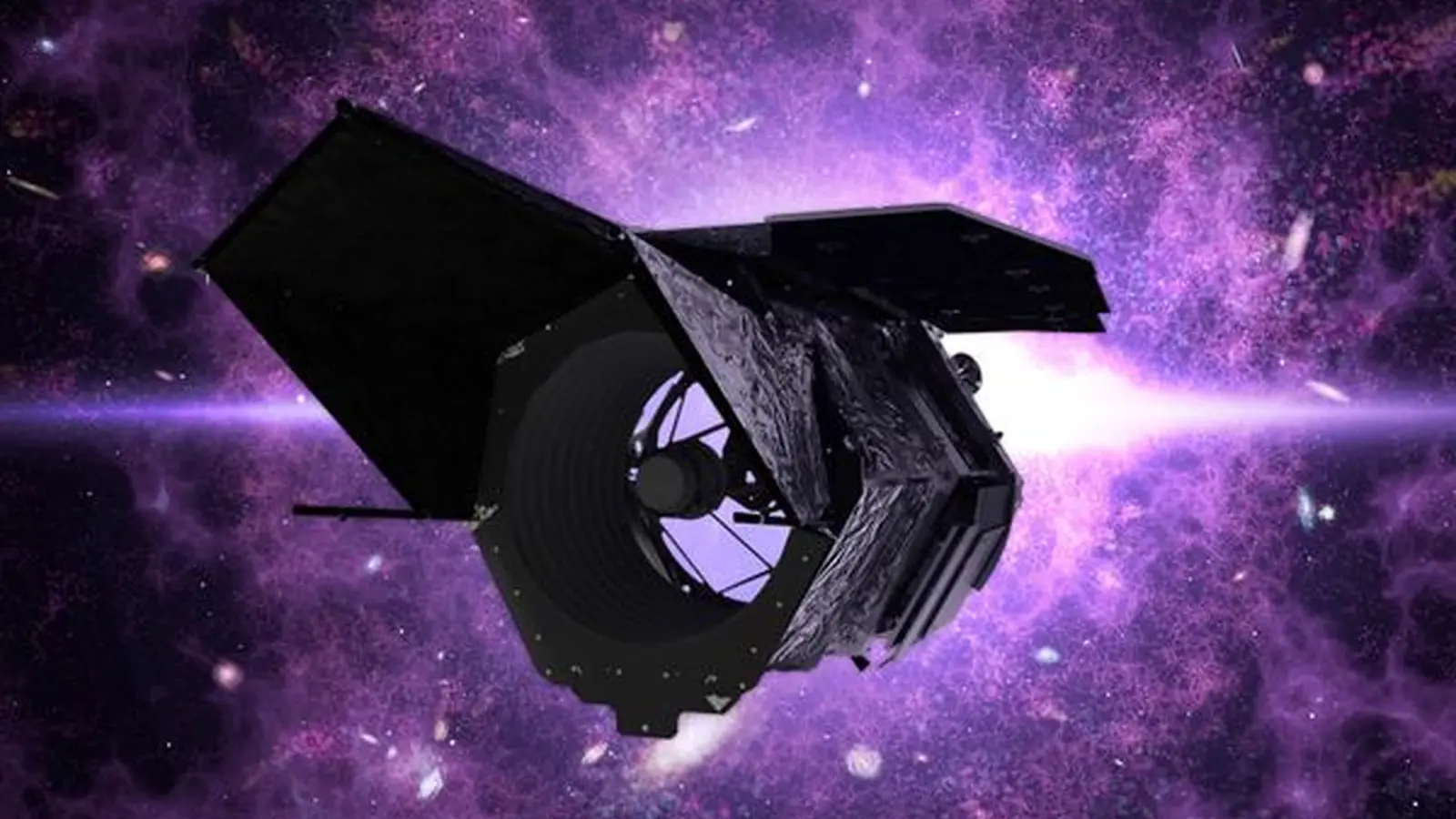
Imagine tuning a grand piano with the lights dimmed and an audience waiting. Every tiny fret, every millimeter matters. That analogy fits the work engineers performed on the Roman Space Telescope this autumn as they nudged a billion-dollar observatory into a level of optical precision few teams dare hope for.
Small moves. Big clarity.
Roman’s Wide Field Instrument is the mission’s workhorse for broad, deep surveys. After activation in September, teams at NASA’s Goddard Space Flight Center ran a deliberate battery of checks: the 18 detectors that tile the instrument’s focal plane, the element wheel that swaps filters and optical components, internal calibration LEDs, the thermal control system, and the motorized alignment mechanisms that set mirror positions. Each subsystem was exercised independently, then tested together to make sure the whole optical chain behaved exactly as expected.
The payoff came in measured numbers. Engineers had set an image-quality requirement of roughly 90 nanometers RMS — already an almost vanishing wavefront error, about a thousand times thinner than a human hair. After the final alignment and calibration steps, the Wide Field Instrument produced only 63 nanometers RMS. In plain terms, Roman’s optical performance is nearly 30 percent better than the mission team predicted.
Why that improvement matters
Higher image quality is not an aesthetic bonus. It directly increases the telescope’s ability to detect faint structure and subtle distortions in galaxies, which are the fingerprints of dark matter and the statistical signals used to probe dark energy. Sharper point-spread functions mean tighter shapes for galaxies, less blending between neighbors in crowded fields, and greater confidence in measurements that will underpin some of the most ambitious cosmological surveys of the next decade.
Those benefits compound across Roman’s planned surveys: billions of pixels captured across thousands of square degrees of sky. A modest reduction in optical error translates into clearer maps of mass distribution, more precise weak-lensing measurements, and improved photometric precision when combined with Roman’s filter set.
What the engineers actually did
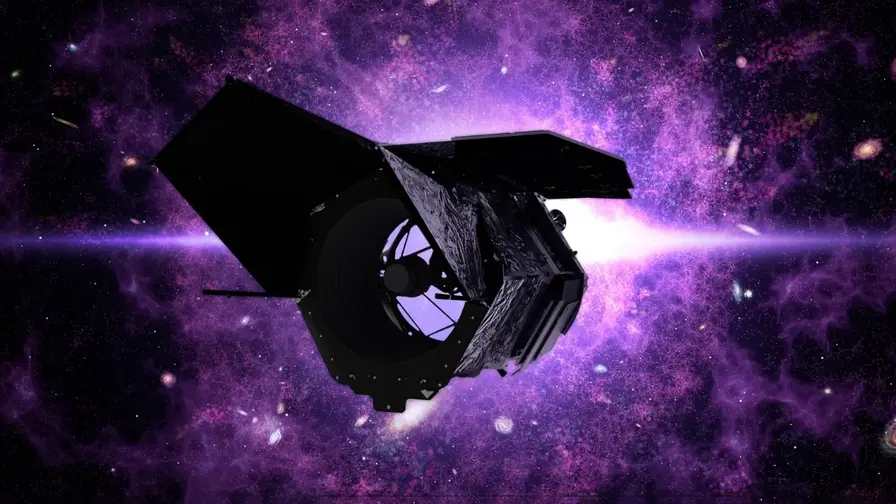
Not all corrections were dramatic. In fact, some were almost absurdly small. The secondary mirror was shifted by roughly one-sixteenth of the diameter of a human hair to adjust its height above the primary. To give a sense of scale the team used a terrestrial analogy: if that mirror spacing were scaled to the height of the Empire State Building, the change would be smaller than placing a single U.S. penny (about €0.01) on its tip. That tiny nudge improved focus and reduced residual wavefront error across the instrument’s field.
The coronagraph instrument began life slightly out of optimal focus, producing marginally blurred images at first. That problem was less severe than initial models suggested and was corrected by refining camera settings and mirror configurations. Work continues there to optimize deformable mirrors and demonstrate the coronagraph’s capacity to suppress starlight — a key step toward imaging faint circumstellar material or, eventually, planets around nearby stars.
Calibration, temperature control, and detectors
Calibration matters because detectors are not perfectly uniform. The Wide Field Instrument’s internal LEDs, which can produce a range of colors and intensities, were used to profile every detector’s response. Engineers adjusted gain, flat-field corrections, and bias offsets so that the 18 detectors behave as one coherent imaging surface. Thermal control checks ensured the observatory could hold stable temperatures that prevent subtle mechanical shifts and electronic drifts that would otherwise degrade image fidelity.
These procedures are familiar in optical engineering, but they take on extra importance in space. Launch vibrations, microgravity, and the vacuum environment all introduce differences compared with ground testing. The Roman team’s preparatory work paid off: the telescope arrived in orbit already close to optimal alignment, leaving only fine corrections to reach the final performance.
Context: how Roman fits with other observatories
Roman occupies a unique niche. Its Wide Field Instrument pairs Hubble-like image quality with a field of view hundreds of times larger than Hubble’s, and it complements observatories such as the James Webb Space Telescope, which excels at deep, targeted observations in the infrared. Where Webb peers deeply into small patches, Roman will sweep wide and find the statistical signatures of the universe’s growth and structure.
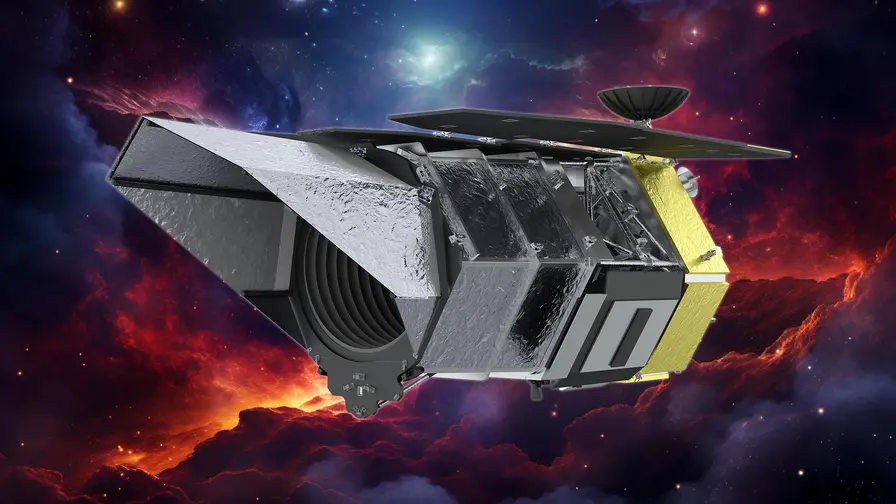
For cosmologists and galaxy evolution researchers, Roman’s sharper images will improve measurements of weak gravitational lensing, galaxy clustering, and supernova distances. For exoplanet scientists, the coronagraph will test high-contrast imaging technologies needed to tease out faint companions near bright stars. And for the broader astronomy community, Roman will deliver richly calibrated, wide-area datasets that will feed countless legacy projects for years to come.
Expert Insight
"Optical performance is the foundation for everything Roman will do," said Dr. Elena Vargas, an astrophysicist and instrumentation specialist not directly involved with the mission. "Hitting 63 nanometers RMS gives the science team more margin and allows them to pursue demanding measurements with greater statistical power. That kind of headroom is invaluable when you are trying to measure cosmic expansion and the invisible scaffolding of dark matter."
Her comment echoes the sentiment of engineers who emphasized careful modeling, metrology, and iterative testing as the reason the telescope exceeded its predictions. Collaboration across NASA Goddard, industry partners, and academic teams produced a system that required only minor in-orbit tuning to reach world-class performance.
Forward look: what’s next
With the Wide Field Instrument delivering improved optics, Roman will shift into regular science operations after final checks and calibration sequences. Engineers will continue to refine coronagraph settings and demonstrate starlight suppression modes. The mission’s survey planning teams will use the latest performance numbers to optimize observation strategies, exposure times, and filter choices for each program.
Longer term, Roman’s data products will be shared with the international scientific community, and its sharper images will increase the value of joint analyses with ground-based surveys and space telescopes in complementary wavebands. Technology demonstrations performed by the coronagraph will inform the design of future missions aimed at direct imaging of Earth-like exoplanets.
Conclusion
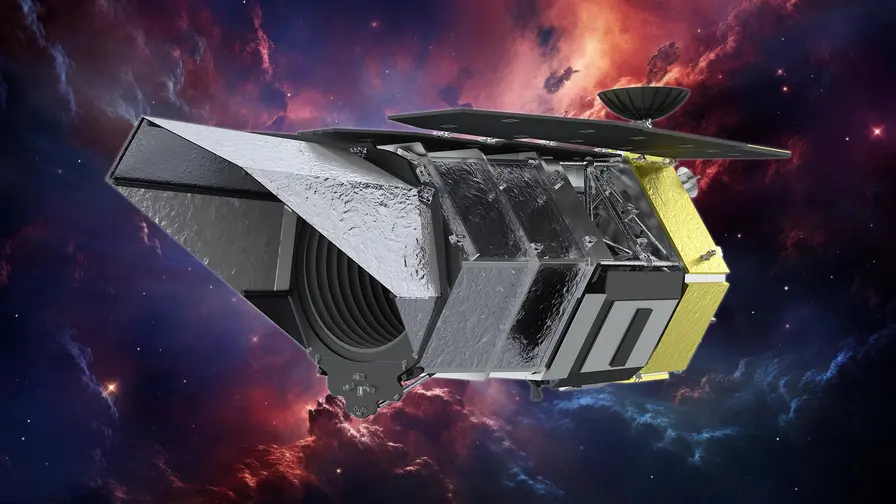
Fine tuning in orbit has turned a near-perfect telescope into an instrument that surpasses its benchmark by a significant margin. Roman’s improved optical performance strengthens its promise to map the cosmos with clarity, to refine measurements of dark energy and dark matter, and to mature technologies for future exoplanet imaging. Small adjustments, meticulous calibration, and careful engineering have yielded a tangible scientific advantage that will be measured in richer datasets and sharper discoveries over the mission’s lifetime.

“The cosmos has always fascinated me. I write about space missions, astronomy, and the technologies pushing humanity beyond Earth.”

Discussion
Leave a Comment
Comments
No comments yet. Be the first.