Read MoreOliver Hayes2026-09-141How Heated Molten Salts Turn Polyethylene Waste into FuelOak Ridge researchers used molten aluminum-containing salts to convert polyethylene into gasoline- and diesel-like fuels below 200°C, avoiding noble metals and external hydrogen while raising scale-up questions.
Read MoreNora Schmidt2026-09-062Heat That Makes Cold: A New Solid-State Cooling TrickResearchers created a prototype heat-driven elastocaloric cooler using two nickel-titanium foils that converts waste heat or solar thermal energy into cooling, pointing to compact, energy-efficient cooling options.
Read MoreOliver Hayes2026-09-033Remote Control: Chicago Commands a Korean Brain ImplantScientists demonstrated a wireless brain implant in South Korea that was remotely controlled from Chicago. The RAPIDO system delivered drugs and light to freely moving rats, showing repeatable behavioral effects and remote operation over 10,596 kilometers.
Read MoreOliver Hayes2026-09-022How Chatty Bots Are Quietly Shaping Our Behavior and SpeechA theoretical study warns that frequent interactions with customer-service AI may push people toward more predictable, machine-friendly speech and behavior, a shift the authors call 'robotoid humanness'.
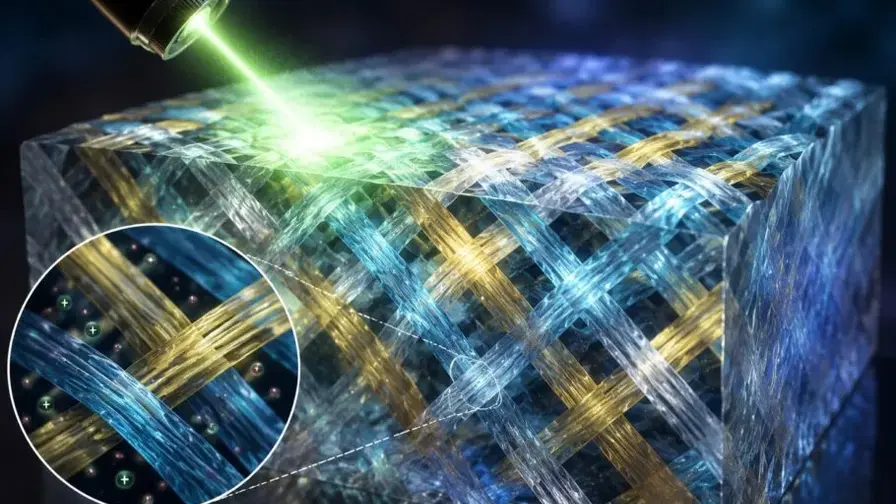
Read MoreOliver Hayes2026-08-264A Crystal That Weaves Electric Threads for Future MemoryResearchers observed a ferroelectric crystal self-assemble a three-dimensional, interlaced network of electric domains. The structure is optically tunable and suggests new directions for photonic memory and neuromorphic hardware.
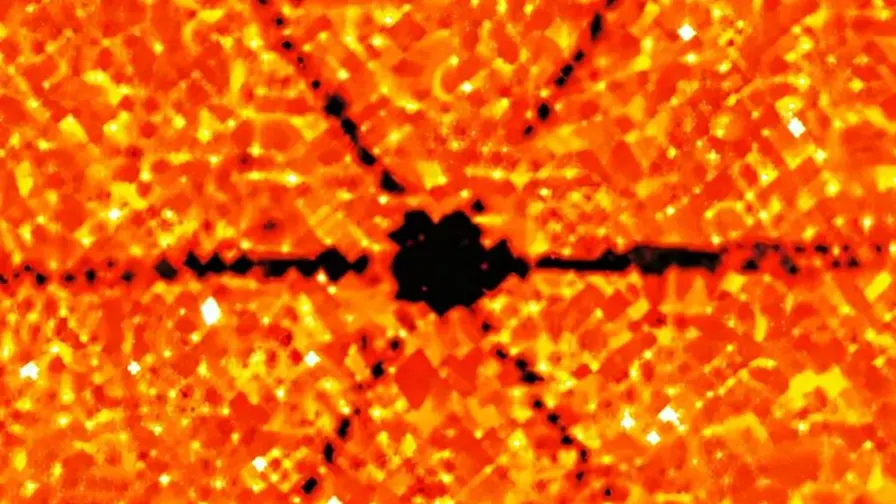
Read MoreNora Schmidt2026-08-252Phonon Focusing at Room Temperature Rewrites Heat ControlResearchers have observed focused, ray-like phonon heat flow at room temperature in boron arsenide, suggesting new possibilities for nanoscale thermal management in electronics and quantum devices.
Read MoreNora Schmidt2026-08-23How Magnetic Switching Could Shrink Computing's Energy BillA University of Edinburgh team proposes optimized magnetic-field waveforms to flip memory bits with far lower energy, potentially outperforming DRAM and MRAM and approaching the Landauer limit for irreversible computation.
Read MoreNora Schmidt2026-08-202Quantum Breakthrough: 15-Minute Calculation VerifiedIBM and University of Chicago researchers ran a 15-minute quantum computation using 70 logical qubits, pairing error correction with a verification method that proves the result is classically hard and reliable.
Read MoreNora Schmidt2026-08-182Chinese 2D Memory Chip Stores a Bit Using a Single ElectronChinese researchers report a 2D flash-memory prototype that traps a single electron at room temperature using a graphene-enhanced floating gate, offering much lower energy per bit and promising higher-density, energy-efficient storage.
Read MoreOliver Hayes2026-08-172Ancient Sea Reptile Preserved Its Organs for 245M YearsAn exceptionally preserved 245-million-year-old Austronaga minuta fossil reveals stomach, liver and intestines, offering fresh insights into early archosaur adaptations to marine life and Triassic ecosystems.
Read MoreNora Schmidt2026-08-172How Researchers Turn Stubborn PVC Waste Into Engine OilVirginia Tech researchers developed a chemical route that converts hard-to-recycle PVC into polyalphaolefin-like lubricant oil, potentially diverting waste while producing valuable synthetic lubricant components.
Read MoreOliver Hayes2026-08-163How Scientists Bypass Kirchhoff to Direct Heat FlowResearchers propose a theoretical device that breaks Kirchhoff's reciprocity to direct thermal radiation one way while storing that setting. Applications range from improved solar capture and thermal management to infrared sensing and thermal memory.
Read MoreOliver Hayes2026-08-162Japanese Team Converts Male Mouse Embryos to Fertile FemalesJapanese scientists used a CRISPR-based tool called Y-CUT to remove the Y chromosome from male mouse embryos, producing healthy, fertile XO female mice and raising new possibilities for reproductive biology and conservation.
Read MoreOliver Hayes2026-08-03How Quantum Dots and OLEDs Give Night Vision Real ColorScientists built a lightweight prototype using mercury telluride quantum dots and a two-layer OLED to convert infrared into full-color images. The semi-transparent glasses reveal simultaneous normal and IR-enhanced vision, with implications for prosthetics and sensing.
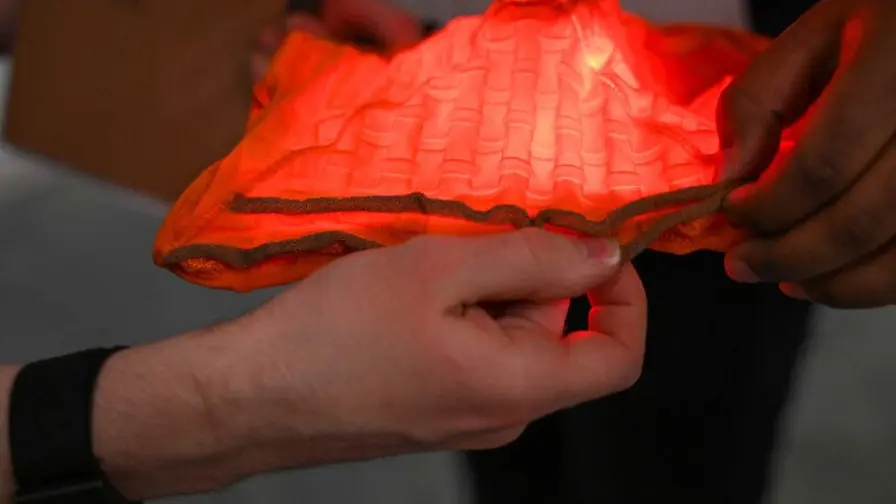
Read MoreNora Schmidt2026-08-01Knitted Fabrics That Snap: Programmable Textile SwitchesHarvard engineers turned machine-knitted fabric into programmable, multistable devices: snap-through textiles that act as mechanical switches, sensors, and reconfigurable lampshades using conductive yarn and standard knitting machines.
Read MoreOliver Hayes2026-07-302Light-Steered Electron Beams Open New Routes in ChipsTwo-color lasers steer a narrow electron beam through a semiconductor without applied voltage. University of Michigan researchers demonstrate light-controlled photocurrents via quantum interference, opening paths for optoelectronic routing and sensors.
Read MoreOliver Hayes2026-07-283Earth’s Core Could Be Up to 1000°C Cooler Than ThoughtNew high-pressure experiments suggest iron in Earth’s core melts at temperatures up to 1,000°C lower than prior estimates, which could explain how the planet’s magnetic field stayed active for billions of years.
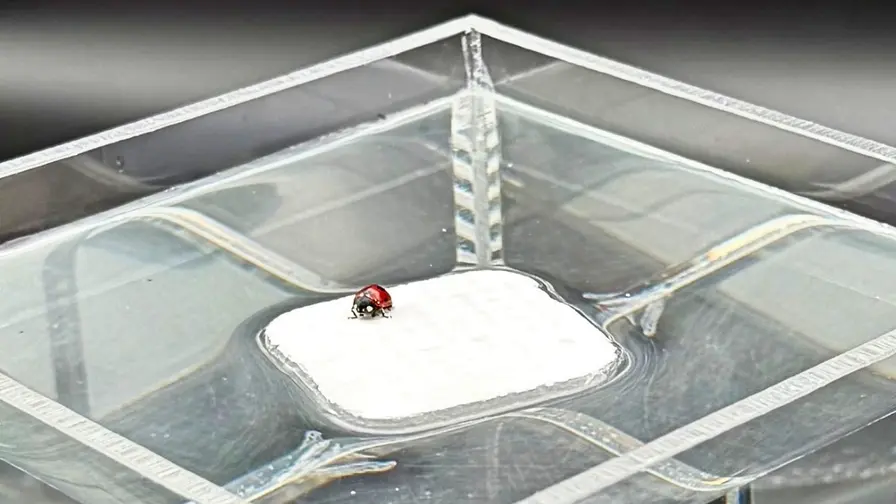
Read MoreOliver Hayes2026-07-273Lung-Inspired Hydrogel From MIT Lets Wearables BreatheMIT researchers developed a lung-inspired, air-permeable hydrogel that lets oxygen and water vapor pass while keeping 70 percent water, improving wearable comfort and long-term ECG monitoring.
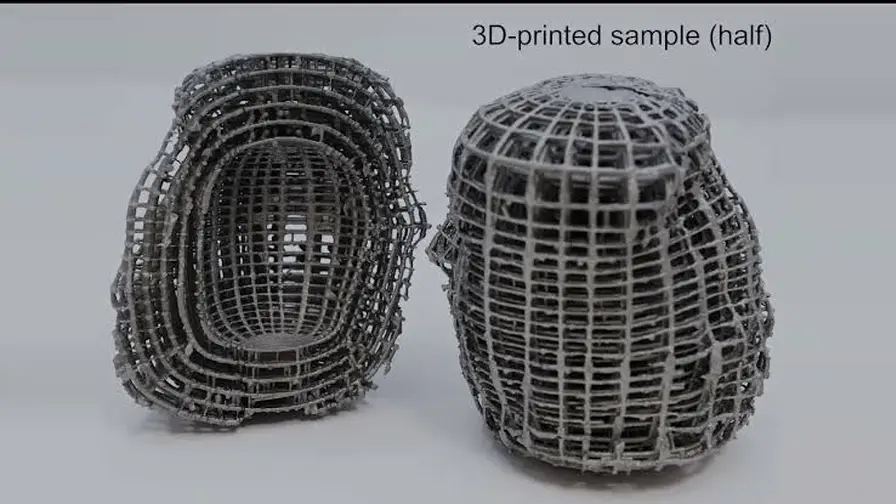
Read MoreOliver Hayes2026-07-2533D Thermal Cloak Hides Objects from Infrared Eyes NowA 3D-printed aluminum-and-rubber thermal cloak reroutes heat around complex shapes, hiding them from infrared cameras while stabilizing internal temperatures, with implications for electronics, defense, and adaptive heat management.
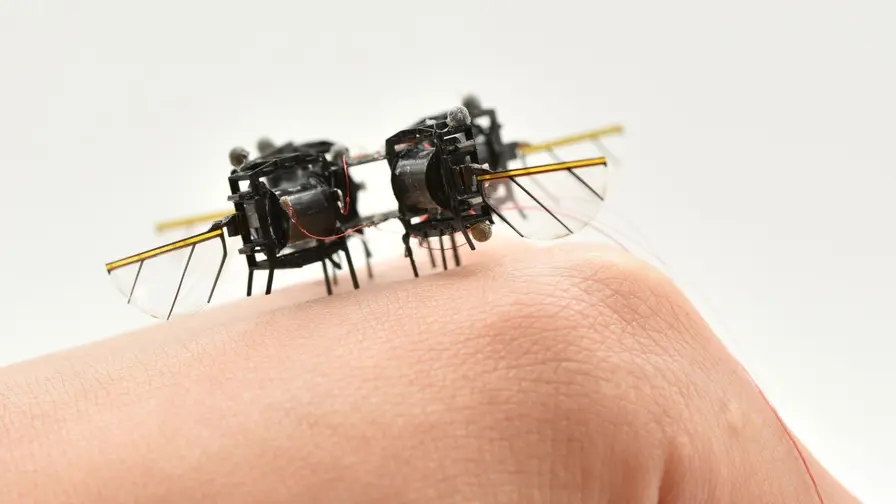
Read MoreNora Schmidt2026-07-224Tiny Insect-Scale Robot Now Flips with Insect AgilityMIT teams taught a microcassette-sized flying robot to perform insect-like maneuvers using a two-step AI controller. The system pairs a powerful planner with a learned policy to enable rapid, robust aerial flips.