
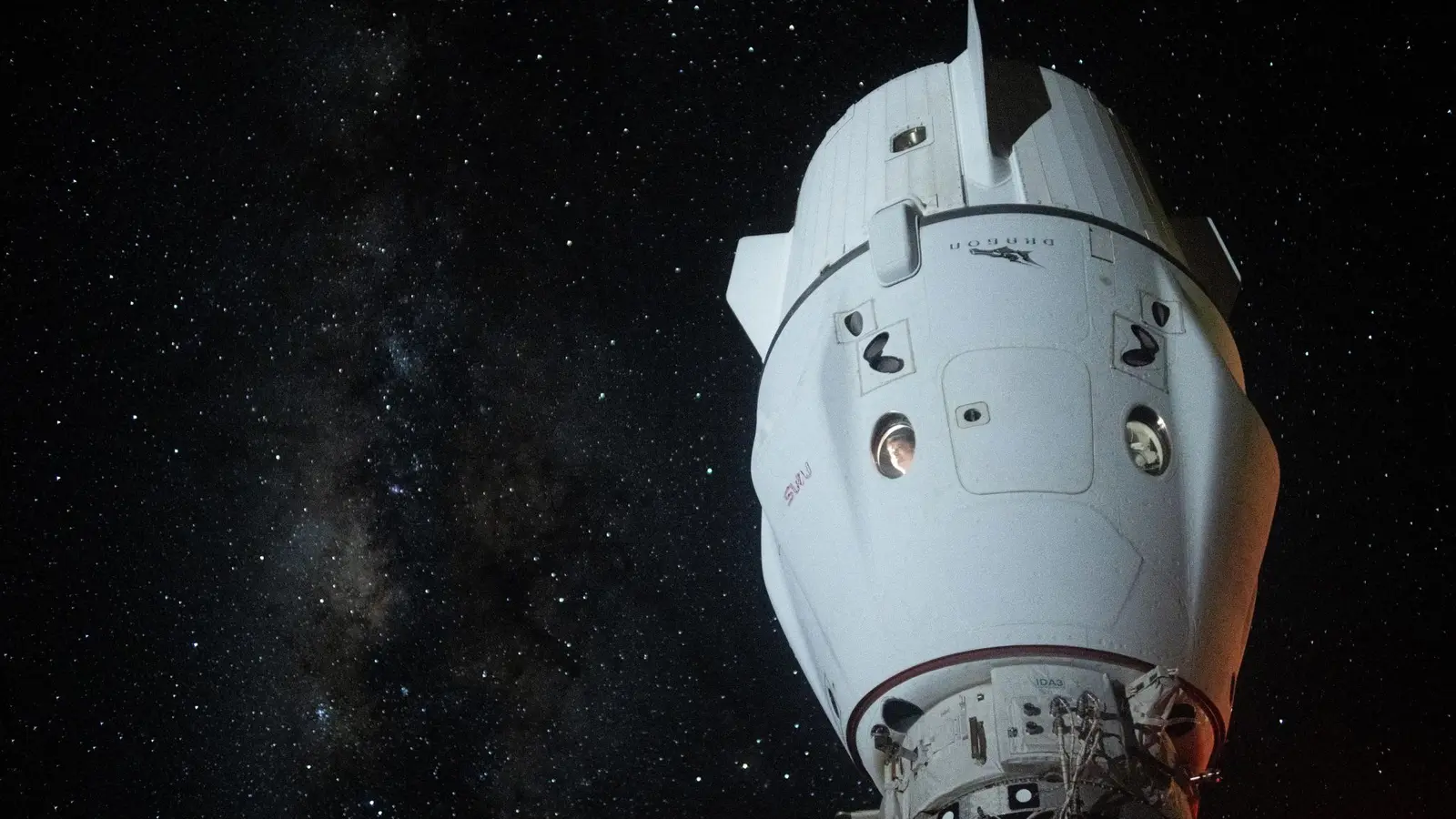
Something small, invisible, and highly reactive has paused one of NASA’s next crewed flights. During routine prelaunch checks engineers found an oxidizer leak in the Dragon spacecraft’s propulsion system, and that discovery has put the Crew-13 mission on hold while teams hunt down the source and ensure the vehicle is safe for flight.
Oxidizers are the chemical partners that let rocket propellants burn. In a spacecraft’s maneuvering system they help produce thrust for attitude control, abort maneuvers, and small docking adjustments. A leak can change pressure and temperature inside plumbing, contaminate components, and in the worst case, create conditions that make a system unreliable when crews are onboard. That is why neither NASA nor SpaceX will proceed until engineers can be confident the spacecraft meets strict safety margins.
.avif)
The SpaceX Crew-13 members pose for a portrait in their pressure suits during a preflight training session at the company’s headquarters in Hawthorne, California. From left are, Roscosmos Sergey Teteryatnikov, NASA astronauts Jessica Watkins and Luke Delaney, and CSA (Canadian Space Agency) astronaut Joshua Kutryk.
What engineers are doing now
Teams from both organizations shifted into diagnostic mode as soon as the leak showed up during prelaunch processing. Additional leak checks, pressure and flow tests, and a detailed review of telemetry and ground test logs are underway. Technicians will replace or repair any component that falls outside tolerance, then revalidate the entire propulsion system through a series of repeatable checks.
That work takes time. Spacecraft plumbing is accessible in the cleanroom environment used for final processing, but every intervention must follow flight hardware procedures and be documented. NASA has said it will not set a new launch date until the inspections and any corrective work are complete and the agency has an adequate safety case to support carrying astronauts.


The four members of NASA’s SpaceX Crew-13 mission to the International Space Station display their mission plaque inside a training mockup of a space station module. From left are, Commander Jessica Watkins and Pilot Luke Delaney, both from NASA, and Mission Specialists Joshua Kutryk of CSA (Canadian Space Agency) and Sergey Teteryatnikov of Roscosmos.
Crew-13 is scheduled to ride a Falcon 9 rocket from Space Launch Complex 40 at Cape Canaveral Space Force Station in Florida once cleared. The flight will carry NASA commander Jessica Watkins and pilot Luke Delaney, accompanied by Canadian Space Agency astronaut Joshua Kutryk and Roscosmos cosmonaut Sergey Teteryatnikov. On arrival they will integrate into Expedition 75 aboard the International Space Station, joining that long-duration team for research and station operations.
Why does this matter beyond one launch slip? Because any launch delay affects station crew rotations, cargo schedules, and experiment timelines. Short cascades can ripple into later missions, so mission managers weigh schedule pressure against safety margins. Two weeks before launch, crews enter quarantine at Johnson Space Center to reduce illness risk. That window is also part of final mission cadence, so shifting the launch date reshuffles preflight plans.
Expert Insight
"An oxidizer leak is not necessarily dramatic, but it is nontrivial," says Dr. Elena Ramirez, a propulsion systems engineer who has worked on liquid propulsion test programs. "You can think of it like a slow drip in a hydraulic system on an aircraft. Left unchecked, it erodes margins and can change system behavior under flight conditions. The right approach is controlled: isolate, measure, repair, and validate. That protects both hardware and crew."
SpaceX and NASA will publish updates as troubleshooting proceeds and as they determine when Dragon is ready to fly. For the public and mission supporters this is a reminder that human spaceflight depends on thousands of small details lining up perfectly. A tiny fault can prompt extensive scrutiny, because the stakes are very high.
Spaceflight pushes the envelope of engineering. Sometimes the envelope pushes back. Teams now have the time they need to find the leak, fix it, and return Crew-13 to the launch manifest when safety and data allow.

“The cosmos has always fascinated me. I write about space missions, astronomy, and the technologies pushing humanity beyond Earth.”

Discussion
Leave a Comment
Comments (2)
Been on test stands, leaks are maddening. Good they caught it now, still gives me the jitters, if that's real then... Fingers crossed
Wait, an oxidizer leak? sounds small but pressure changes can be nasty… is this even true? hope they don't rush it.