
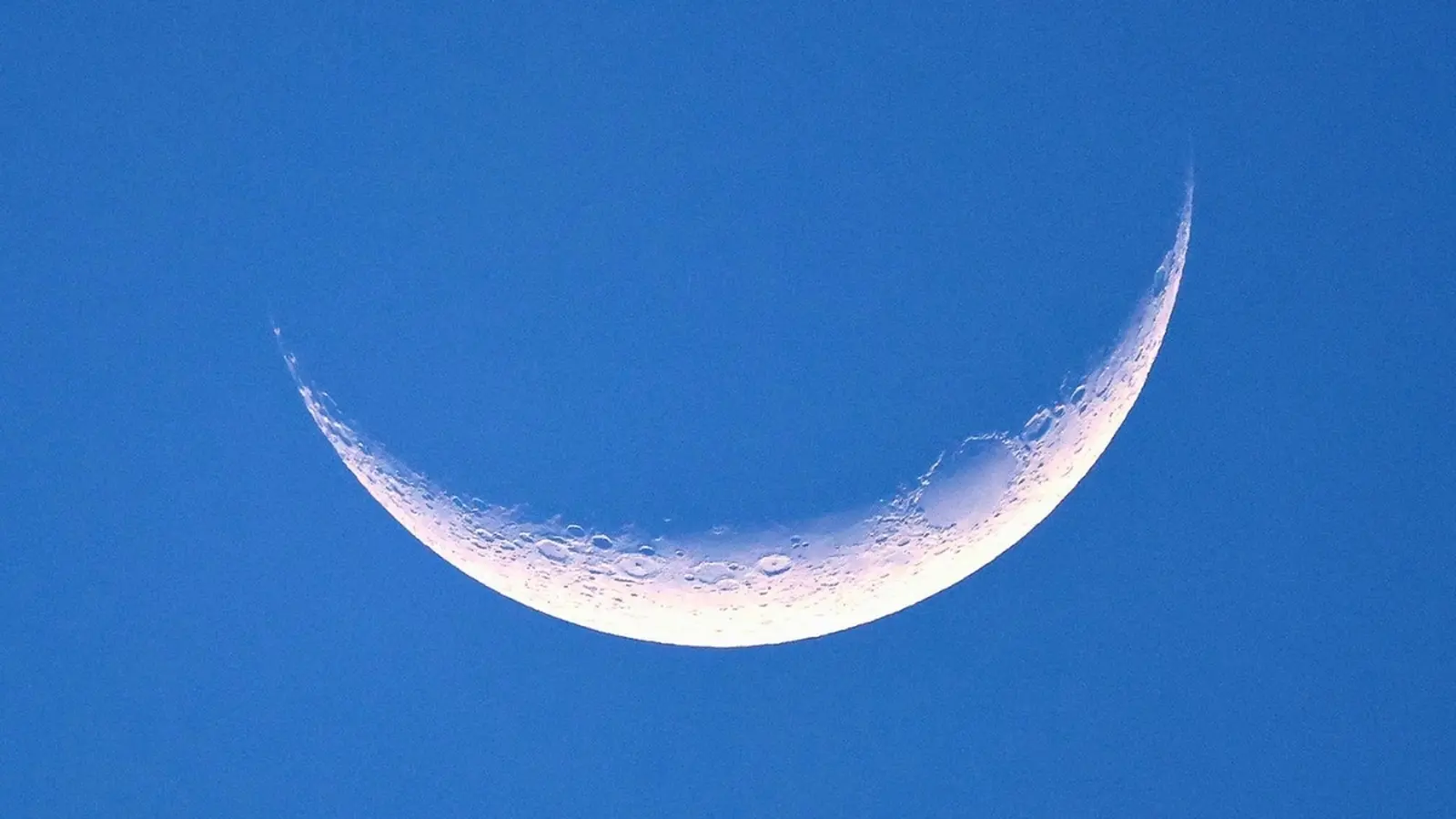
Look up on the afternoon of June 17, 2026. You might see the Moon quietly blot out one of the brightest planets in our sky, and yes, you can do it in broad daylight.
When and where this happens
The central moment of the event is 16:40 EDT (20:40 UTC) on Wednesday, June 17. Under dark skies after sunset the occultation will be visible across northeastern South America. Earlier, while the Sun still sits fairly high, observers across the Caribbean, the contiguous United States, northern Mexico, and southern Canada will witness the Moon slide in front of Venus during daytime.
Why is this unusual? Venus rarely wanders far from the Sun, never exceeding about 47 degrees in elongation as seen from Earth. For this occultation Venus will sit roughly 38 degrees from the Sun, comfortably distant enough to be spotted in a deep blue sky. The Moon will be a thin waxing crescent, about 11 percent illuminated, having passed New phase on June 15.
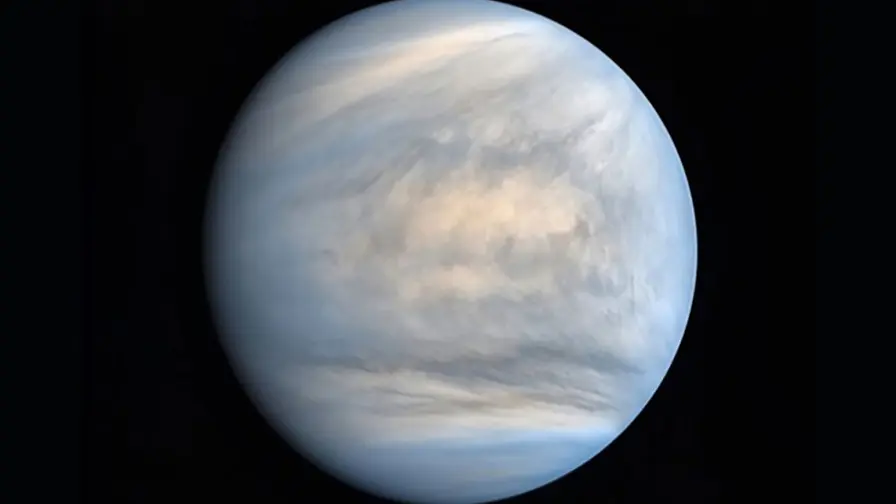
The planet itself will still be bright: Venus will shine near magnitude -4 with a 15 arcsecond disk around 74 percent lit. From first contact to last the Moon takes only about 29 seconds to cover and then uncover the planet at a typical observing site.

Why amateur astronomers are excited
This is the kind of sight that blurs the line between routine and rare. Lunar occultations of bright planets are memorable at night; daytime occultations are rarer because you must see a small, bright dot against a bright sky. Venus is the only planet bright enough to be plainly visible during such an event, and the geometry this week favours wide swathes of North America.
There are three lunar occultations of Venus in 2026. The June 17 event is the first; the next two occur on September 14 in Southeast Asia and on November 7 off the southern tip of South America. For observers in the contiguous United States, this is among the last favorable daytime occultations of Venus until the 2029 to 2031 window.
Curious physics note: Venus reflects an enormous fraction of incident sunlight—about 70 percent—because of its dense cloud tops. The Moon, by contrast, returns less than 14 percent. Up close the lunar surface looks like worn asphalt. From a distance, however, that small returned patch of light appears pearly against a blue sky, which helps make the occultation visually striking.
Practical tips for seeing and recording it
Seeing Venus in daytime takes a bit of persistence. Start by finding the Moon first. Then sweep the field to catch the planet nearby. A cloudless, deep-blue sky is your ally. Binoculars or a small spotting scope with a wide field will let you frame both the crescent and Venus together. If you record video, use manual focus. Autofocus often fails to lock on the daytime Moon and can ruin the clip.

Try a wide-angle view that captures the Moon and a sliver of sky; when Venus disappears it will slip behind the Moon's dark limb, then reappear on the opposite side. For photographers, a short focal length reduces the chance of losing the target to tracking errors. For those who prefer simple stargazing, this is a great excuse to set up a little sidewalk astronomy with friends.
If you want exact contact times for your location, the International Occultation Timing Association (IOTA) publishes ingress and egress timings for selected sites. Planetarium apps like Stellarium will also let you zero in on local circumstances and simulate the event in advance.
Two more celestial notes: the Moon will pass roughly 2.5 degrees north-northeast of Mercury on the evening of June 16, just after Mercury reaches greatest eastern elongation at 24.5 degrees. And scant hours after the Venus occultation, the slender waxing crescent will occult the open cluster Messier 44 (Praesepe) in Cancer—a dusk treat favoring the southeastern United States. Venus will pass just north of Praesepe on June 19.
Expert Insight
"Daytime occultations are deceptively simple to describe but surprisingly thrilling to observe," says Dr. Elena Moreno, an observational astronomer. "The contrast between Venus’s brilliant cloud tops and the Moon’s muted surface creates a fleeting, textbook demonstration of reflectivity, geometry, and timing. For both educators and backyard observers, events like this are ideal moments to explain orbital mechanics without slides or simulations—just the sky above."
Whether you record video or simply watch with the naked eye, the event offers a concise lesson in celestial motion: small shifts in angle, and two familiar objects perform an elegant dance across the daytime dome. Don't miss it.

“The cosmos has always fascinated me. I write about space missions, astronomy, and the technologies pushing humanity beyond Earth.”

Discussion
Leave a Comment
Comments (2)
is this even true? daytime occultation across the US sounds wild. how do you spot a 15 arcsec disk in a blue sky w/out a scope, any tips?
wow, didn't expect a daytime Venus occultation, gonna try binoculars, fingers crossed for clear sky so cool!