

Imagine a cell that will not stop working even when its fuel tank is empty. That is the tactical twist scientists have just exploited against one of blood cancer's toughest foes.
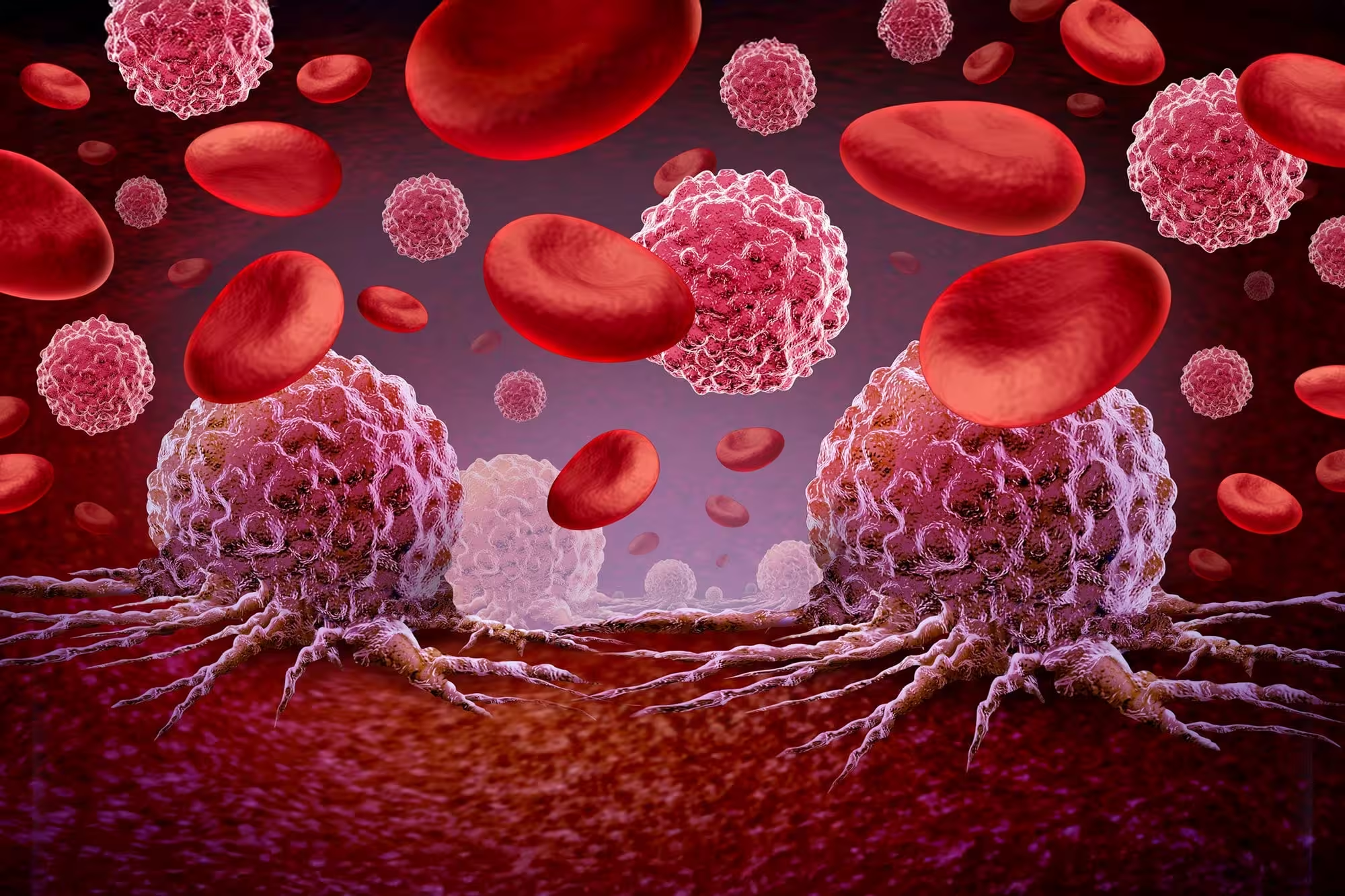
Leukemia is a type of cancer that affects the blood and bone marrow, where blood cells are produced. It typically causes the uncontrolled growth of abnormal white blood cells, which crowd out healthy blood cells and interfere with the body’s ability to fight infections, carry oxygen, and prevent bleeding.
Researchers from the University of Gothenburg in Sweden and Case Western Reserve University in Cleveland have built an experimental therapy that does not attack DNA to kill malignant cells. Instead, it creates a metabolic trap: stop the cancer cell from producing energy, but also stop it from switching off the high-demand processes that normally conserve power. The result is catastrophic stress and cell death.
Turning metabolism into a weapon
Acute myeloid leukemia, or AML, progresses rapidly and often resists standard treatments. The new approach targets AML's appetite for energy rather than its genetic code. At the heart of the strategy is mTOR, a protein complex that acts like a cell's traffic controller for growth and metabolism. When resources are ample, mTOR tells the cell to grow, divide, and maintain high activity. When resources are scarce, it signals the cell to conserve.
The team designed a small molecule named AcTor that interferes with a signaling protein upstream of mTOR. AcTor allows growth signals to keep firing even when the cell's mitochondria are being sabotaged. The researchers combined AcTor with ixazomib, a proteasome-inhibiting drug already used in oncology, to attack mitochondrial energy production while simultaneously preventing the normal downshift of cellular activity.
How the trap works
- Ixazomib reduces mitochondrial function and increases metabolic stress.
- AcTor blocks the brake that would normally slow growth and conserve energy.
- Leukemic cells, forced to sustain high-demand processes without sufficient ATP, undergo fatal stress responses.
Short sentence. Then a longer one to describe why this matters: many conventional therapies rely on DNA damage or cell division rates, which cancer stem cells can evade, but a metabolic collapse targets cellular survival mechanisms in a fundamentally different way.
The combination was tested across laboratory AML cell lines, patient-derived primary samples, and in mouse models. The results were promising: malignant blasts and the rarer leukemic stem cells were depleted. Significantly, the treatment showed activity against TP53-mutant AML, a genotype associated with treatment resistance and poor prognosis.
The idea grew from a collaboration between biochemist Boaz Tirosh and computational chemist Leif Eriksson. Tirosh proposed the biological premise and the cellular logic; Eriksson used computational design to produce a molecule that could enter cancer cells and modulate the intended signaling pathway. Their complementary skill sets helped move a theoretical vulnerability toward a testable therapy.
Biomarkers and resistance
Another useful finding emerged from how treated cells responded at the molecular level. Cells exposed to the drug pair released ADM2, a protein whose presence may indicate that the metabolic assault is active. If validated in clinical studies, ADM2 could become a measurable biomarker to help physicians monitor whether the therapy is engaging its target.
In mice, the experiments suggested a reduced tendency for the tumors to develop resistance. That does not guarantee the same will hold in humans, but it points to an advantage: by collapsing an essential function rather than targeting a single mutated protein, the therapy may present cancer cells with fewer escape routes.
These are still preclinical results. Safety, dosing, off-target effects, and long-term outcomes remain unknown until clinical trials take place. The strategy could, however, offer hope for patients with relapsed or refractory AML whose disease has returned or failed to respond to treatment.
Expert Insight
Dr. Maria Santos, a clinical hematologist unaffiliated with the study, says this work is an important step toward diversifying how we attack blood cancers. "Targeting cancer metabolism is not new, but forcing cells into an energy paradox is a clever twist," she remarks. "If ADM2 proves a reliable readout, it could make early-phase trials much more informative. Still, translating mouse data to patients will be the real test."
Beyond AML, the research signals a broader shift in oncology: looking beyond genetic lesions to the physiological bottlenecks cancers depend on. Mitochondrial function, proteostasis, and nutrient-sensing pathways like mTOR are recurring themes in efforts to make therapies that are both selective and hard for tumors to evade.
Questions remain. Will normal, rapidly dividing tissues tolerate this induced energy mismatch? Can dosing be calibrated to spare the bone marrow that produces healthy blood cells? And crucially, can researchers design clinical trials that rapidly identify which patients stand to benefit?
For now, the study demonstrates a plausible new route to kill leukemia cells by manipulating how they balance supply and demand. It is a reminder that sometimes the most effective strikes exploit a weakness cancer cells reveal when they try to grow too fast.


“The cosmos has always fascinated me. I write about space missions, astronomy, and the technologies pushing humanity beyond Earth.”

Discussion
Leave a Comment
Comments (1)
Wow, that metabolic trap idea is wild. If it actually works in humans it could flip AML care on its head, but I'm worried about marrow toxicity, dosing and long term safety...