
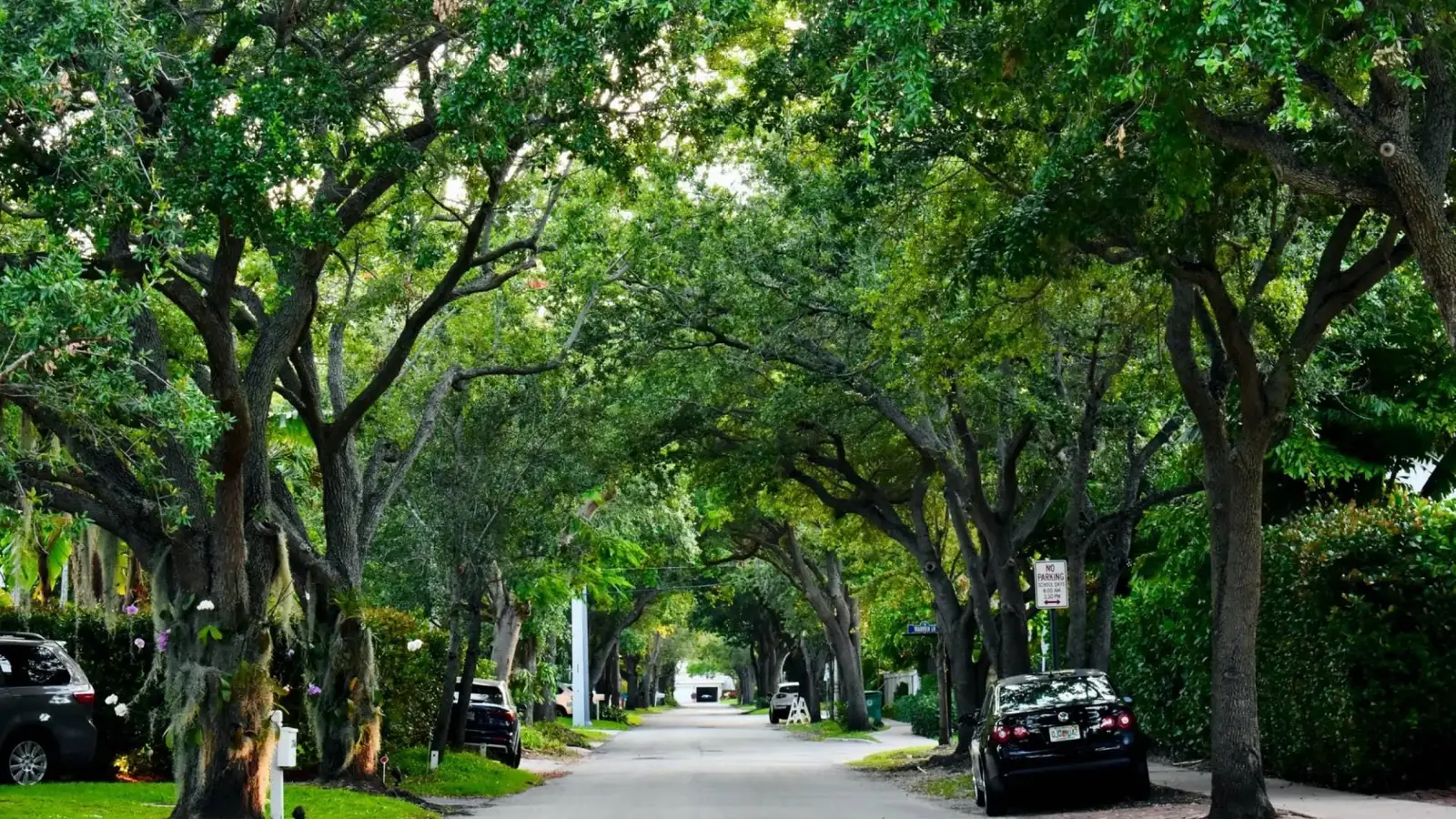
The city heat comes first. Asphalt gives back the sun. Air that should flow cool and clean instead sits and bakes. In many Chicago neighborhoods, the slow disappearance of giant shade trees has been more than an aesthetic loss. It has been a matter of survival.
Researchers following tree cover across Chicago for 11 years have found a striking pattern: neighborhoods that lose canopy from year to year, especially in the hottest parts of the city, tend to see higher mortality rates among residents. Conversely, places where canopy grew year to year experienced lower death rates. The lesson is blunt and hard to ignore. It is not simply the number of trees at a single moment that matters. It is the direction the canopy is moving.
Tracking change, not a snapshot
Most earlier studies looked at a single snapshot of urban greenery and linked that static picture to health outcomes. This study did something different. By analyzing annual changes in tree canopy alongside mortality records over more than a decade, researchers could test whether neighborhoods that were losing canopy were also losing lives. The correlation was clear. Each 1 percent year-on-year increase in tree canopy within a neighborhood corresponded roughly to a 10 percent drop in mortality for that area.
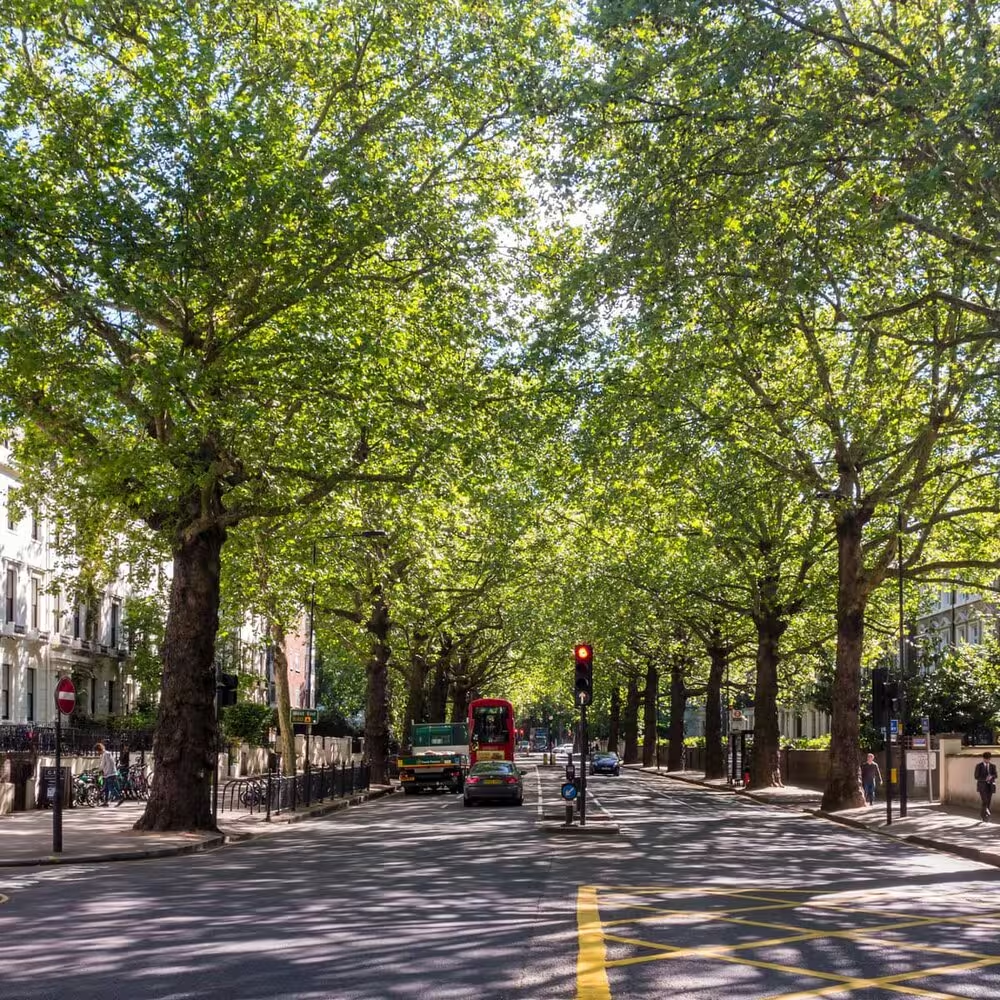
That is a large effect. And it was not limited to heat-related deaths. Reductions in canopy were associated with higher rates of cardiovascular disease deaths, respiratory illness, and even deaths tied to mental health conditions. Trees cool by shading streets and buildings and by releasing water vapor from their leaves, but the protective effect appears broader than heat mitigation alone.
Vivek Shandas, an urban climate and public health researcher at Portland State University who was not part of the Chicago team, put the study in context. He says the work confirms trends seen in other U.S. cities, where many neighborhoods are losing green cover and the warmest areas often see the smallest gains in canopy. In plain terms: places that need trees most are often the places gaining them least.
Limitations that matter
Observational studies can show pattern. They cannot prove cause. The Chicago analysis cannot, by itself, prove that losing a tree causes a death. It does show a repeating association across space and time that policy makers should take seriously. Confounding factors are possible. Neighborhoods that lose canopy may also be experiencing economic decline, housing turnover, or other stressors that affect health.

Another technical constraint comes from the way canopy was measured. The researchers relied on standard satellite-derived data to estimate tree cover. These datasets are powerful for citywide and long-term tracking, but they are not perfect. They can miss small, newly planted trees and may underestimate ground-level green improvements. Young saplings, which still take decades to become the shade giants that provide extensive cooling and other ecological services, are especially likely to be undercounted.
Even with these caveats, the scale of the association and its consistency across causes of death strengthen the argument that mature trees are an underappreciated public health resource.
Policy implications and real choices
City leaders and planners face choices. Planting new trees is good. But this research suggests protecting the mature trees already in place may yield faster, larger benefits for community health. Mature trees represent decades of growth and stored value: deep roots, extended canopy, complex ecosystems that cool and filter the neighborhoods around them. When a large ash, oak, or maple is lost, the gap is not easily replaced by a sapling planted the next season.
What does protection mean in practice? It includes stronger ordinances against unnecessary removal, incentivizing maintenance, investing in root-zone preservation during construction, and prioritizing watering and care during heat waves. It may also mean shifting urban forestry budgets to recognize the high returns of sustaining existing canopy rather than focusing solely on aggressive new-planting targets.
Expert Insight
Dr. Elena Marquez, a public health urbanist not involved in the study, reflects on these findings: "We have long known that green infrastructure brings benefits. What this work does is push us to act differently. If a neighborhood loses its mature trees, the most immediate health protection is gone. Planting is necessary, but it is not a quick fix. Caring for what is already there will save lives now and build resilience for the future."
Conclusion
The Chicago study, published in GeoHealth, reframes a familiar idea: urban trees matter for public health. It adds a precise twist. The trend of canopy change year to year predicts neighborhood mortality more strongly than a single measure of how many trees are present right now. For cities confronting hotter summers and widening health inequities, the research argues for an urgent, practical policy pivot. Protect the old growth. Tend the canopy. Plant where needed. But recognize that the oldest trees are not just decoration. They are a public health asset that took decades to build and can be lost in an afternoon.

“My work centers on sustainability, energy, and environmental science — examining how innovation can lead to a greener future.”

Discussion
Leave a Comment
Comments (2)
Is this even causal? neighborhoods losing trees might also be losing jobs, services etc. but if true, protecting mature canopy should be top priority. hmm
wow, chilling stat... losing trees = losing lives. Protect those old oaks now, not just plant saplings! this is urgent