
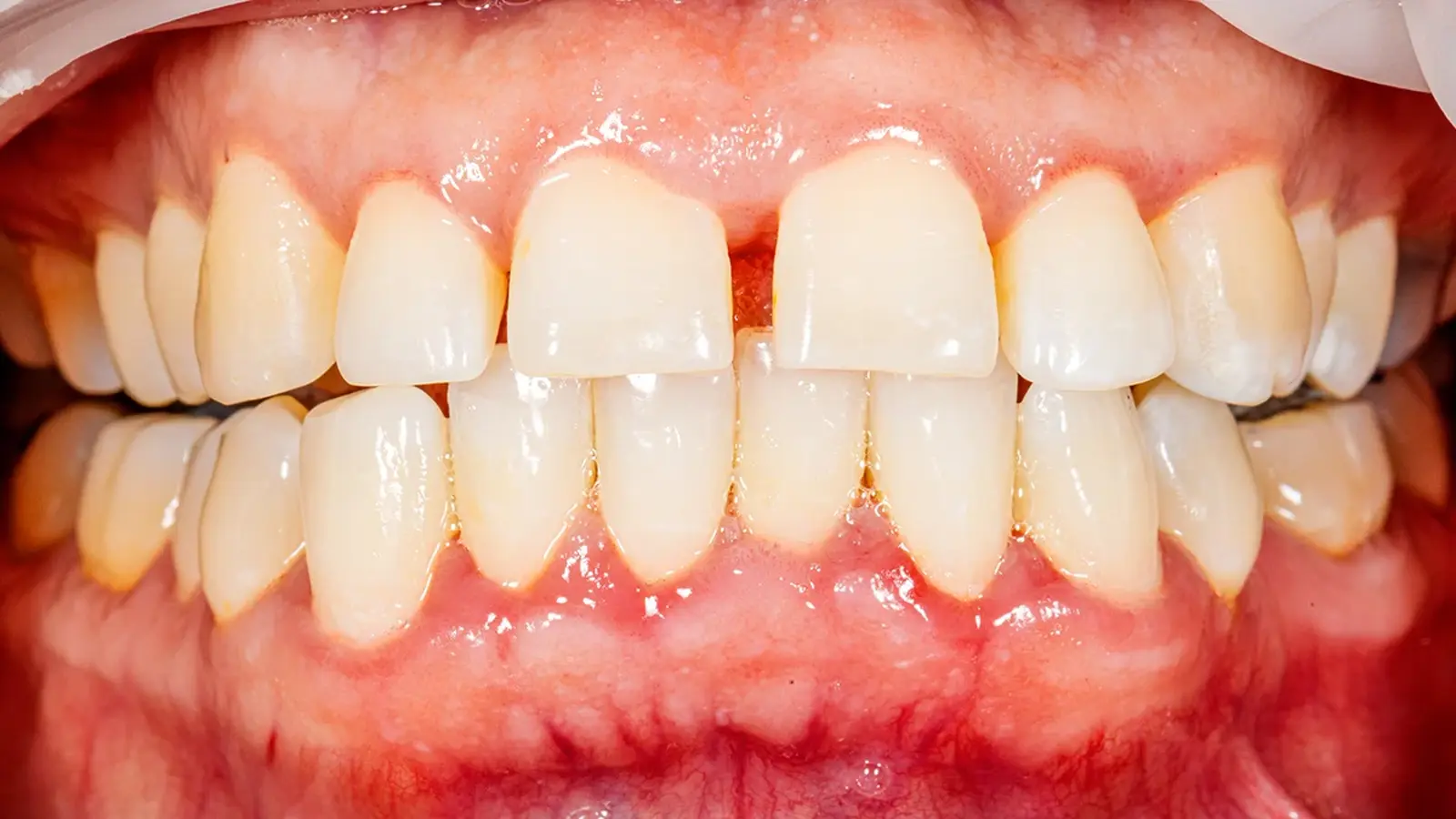
What happens when you tighten calories for a few days each week? For people with advanced gum disease, the answer appears to be less inflammation both in the mouth and across the body.
Researchers have begun to treat periodontitis not merely as a local oral problem but as a systemic inflammatory condition that can respond to whole-body interventions. A recent pilot trial published in the Journal of Clinical Periodontology tested a fasting-mimicking diet, an approach that sharply reduces caloric intake for several consecutive days, to see whether it could blunt the inflammatory signals that accompany periodontal disease.
Design and what the trial actually did
The study enrolled 28 people diagnosed with periodontitis. Half of the participants followed a weekly fasting-mimicking regimen: 1,100 calories per day for two days, then 750 calories per day for three days, followed by two days of normal eating. That cycle was repeated three times across three months. The other half continued their usual diet and served as controls. Crucially, everyone underwent the standard deep dental cleaning used to treat advanced gum disease at the start of the study, so the dietary plan was tested as an adjunct to conventional care.
Blood tests and samples of the gingival crevicular fluid, the liquid that occupies the tiny space between teeth and gums, were collected at baseline and during follow-up visits through six months. The investigators tracked markers of inflammation such as C-reactive protein, commonly abbreviated CRP, which signals systemic inflammation and is used widely in clinical studies.

Levels of C-reactive protein (CRP), an indicator of inflammation, were measured over time. There was a significant difference between people on the FMD and those in the control group at 90 and 180 days.
Key outcomes and what they mean
Patients on the fasting-mimicking diet showed a measurable reduction in inflammatory markers both in blood and in gingival crevicular fluid at 90 and 180 days, compared with the control group. In plain terms, the immune system’s inflammatory response was dampened. Yet, when it came to clinical healing of the periodontal pockets and gum tissues, both groups improved at a similar pace. The deep cleaning did its job; the diet altered the inflammatory milieu around the teeth and systemically, but it did not translate into faster disappearance of the disease over the six-month study window.

Why does that matter? Chronic inflammation in the mouth has been linked to wider health problems, including increased risks for stroke and neurological injury. Lowering systemic inflammation may therefore reduce those downstream risks, even if the local gum healing timeline remains unchanged. That is the practical promise: a complementary therapy that improves systemic health metrics in patients already receiving dental care.
Possible mechanisms
- Reduced oxidative stress. Periods of calorie restriction can lower cellular oxidative damage, which drives inflammation.
- Fewer refined carbohydrates. Limiting high-calorie, processed foods removes dietary triggers that amplify inflammatory signaling.
- Systemic metabolic shifts. Short fasting cycles can change hormone and immune responses in ways that suppress chronic inflammation.
"Lifestyle modifications could be important alongside proper tooth brushing for patients," says periodontologist Giuseppe Mainas from King's College London. Luigi Nibali, also from King's College, adds that fasting can reduce oxidative stress and the inflammatory burden that harms cells and DNA. Those interpretations align with wider dietary research that ties healthier eating patterns to lower systemic inflammation and reduced periodontal risk.
Expert Insight
"This pilot trial shows a promising, low-cost strategy to lower inflammatory markers in people with periodontitis," says Dr. Elena Vargas, a nutritional epidemiologist at the University of Barcelona who was not involved in the study. "We should be cautious. The sample is small and the clinical endpoints need longer follow-up. Still, the biology is plausible: short, repeated calorie restriction can reprogram metabolic and immune responses in beneficial ways. Future trials should test whether similar benefits can be obtained safely in patients with diabetes or other conditions that make fasting risky."
The authors themselves describe the results as exploratory and call for larger, fully powered trials. They also highlight a practical concern: not everyone can safely limit calories, so alternatives that mimic the anti-inflammatory effects of fasting—whether through targeted nutrients, pharmaceutical mimetics, or tailored eating plans—are worth investigating.
Conclusion
The fasting-mimicking diet reduced markers of inflammation in both the mouth and the bloodstream of people treated for periodontitis, without altering the short-term clinical recovery from deep cleaning. The finding reframes periodontal therapy as a possible two-pronged effort: treat the local infection and modulate the body’s inflammatory response. Larger studies with longer follow-up will be needed to confirm whether those biomarker changes lead to better long-term health outcomes and to identify safe, scalable approaches for patients who cannot practice calorie restriction.
For clinicians and patients, the takeaway is pragmatic. Good dental care remains the cornerstone of periodontitis treatment. Dietary strategies that reduce systemic inflammation may provide added benefit, but they are complementary, not replacements for standard periodontal therapy.


“The cosmos has always fascinated me. I write about space missions, astronomy, and the technologies pushing humanity beyond Earth.”

Discussion
Leave a Comment
Comments (2)
Is this even safe for diabetics tho? sounds promising but fasting can be risky, need alternatives or guidelines.
Wow, fasting actually calmed gum inflammation? If true, kinda wild. But small sample and 6 mo, need more data... still curious!!