
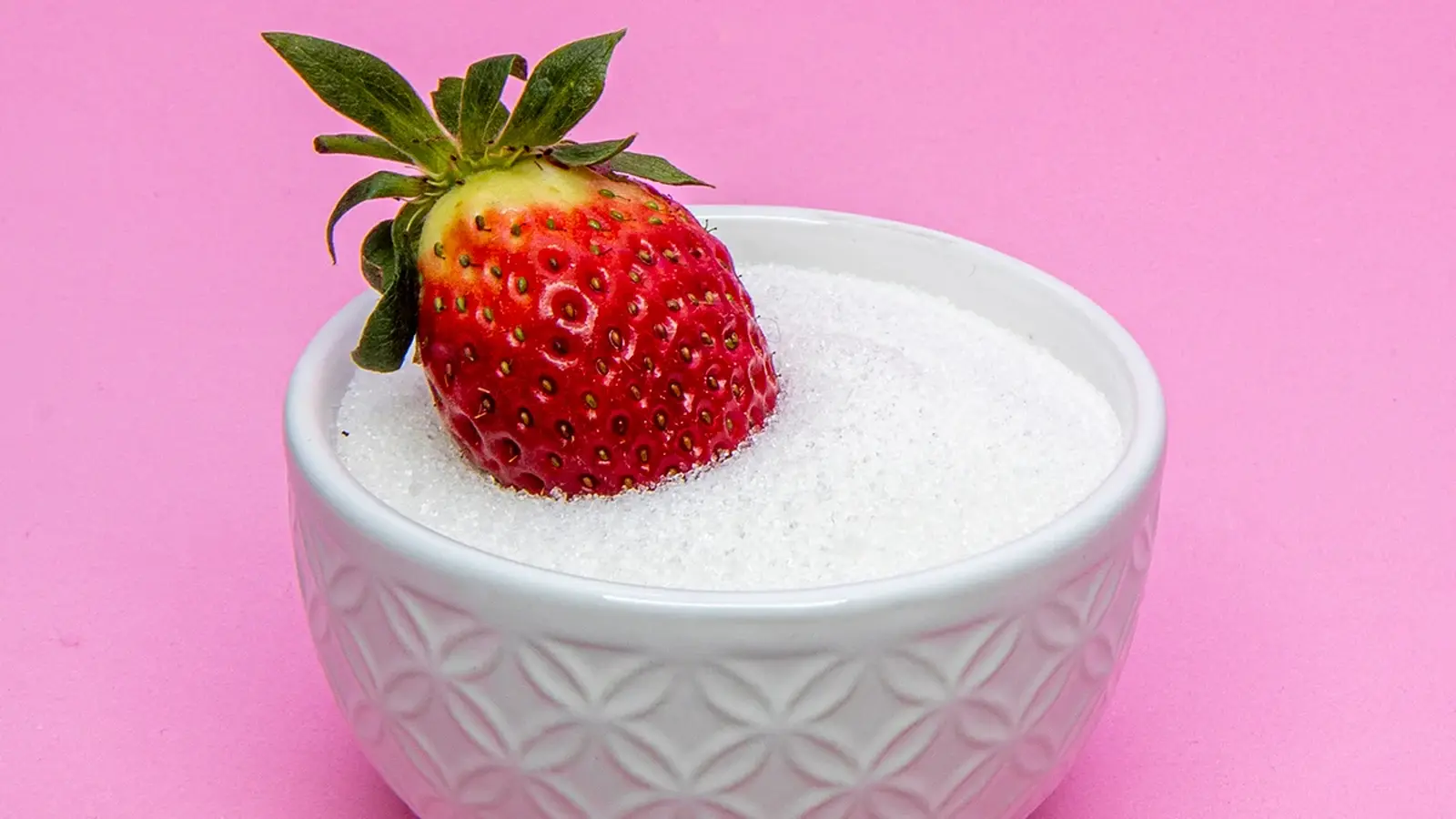
Imagine a sugar that does more than sweeten your food. It quietly retools the gut, nudging the digestive system to take in more fat. That is the provocative implication of a new study from researchers at the University of California, Irvine, published in Science Advances in 2026.
Small intestine, big role
For decades, debates over obesity have centered on calories and dietary fat. Lately, attention is turning to sugar, and fructose in particular, as a possible accelerator of weight gain. Fructose is common: it exists naturally in fruits and vegetables and forms half of table sugar. It also appears in concentrated form in high fructose corn syrup, a widespread sweetener in processed foods.
The UC Irvine team asked a focused question: does the small intestine's ability to metabolize fructose influence how the body handles dietary fat? To answer that, they turned to genetics and to mice. The researchers disabled the main intestinal enzyme that breaks down fructose, called KHK-C, only in the small intestine. Then they fed the animals a diet enriched with high fructose corn syrup for three months and compared results to normal mice eating the same food.

Genetic modifications changed the way the mice processed fructose and fat.
The outcome was surprising. Mice lacking intestinal fructose-processing capacity gained less weight and carried less fat than their unmodified counterparts. Their metabolic profiles were better. And the most striking change was not in the liver or fat tissue at first glance, but inside the gut itself.
A cascade from sugar to fat absorption
The research outlines a chain of events that begins with intestinal fructose catabolism and ends with altered fat uptake. When the small intestine can process fructose normally, the ileum, the final segment of the small intestine, sustains a population of immune cells called macrophages. Those macrophages support the growth of lacteals, tiny lymphatic vessels nestled inside the intestinal villi that transport absorbed dietary fat into the circulation.
Knock out intestinal fructose metabolism and the chain unravels. Fewer ileal macrophages were present. Lacteals were shorter. Less fat moved from the gut into the body. The genetically modified mice excreted more fat in their feces, and transplanting those altered fecal microbiomes into other animals reproduced the effect. In short, digesting fructose appeared to prime the gut to absorb more fat.
Disabled fructose processing (bottom row) led to shorter lacteals, tiny lymphatic vessels in the villi, which give the intestine its ruffled surface. This only occurred in the ileum, the final and longest part of the small intestine (far right). (Lopez et al., Sci. Adv., 2026)
That series of events ties together several previously separate ideas. Fructose can overwhelm the liver when consumed in excess. Gut bacteria influence obesity. Immune cells in the intestine shape local tissue architecture. Now, the new data suggest that these mechanisms interact: intestinal fructose metabolism modifies the microbiome, which in turn affects ileal macrophages and lacteal development, and that structural change changes whole-body fat balance.
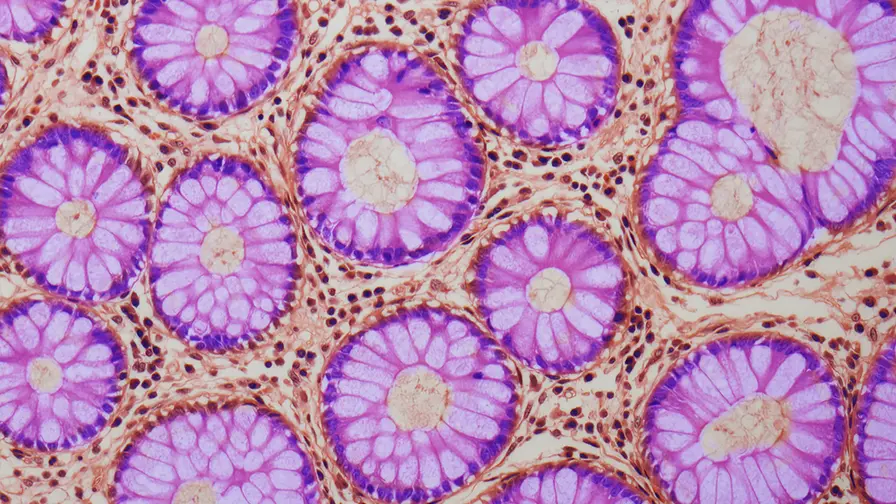

Disabled fructose processing (bottom row) led to shorter lacteals, tiny lymphatic vessels in the villi, which give the intestine its ruffled surface. This only occurred in the ileum, the final and longest part of the small intestine (far right).
Why this matters
At the population level, the finding reframes how added sugars might drive obesity. We usually think about sugar as empty calories or as a factor that leads to overeating. This work suggests sugar can also tune the digestive tract itself to transfer more dietary fat into storage. That is a qualitative shift in thinking: sugar is not only energy, it can remodel absorption pathways.
There are practical implications. If specific bacterial strains mediate the macrophage and lacteal changes, targeted probiotics or microbiome therapies could blunt dietary fat uptake. Alternatively, pharmaceutical modulation of intestinal fructose metabolism might become a tool for metabolic disease. But caveats abound: mouse physiology is not the same as human physiology, and long-term safety of altering intestinal enzymes would need rigorous study.
Study details and limits
- Model: The experiment used mice with intestine-specific deletion of the KHK-C enzyme, which is crucial for fructose catabolism.
- Diet: High-dose high fructose corn syrup exposure for 12 weeks simulated heavy dietary intake.
- Readouts: Weight gain, body fat, ileal macrophage counts, lacteal length, fecal fat content, and microbiome composition.
The research team notes that their results point to an unexpected organ-specific role for intestinal fructose handling in modulating the microbiome and fat absorption. They wrote that inhibition of fructose catabolism in the small intestine mitigated fructose-induced obesity and insulin resistance in mice, but they emphasized the need to verify these mechanisms in humans.
Expert Insight
Dr. Elaine Porter, a gastrointestinal physiologist and science communicator unaffiliated with the study, says: "This work is compelling because it links metabolism, immunity, and the microbiome in a clear mechanistic chain. It reminds us that the gut is not a passive tube. It senses nutrients and adapts structurally and immunologically. Translating this to people will take time, but the conceptual leap is important: sugars can reprogram how the gut handles other macronutrients."
Researchers involved in the study emphasize prudence. Excessive fructose intake remains harmful in many ways. The new findings add a layer: processing fructose in the small intestine appears to be a signal that enhances the body's ability to harvest fat from the diet.
Conclusion
The UC Irvine study expands our view of how diet shapes metabolism. Fructose is more than a calorie count. By influencing the microbiome and local immune populations, it can reshape gut architecture and raise the efficiency of dietary fat absorption. If replicated in humans, the discovery could redirect interventions for obesity toward the gut ecosystem and its enzymes as much as toward calorie restriction and fat counting.

“The cosmos has always fascinated me. I write about space missions, astronomy, and the technologies pushing humanity beyond Earth.”

Discussion
Leave a Comment
Comments (3)
Feels overhyped but thought-provoking. Targeting gut enzymes or microbiome for obesity makes sense, ok but safety and human data first... not a quick fix.
Wait, so mice with intestine-only KHK-C knocked out absorbed less fat and weighed less? promising in mice, but humans are messy. Is this even translatable? sounds premature
Wow, sugar actually trains the gut to hoard fat? wild. If that's real then we might need to rethink sweeteners, not just calories. weird but kinda scary.