
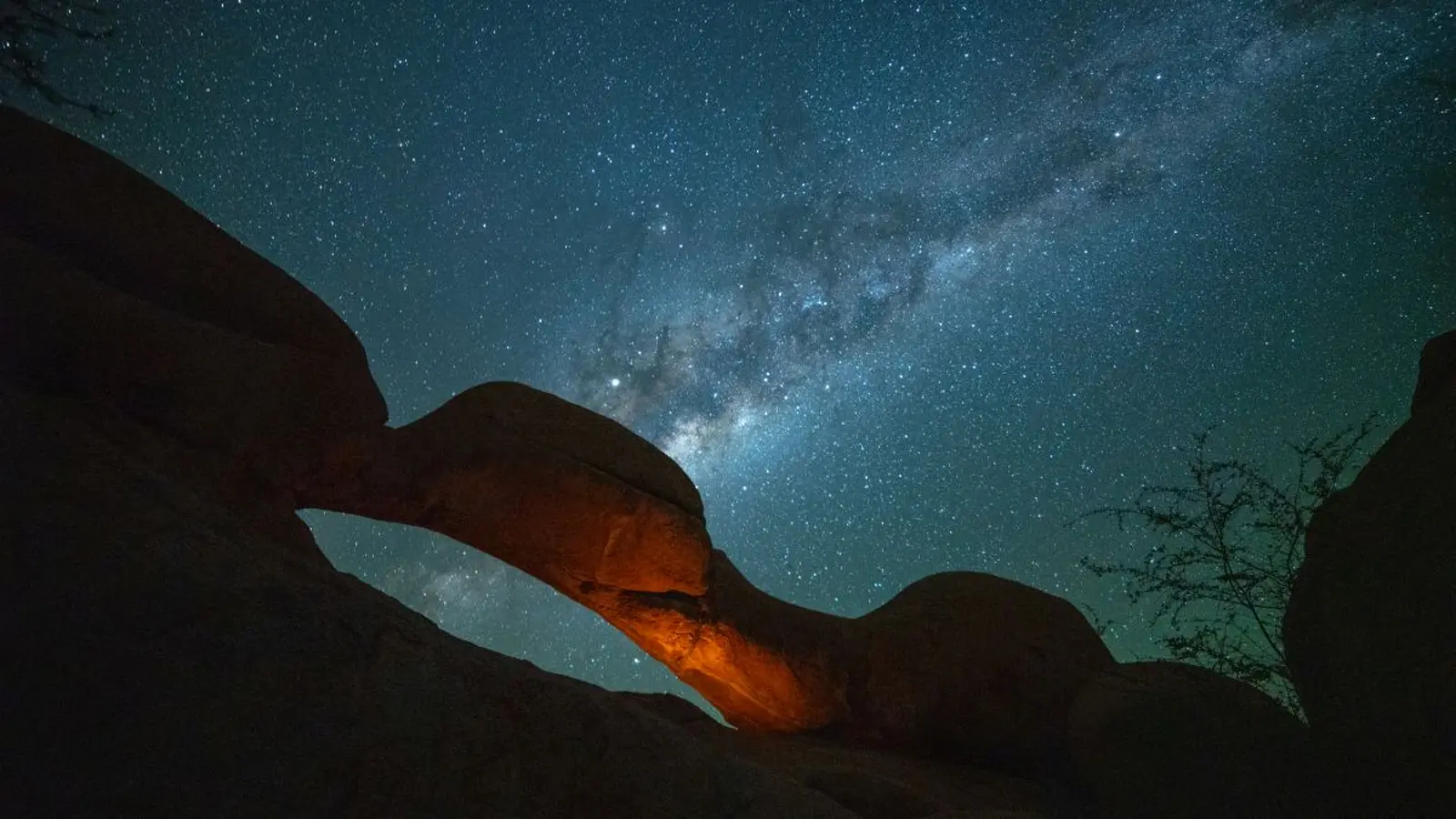
The idea is simple and unsettling: as the Solar System cruises through the Milky Way, it encounters changing neighborhoods of gas and dust. Those encounters may stir waves of star formation. Could they also leave fingerprints in Earth's rocks?
Looking beyond Earth for a matching time signature
Recent work that revisited the planet's oldest known asteroid impact and dated it to about three billion years ago has renewed this question. If the Galaxy's shifting environment nudges clouds of gas into new bursts of star birth, then the Solar System's repeated passages through those regions might nudge other systems on a subtler level. Geologists and astronomers now propose a straightforward test: compare Earth's mineral record with the mineralogical layers on the Moon and Mars. If a common timing appears off-world, that would strengthen the case for a Galactic driver.
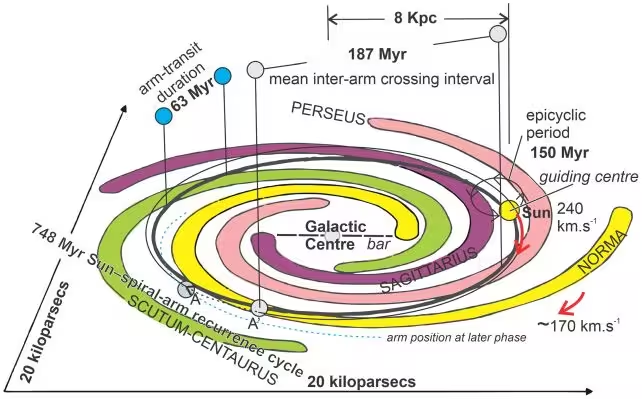
A diagram of the Sun's journey around the center of the Milky Way.
Lead researchers point out two uncertainties. First, not every crossing should leave a clear imprint on a single planet. Second, even if an imprint exists, preservation depends on local geology. Planetary surfaces differ. The Moon keeps an older memory than Earth. Mars holds its own archive, albeit weathered by dust and wind.
"If changing Galactic environments can trigger star formation," one scientist explained, "it would be odd if the Solar System felt no effect at all." The key question becomes whether those effects were large enough and persistent enough to be read in rock samples and returned mission data.

The team's hypothesis connects spiral-arm crossings with continental growth and ancient impacts.
The findings prompting this discussion were published in Earth and Planetary Science Letters. Future tests will combine crater dating, isotopic studies, and comparative planetology to search for a shared cosmic timetable.

“My work centers on sustainability, energy, and environmental science — examining how innovation can lead to a greener future.”

Discussion
Leave a Comment
Comments
No comments yet. Be the first.