
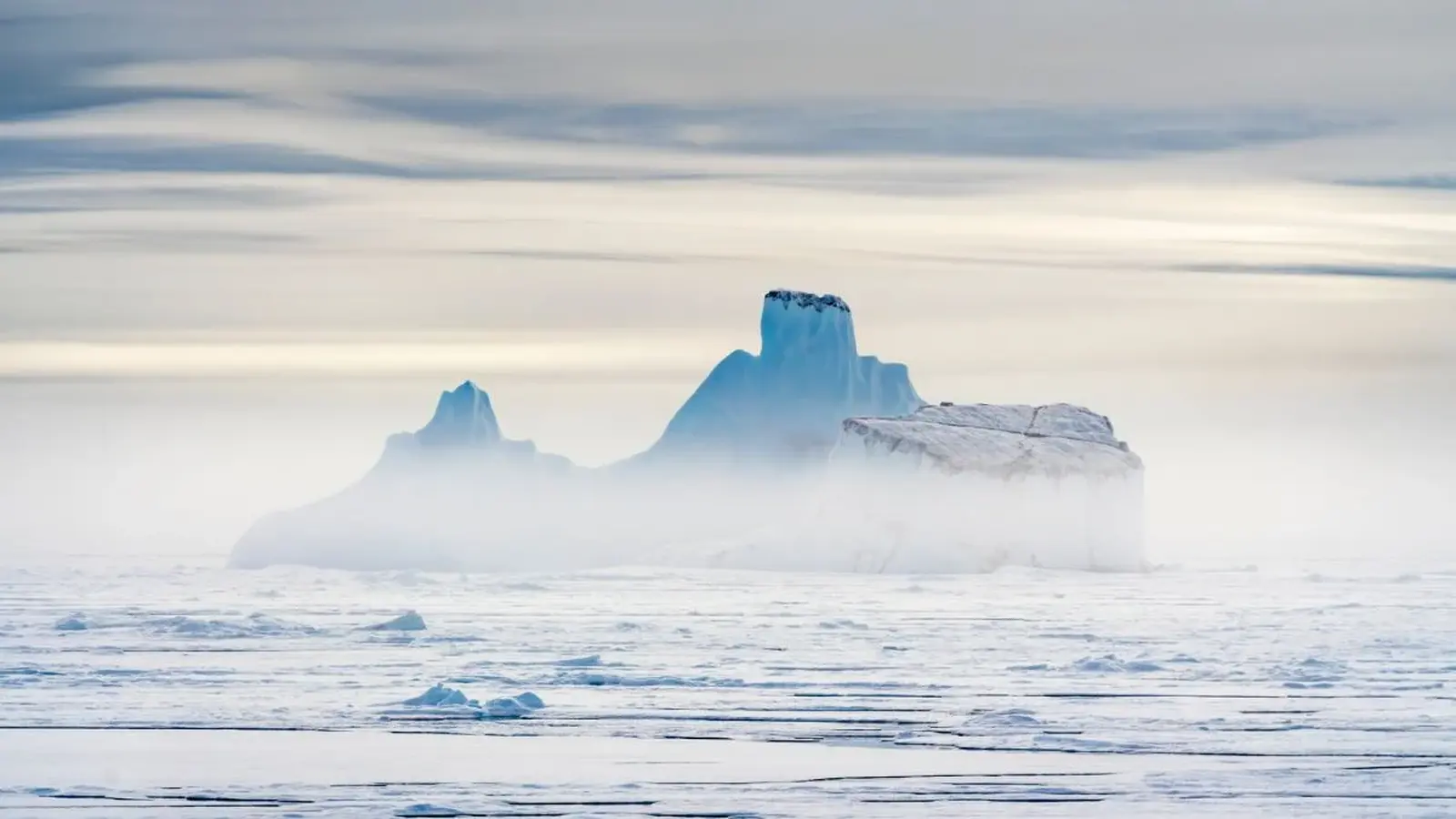
Icebergs are no longer only a symbol of melting poles. They are architects. As Greenland's glaciers break apart, massive blocks of ice carry with them a cargo few notice: rocks, gravel and mud that eventually change the face of the deep seafloor.
Researchers from the Technical University of Denmark published a study in Nature showing that the number of icebergs drifting through the Fram Strait between northeast Greenland and Svalbard has roughly quadrupled since 2000. That uptick is tied directly to accelerated glacier loss in Greenland. More calving means more icebergs. More icebergs mean more material being dropped far offshore when those bergs melt and sink.
How icebergs engineer the seafloor
When a glacier calves, it does more than add an iceberg to the ocean. Chunks of bedrock and coarse sediment become locked in the ice. Carried by currents, those stones can travel hundreds of kilometres before the supporting ice melts. The heavier fragments then fall to the abyss, creating patches of hard substrate on what is otherwise a soft, muddy bottom. That change in substrate can be dramatic for life on the seafloor: organisms that need solid surfaces, such as cold-water corals, sponges and sessile invertebrates, find new habitat to colonize.
"Our results indicate a direct, climate-driven connection between glacier change at the surface, amplified iceberg traffic, and the increased availability of hard-bottom habitats on the deep seafloor," the researchers wrote. Shfaqat Abbas Khan, one of the paper's co-authors, emphasized the reach of this process: "When the Greenland ice melts, sea levels rise. But we can also see that the changes affect the entire Arctic."

Researchers working in the Arctic have identified a new mechanism by which melting glaciers impact ocean ecosystems. Icebergs calved from glaciers carry stones and sediment to the deep-sea floor, where coarser stones can provide habitat for marine life.
The study also quantified how iceberg clustering is changing. Groups of icebergs originating from Greenland and the Russian Arctic that include more than five individual bergs are becoming more common, rising at around 4.5 percent per decade since 2000. Larger and more numerous iceberg clusters increase the odds of extensive seabed modification across wider regions.
Fieldwork aboard the German research icebreaker Polarstern (expedition PS149, July 2025) provided on-the-ground evidence. Scientists lowered ropes and sampling gear to collect sediment and biological samples from areas beneath melting bergs. In one striking image, a melt pond at the base of an iceberg, discoloured brown by trapped sediment, signals the presence of transported material.

Researchers collect samples using ropes during an expedition aboard the research icebreaker Polarstern (July 2025, expedition PS149). A melt pond has formed at the base of this iceberg locked within Arctic sea ice, tinted brown by sediments contained within the ice.
There are practical implications beyond ecology. As Arctic sea lanes open with warming, trans-Arctic shipping will face greater exposure to drifting ice. The changing pattern of iceberg distribution raises safety concerns for navigation, resource operations and search and rescue planning.
Scientists warn that these processes are linked: climate-driven glacier loss, increased iceberg delivery of hard material to the deep ocean, and cascading effects on biodiversity and human activity. The Arctic is being remade, little by little, by the very blocks of ice it once seemed to hoard.

“My work centers on sustainability, energy, and environmental science — examining how innovation can lead to a greener future.”

Discussion
Leave a Comment
Comments (2)
wait so more icebergs = more shipping hazards? ok but is sediment really enough to build habitats or just mess up the muddy plains, or am I missing something?
Wow didn't see icebergs as habitat makers... kinda poetic and scary. If rocks seed corals far offshore that's huge, but also ominous for ecosystems.