
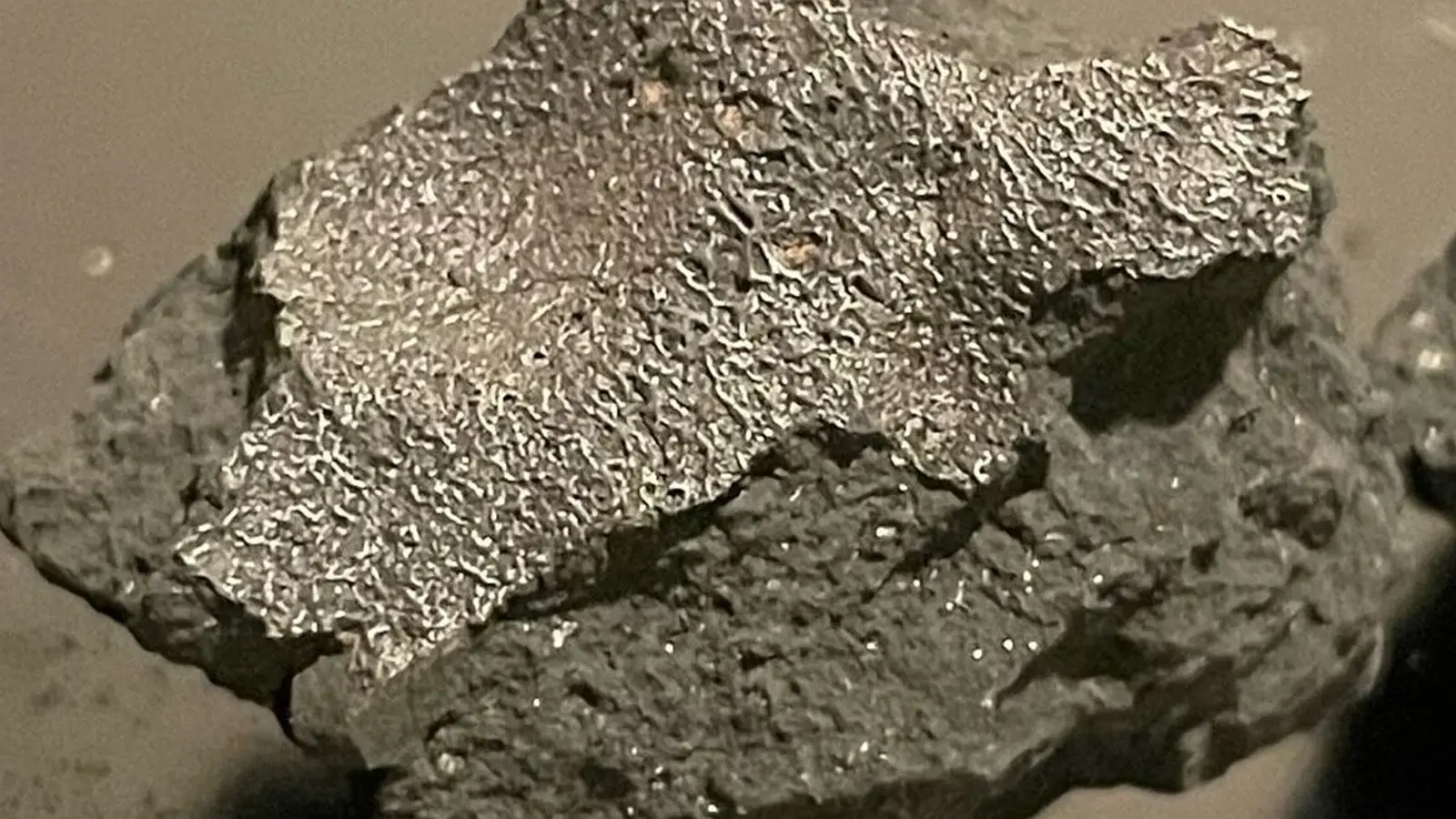
She reached for a glass of water and found a rock where a ceiling should have been. In July 2024 a fireball lit the New York sky, rattling homes with a sonic boom. One fragment did something rarer still: it punched through a New Jersey roof and came to rest on a bedroom floor, untouched by rain or soil.
A pristine messenger from the asteroid belt
That homeowner’s quick thinking made a scientist's dream come true. Wearing gloves and using aluminum foil, they collected fragments and sealed them in jars. Within hours, meteor astronomers were analyzing a specimen now named the Hillsborough meteorite. Because it landed inside a house and was recovered almost immediately, it escaped the ordinary surface contamination that plagues most falls. The result: unusually pristine chemistry preserved from a small body that once orbited between Mars and Jupiter.
Trajectory reconstructions point to the asteroid belt as the source. Mineralogy links Hillsborough to the CM class of carbon-rich meteorites, relatives of the historic Mighei fall from 1889. CM meteorites are prized because they conserve primitive Solar System material, including organics and water-altered minerals. But Hillsborough adds a twist.
Investigators found salt-rich inclusions and mineral textures that could only form in the presence of concentrated brines—waters saltier than Earth’s oceans. In short: tiny pockets of salty liquid once moved through this asteroid, altering its minerals and forging a suite of organic molecules.

Back-scattered electron image of a section of the meteorite that is rich in salts.
How salty water rewrites asteroid chemistry
Liquid water inside small asteroids is not a new idea. But the notion that brines—highly concentrated salt solutions—persisted and drove rich chemistry is less expected. Why does that matter? Salt changes everything. It depresses freezing points, concentrates solutes, and creates microenvironments where chemical reactions run differently than in fresh water.
In Hillsborough, those brines appear to have catalyzed the synthesis of a diverse array of organic compounds, including many amino acids. Amino acids are the building blocks of proteins and a key ingredient in origin-of-life scenarios. The meteorite therefore provides a concrete setting where complex organics could form long before these rocks ever encountered Earth.
Peter Jenniskens of the SETI Institute and NASA’s Ames Research Center, who led part of the analysis, describes the find as a kind of forensic snapshot. Pieces of a near-surface environment were preserved. "A forensic study of the fragments revealed that they contained preserved bits from near the surface of a small primitive asteroid where it experienced concentrated salty fluids—a process not previously known from this type of proto-planet world," he said.
Airburst fragmentation made this recovery possible. As the parent object plunged through the atmosphere it shattered into many pieces. Most fell into the harbor or onto urban streets. Only the fragment that pierced the house was recovered in time to remain unweathered.
Implications for the origin of life's ingredients
The Hillsborough result strengthens the idea that meteorites delivered prebiotic material to early Earth. If pockets of brine inside primitive asteroids were common, they could have been small chemical factories producing amino acids and other organics before being transported to our planet by impacts.
But scientists caution against simple narratives. Some of the organic inventory might be the legacy of prior collisions, redistributed and concentrated by impact processes. Definitive assignment of sources—whether formed in situ in brines or inherited from earlier parent-body events—requires more targeted study, and ultimately, in situ exploration of similar asteroids.
Laboratory analyses, including electron imaging, mass spectrometry, and isotopic studies, have mapped the salts and organics at micron scales. Together they hint at episodic fluid activity: short-lived, localized wetting events rather than long-lived oceans. That picture fits with models of small bodies that heat briefly from radioactive decay or collisional energy and then cool, leaving behind salted residues.
Expert Insight
"This meteorite is like a time capsule from a pocket of salty water in a tiny world," says Dr. Elena Márquez, a planetary scientist unaffiliated with the study. "What strikes me is the locality of the chemistry. These were not global oceans; instead, think of discrete veins or pockets where salts and heat came together to push chemistry forward. That has big implications for how we model prebiotic synthesis across the early Solar System."
Her point underscores a subtle shift in perspective. Primitive asteroids are no longer just rubble that delivered rocks to Earth; they were dynamic micro-environments where water, salts, and organics mixed and reacted. Hillsborough makes that claim tangible.
Where do we go from here?
To refine the story, scientists want two things: more falls like Hillsborough recovered quickly, and spacecraft missions that can examine asteroids in their native context. Sample-return missions already in flight or planned for carbon-rich targets will be crucial because they can access material before terrestrial contamination changes its chemistry.
Meanwhile, the Hillsborough fragments will be a focus for laboratory teams worldwide. High-resolution isotopic mapping could reveal whether certain amino acids have extraterrestrial signatures distinct from terrestrial biology. Experimenters will also replicate brine chemistry under controlled conditions to test proposed synthesis pathways.
Conclusion
The Hillsborough meteorite is a rare gift: a well-documented fall, a rapid recovery, and a chemical archive that points to salty, reactive niches inside a small asteroid. Those niches appear capable of producing biologically relevant organics. That finding does not prove life originated outside Earth, but it widens the menu of natural settings where life's ingredients can form. For researchers hunting the chemical origins of life, Hillsborough is now a benchmark—a small rock with a surprisingly big story.

“The cosmos has always fascinated me. I write about space missions, astronomy, and the technologies pushing humanity beyond Earth.”

Discussion
Leave a Comment
Comments (3)
feels a bit overhyped, but i'll give it this: rare find. still, calling it a 'benchmark' seems premature. need more falls, in-situ missions, isotope maps - not headlines yet
Is this even true? sounds neat but i'm not sold on brine-formed organics vs inherited stuff. need isotope proofs, not just salts.
wow, a rock punching through a roof and carrying salty brine pockets? mind blown. Amino acids in tiny asteroids… if true this rewrites small-body chemistry. so cool, kinda spooky too