
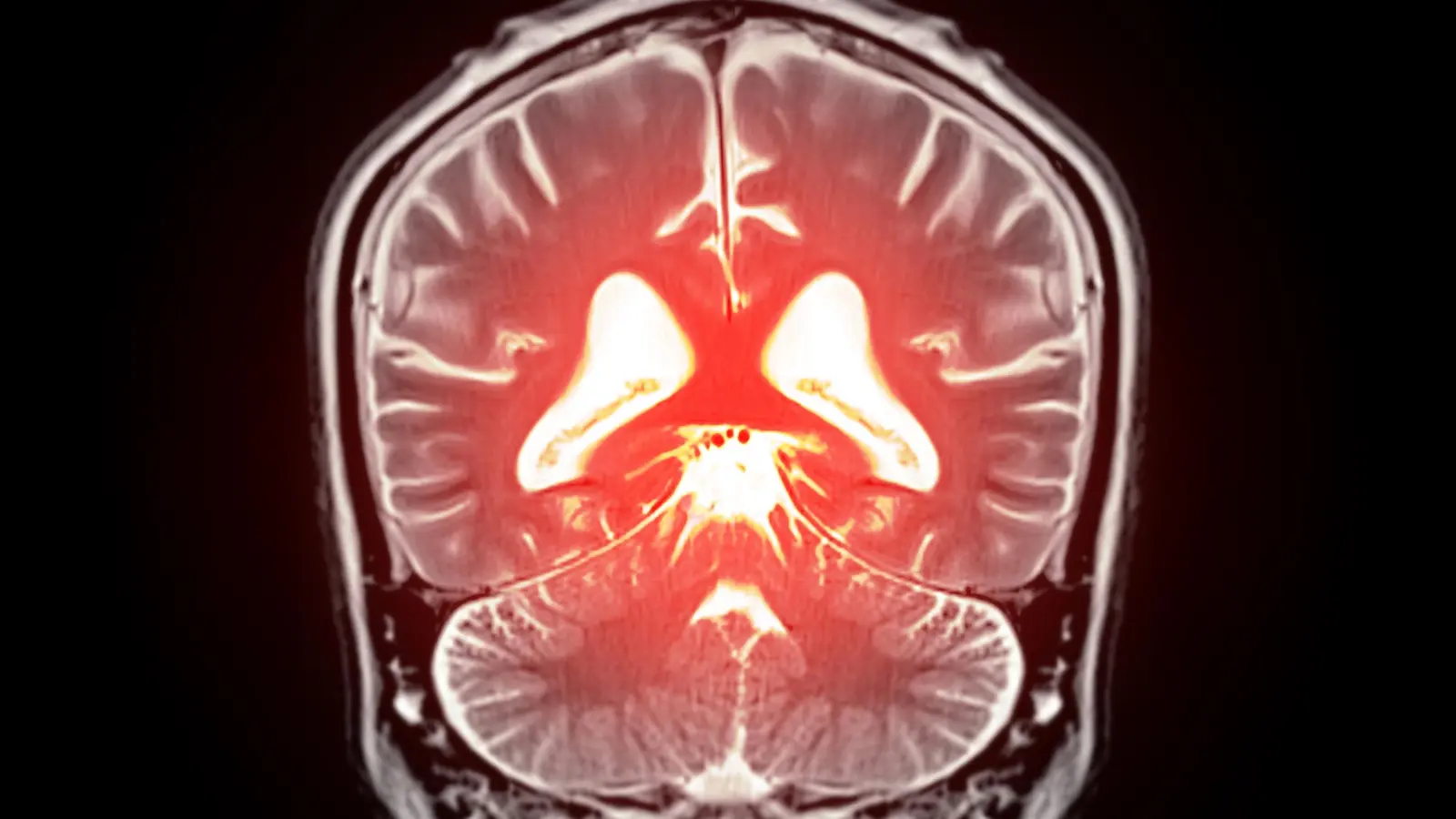
Think of the brain as a fortified city and its blood-brain barrier as the ancient wall standing guard. That wall must be repaired constantly, stone by stone, cell by cell. When repairs falter, the city becomes vulnerable: memory slips, mood shifts, thought grows sluggish. New research now pinpoints a single protein inside the cells that build that wall as a decisive player in how—and why—that deterioration happens.
Small molecule, big consequences
Researchers led by Andrew A. Pieper, MD, PhD, have followed a biological breadcrumb trail from the tiny endothelial cells that line cerebral blood vessels to broad signs of brain aging. Their work, published in Proceedings of the National Academy of Sciences, implicates the transcription factor KLF4 as a linchpin for blood-brain barrier integrity. As KLF4 levels fall in endothelial cells with age, the barrier becomes porous, blood flow regulation weakens, and downstream damage appears in neurons and behavior.
That description compresses a complex set of experiments. The team used two-photon microscopy to observe living brain tissue and vessels in mice across different ages. They watched what happened when endothelial cells lost KLF4 prematurely. The effects were rapid and cumulative: leakier vessels, fewer small capillaries, and a breakdown in neurovascular coupling—the mechanism that directs extra blood to active regions of the brain. Within months, even middle-aged animals showed oxidative damage, activation of harmful immune responses in the brain, neuronal injury, anxiety-like behaviors, and impaired cognition—changes normally linked to much older animals.

Why this matters for therapies
Pinpointing a molecular trigger is rare and valuable. Scientists have long known the blood-brain barrier declines with age, but causality was unclear. Did barrier weakening cause cognitive decline, or was it simply a parallel sign of aging? By accelerating loss of KLF4 in endothelial cells, Pieper and colleagues showed that barrier deterioration can be a direct driver of brain aging features.
At the genetic level, single-cell RNA sequencing revealed broad remodeling of gene programs tied to immune signaling and barrier function. Those shifts help explain why KLF4 loss produces such wide-ranging effects rather than a narrow deficit. In practical terms, KLF4 gives researchers a target: a molecular switch that could be preserved or restored to maintain vascular health and protect cognition.
"Loss of endothelial cell KLF4 accelerated every key aspect of brain aging that we measured," Pieper says. "This suggests that therapies designed to preserve or restore KLF4 function in endothelial cells may help prevent age-related deterioration of the blood-brain barrier and the cognitive decline that follows."
Possible approaches could aim to boost KLF4 expression, stabilize its activity, or blunt downstream inflammatory cascades unleashed when the protein declines. Each route presents challenges. KLF4 acts inside endothelial cell nuclei to regulate many genes, so interventions must be precise to avoid unintended effects elsewhere in the body. Delivering treatments across the same barrier they aim to protect is also a known hurdle in neurotherapeutics.
Technical context and limitations
The study relied on preclinical models, primarily mice. Animal work allows high-resolution imaging and controlled genetic manipulation, but translating results to humans requires caution. Which cell types show the earliest KLF4 loss in aging brains? Does KLF4 decline uniformly across different brain regions? And what environmental or metabolic factors drive that decline with age? Those questions remain open.
Another key point is timing. Intervention windows may matter a great deal. The experiments suggest that even middle-aged animals suffer when KLF4 is lost early, implying that preserving KLF4 before severe damage accrues could offer the best chance to halt downstream decline.
Expert Insight
Dr. Lara Mendes, a neurologist and vascular biology researcher not involved in the study, reflects on the implications: "This work takes us beyond correlation. It supplies a plausible mechanistic chain from endothelial cell dysfunction to cognitive symptoms. For clinicians, that means new biomarkers and, eventually, new interventions that target the vasculature rather than neurons alone. That's a paradigm shift for neurodegenerative prevention."
Her comment highlights a broader trend in brain research: neuroprotection increasingly means protecting the brain's support systems—blood flow, immune balance, and waste clearance—rather than focusing solely on neurons or classic misfolded proteins.
Conclusion
The discovery of KLF4's central role in maintaining the blood-brain barrier reframes part of how researchers think about brain aging. It suggests that molecular maintenance inside the tiny endothelial cells that form the brain's vascular wall can determine whether the organ ages gracefully or becomes vulnerable to inflammation, oxidative damage, and cognitive decline. Translating this insight into therapies will take years and require careful navigation of delivery, specificity, and safety. Still, the payoff could be substantial: treatments that shore up the brain's defenses and slow age-related mental decline.
Keywords woven through this research include blood-brain barrier, KLF4, endothelial cells, neurovascular coupling, oxidative damage, neuroinflammation, single-cell RNA sequencing, and two-photon microscopy. Each term points to a thread investigators will follow as they move from molecular discovery to potential clinical trials.

“My work centers on sustainability, energy, and environmental science — examining how innovation can lead to a greener future.”

Discussion
Leave a Comment
Comments (2)
wow… protect the walls, protect the mind. Boosting KLF4 could be a game changer 🤯 but drug delivery across barrier, yikes.
Wait so KLF4 in tiny vessel cells triggers brain aging? If true, huge... but mice to humans??