
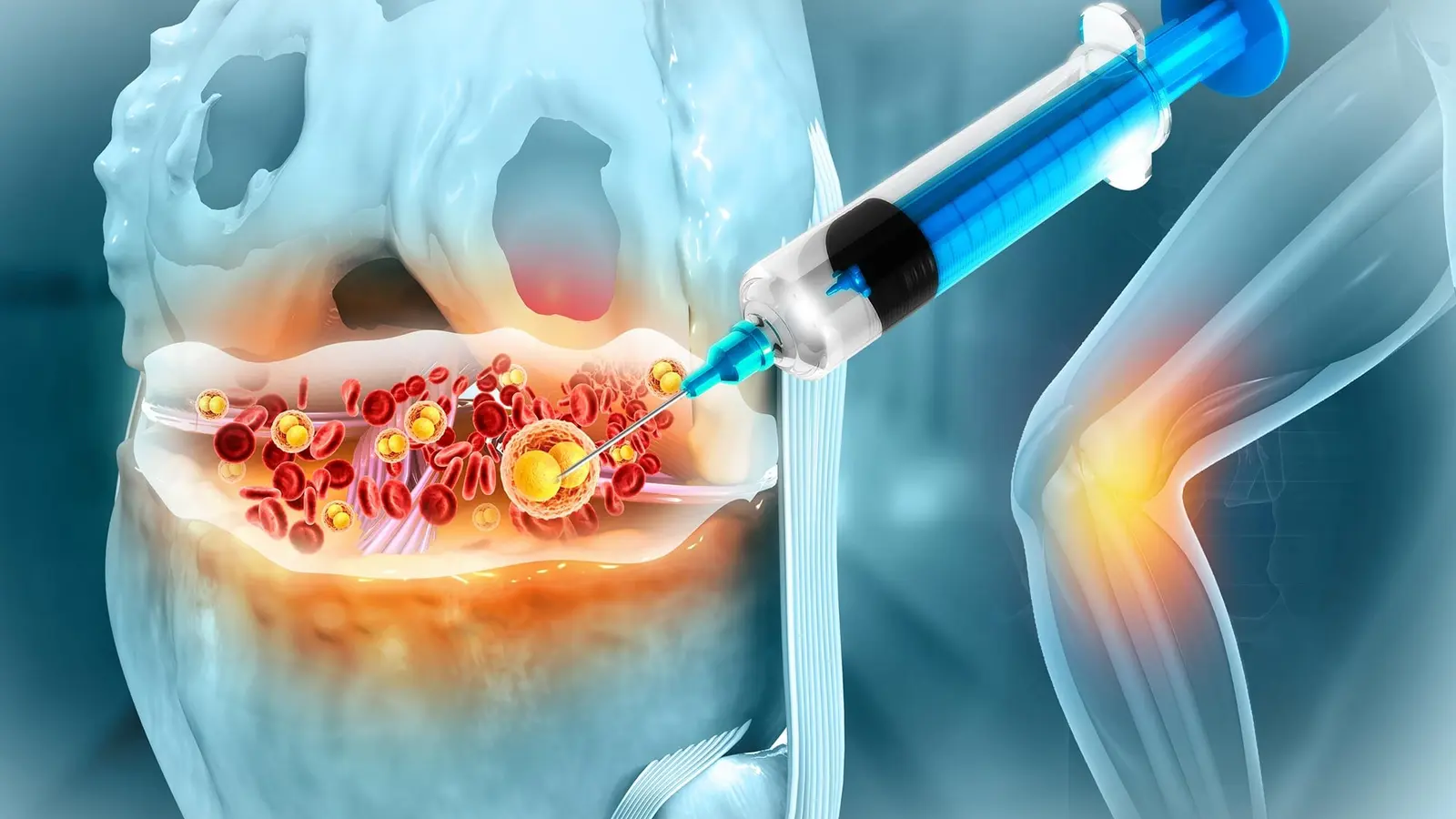
Imagine a single injection that quiets chronic knee pain and nudges damaged cartilage back toward healing. That idea moved a step closer to reality when researchers at Yale repurposed an approved epilepsy medication and combined it with a smart gel to deliver focused, month-long relief.
From unexpected observation to a new therapeutic idea
Osteoarthritis limits millions of lives with persistent pain, stiffness, and shrinking mobility. Current care eases symptoms for a time: analgesics blunt the pain, steroid injections reduce swelling, and surgery is a late-stage option. None of those approaches reliably slows the underlying loss of cartilage that ultimately causes bones to grind together.
Researchers led by Chuan-Ju Liu at Yale took a different tack. Instead of designing a new molecule from scratch, they looked at drugs already approved for human use. Their target was lacosamide, a sodium channel inhibitor prescribed for certain seizure disorders. In cell and animal tests, lacosamide did not merely silence pain signals; it helped rebalance cartilage cells so they favored repair over destruction.
Why Nav1.7 matters for both pain and tissue health
At the center of this story is Nav1.7, a protein that forms a voltage-gated sodium channel. Those channels are tiny gates in cell membranes that enable electrical signaling. Typically, Nav1.7 has been studied in nerve cells that carry pain messages. The Yale team found the channel is also active in chondrocytes, the specialized cells that maintain cartilage.
In healthy joints, Nav1.7 activity is low. In osteoarthritis, it becomes hyperactive. That change does two harmful things at once: it amplifies pain transmission along peripheral nerves and it alters chondrocyte behavior so those cells tilt toward breaking down extracellular matrix rather than building it. Conceptually, Nav1.7 links the sensory experience of pain with the biological process that destroys the joint.
Blocking Nav1.7 therefore becomes a dual strategy: reduce pain signaling and shift chondrocyte programs back toward tissue maintenance. Rather than treating symptoms and the tissue as separate problems, targeting Nav1.7 treats them as two facets of a single pathology.
Dose matters: a narrow therapeutic window

Not all sodium channel inhibitors behaved the same. Lacosamide emerged from screening because it produced the desired chondroprotective effects at low concentrations and carried a comparatively favorable safety record among existing drugs in the class. Importantly, the effect was dose-sensitive. Within a narrow concentration range, lacosamide increased production of cartilage-building proteins and curtailed destructive enzymes. Too little produced no benefit; too much reduced the positive signal.
At the molecular level, lacosamide-treated chondrocytes released protective signaling proteins including HSP70 and midkine. HSP70 assists cells in coping with stress and supports repair pathways. Midkine has anti-inflammatory and tissue-protective roles. Together these factors create an environment where the tissue-level response can shift from degeneration to stabilization and gradual repair.
Saying the system is finely tuned is an understatement. The drug does not force cells into an artificial state; it nudges a stressed tissue back toward its natural equilibrium. That characteristic raises hope for realistic, durable benefit rather than a transient pharmacological trick.

Schematic illustration of the delivery routes and cartilage-protective mechanisms of LCM in osteoarthritis.
A practical delivery problem and a clever material solution
Oral lacosamide showed promise in preclinical models, but systemic administration disperses the drug across the whole body and raises the risk of unwanted effects. The knee joint itself presents another challenge: synovial fluid drains and circulates, so injected molecules can be cleared in hours. To keep lacosamide where it is needed, the team turned to biomaterials.
They developed a thermoresponsive hydrogel built around type II collagen. The formulation remains liquid at cool temperatures so it can be injected easily. Once in the warm joint environment, it gels and becomes a depot that releases lacosamide slowly over weeks. One injection every four weeks maintained therapeutic concentrations inside the joint and outperformed daily oral dosing when evaluated in animal models of osteoarthritis.
In effect, the hydrogel transforms a systemic pill into a sustained, local therapy. That reduces systemic exposure and concentrates the pharmacological action in the joint. For patients, this could mean fewer administrations, fewer systemic side effects, and a more manageable treatment schedule.

Path to the clinic and what it could mean for patients
Because lacosamide is already approved for human use, bringing this indication to clinical trials may be faster than starting with a novel compound. The drug has prior safety data from patients treated for seizure disorders, and it has shown benefit in some nerve-pain conditions linked to Nav1.7 dysfunction. Those existing clinical footprints increase the plausibility that laboratory findings will translate into meaningful outcomes for people with osteoarthritis.
Still, important steps remain. The precise dosing window observed in cell work must be confirmed in human joints. Long-term safety of repeated intra-articular injections and the immunological response to the hydrogel must be assessed. Comparative trials against current standards of care will be needed to demonstrate not just symptom relief but disease modification, meaning slowed cartilage loss or measurable tissue repair.
Expert Insight
'This approach is an elegant example of repurposing matched with smart delivery,' says Dr. Elena Marquez, a fictional biomedical engineer who studies musculoskeletal therapeutics. 'You get the advantage of known pharmacology from lacosamide, and the hydrogel solves a practical pharmacokinetic problem. If human trials confirm the preclinical signals, it could change how we think about managing early to mid-stage osteoarthritis.'
Future prospects and related technologies
The Yale study fits into a growing trend: combining pharmacology with advanced biomaterials to direct where and how drugs act. Similar strategies are under exploration for tendon repair, intervertebral disc disease, and localized cancer therapies. The key idea is the same across fields. Localized, sustained delivery increases efficacy and lowers systemic risk.
Beyond delivery, the discovery highlights an underappreciated principle in disease biology: proteins known for roles in one cell type may play important, sometimes opposing roles in others. Nav1.7 is a useful example. Research that maps such multifunctional proteins could reveal new therapeutic shortcuts by allowing single agents to correct several problems at once.
Conclusion

The repurposing of lacosamide, paired with a thermoresponsive collagen II hydrogel, offers a compelling path toward a therapy that both reduces pain and helps preserve or restore cartilage. There is cautious optimism but also clear work ahead: defining safe, effective intra-articular doses in humans, ensuring the hydrogel behaves well over long periods, and demonstrating true disease modification in clinical trials. If those hurdles are cleared, patients with osteoarthritis could eventually see a shift from symptom management toward treatments that change what the disease does to their joints.

“My work centers on sustainability, energy, and environmental science — examining how innovation can lead to a greener future.”

Discussion
Leave a Comment
Comments
No comments yet. Be the first.