
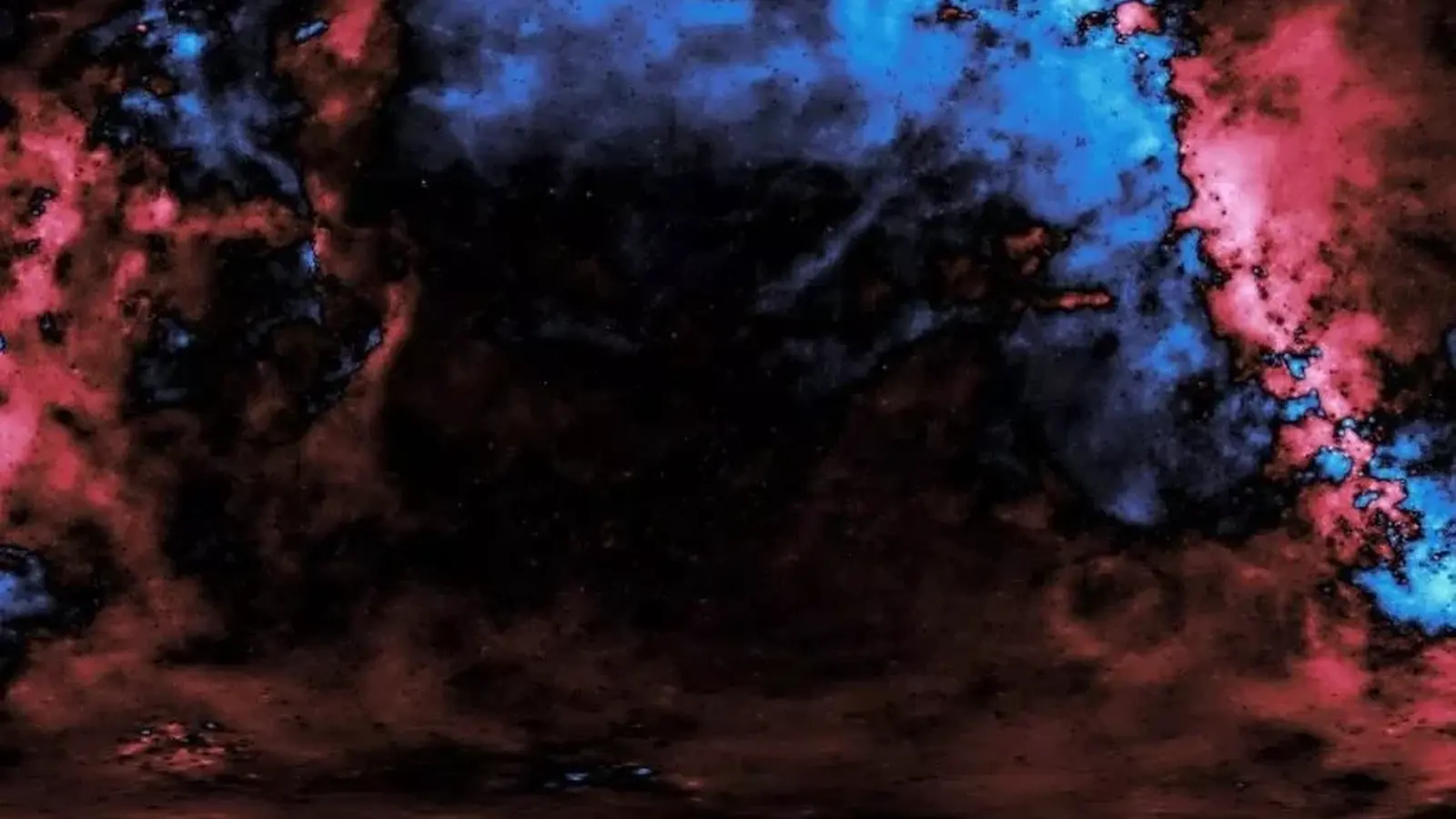
Magnetic fields are the universe's invisible scaffolding. They steer particles, throttle the birth of stars, and wrap entire galaxies in subtle, twisting patterns that telescopes can only now begin to read.
A map made from polarized light
Using 36 twelve-meter dishes of the Australian Square Kilometre Array Pathfinder, or ASKAP, astronomers have produced the most extensive and detailed survey yet of magnetic fields across the sky. The array sits on Wajarri Yamaji country in Western Australia and is operated by CSIRO. Its wide field of view lets scientists trace polarization signatures in radio waves that have traveled billions of light years.

Why polarization? As radio waves pass through magnetized space, their plane of polarization rotates. That rotation encodes the direction and strength of the magnetic field along the line of sight. By measuring this twist across hundreds of thousands of distant galaxies, researchers can assemble a large-scale map of cosmic magnetism.
The team combined data from two major efforts. The Rapid ASKAP Continuum Survey, RACS, previously cataloged about 4 million distant radio sources, including roughly 2 million objects not seen before. From that library, a focused survey called SPICE-RACS analyzed the polarized emission of roughly 350,000 galaxies to paint the new magnetic atlas. The result covers an area five times larger than the sum of all previous radio polarization surveys and is nearly ten times bigger than the prior record.
Color in the map tells a story. Regions colored red indicate magnetic field components pointing toward us. Blue marks fields pointing away. Swirling, bubble-like features are dominated by structures in our own Milky Way, while finer filaments reach into the far background of the universe.

What the map reveals and what comes next
Field strengths vary wildly. Near black holes and neutron stars they become stupendously intense, many trillions of times stronger than Earths field. In the vast voids between stars the fields are far weaker, sometimes millions of times weaker than ours. Still, even these faint threads influence how gas cools and collapses, acting like cosmic brakes or reservoirs of energy that can slow or halt star formation.
“This map is a new window on how magnetic fields weave through the universe,” one project scientist explained. “It lets us compare local, Milky Way-scale features with truly distant systems, and begin to track how magnetism has evolved since the early cosmos.”
All data from the current release have been made public, so astronomers worldwide can probe the dataset for signatures of magnetic turbulence, field reversals, and correlations with galaxy evolution. The team plans to expand the picture further by combining this work with POSSUM, a complementary ASKAP survey scheduled to reach completion around 2030. Together these programs aim to push the reconstruction of cosmic magnetism back toward the epoch of the Big Bang.

The findings and the full dataset are reported in Publications of the Astronomical Society of Australia. For researchers studying galaxy formation, cosmic rays, or the interplay of gas and fields, the survey is likely to become a foundational resource.
Maps such as this change how we see the sky. They turn invisible forces into patterns we can analyze, compare, and debate. And as ASKAP continues to scan the heavens, those patterns will only get richer.

“The cosmos has always fascinated me. I write about space missions, astronomy, and the technologies pushing humanity beyond Earth.”

Discussion
Leave a Comment
Comments (2)
if they're mapping fields back to the Big Bang, how do they untangle Milky Way junk from ancient signals? sounds fancy but I'm skeptical...
Wow, cosmic magnetic scaffolding? Mind blown. The ASKAP map is wild, swirling fields and hidden filaments. Hope they nail the foreground subtraction tho, this could rewrite stuff.