
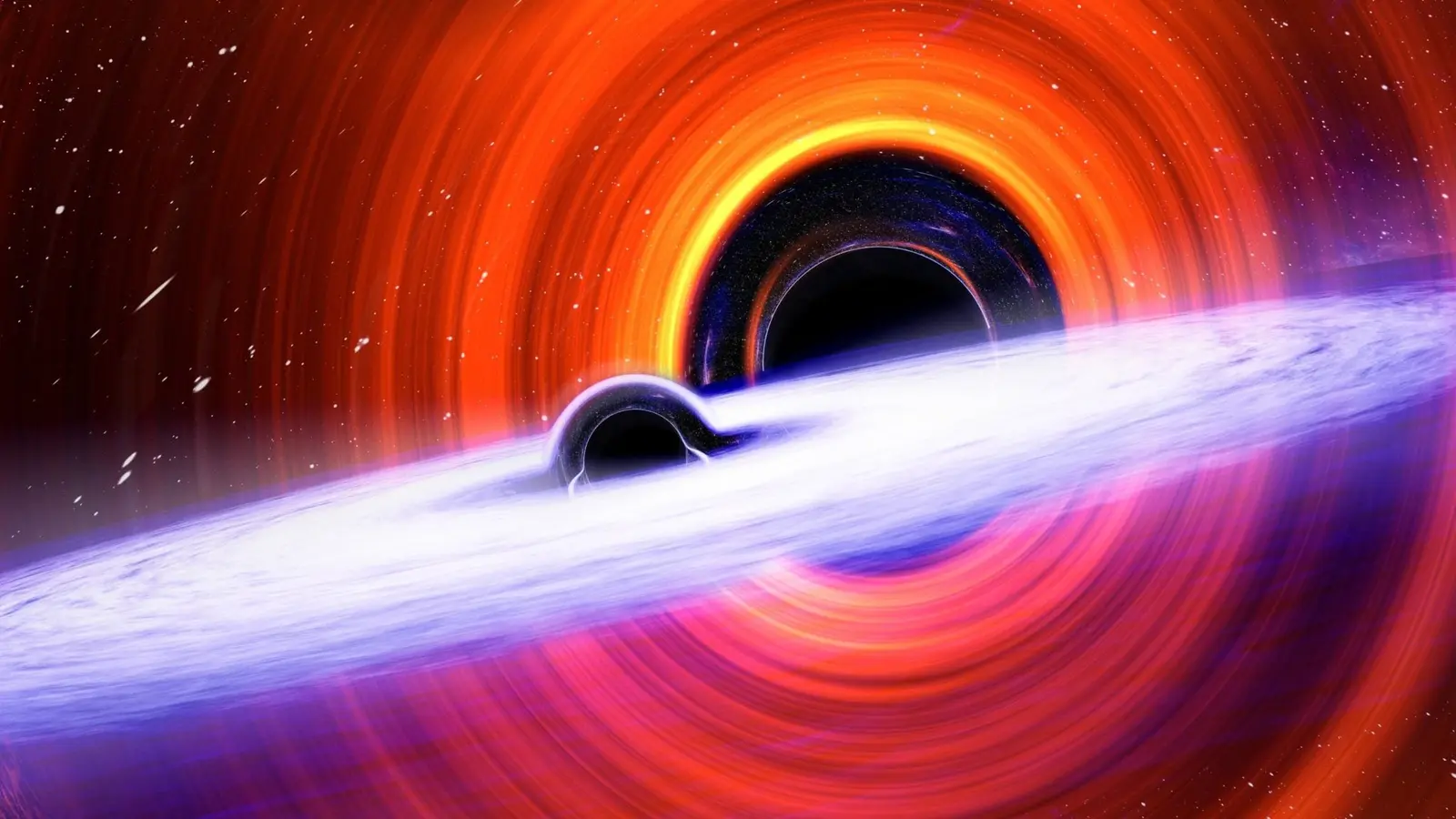
Late one November night a gravitational-wave detector registered something unexpected: a merger that, if real, involved an object lighter than our Sun. That single blip has sent theorists back through decades of speculation about primordial black holes and set observational cosmologists sprinting for confirmation.
When the data don’t fit the textbook
Gravitational-wave observatories like LIGO listen to spacetime itself. They pick up ripples produced when compact objects collide - black holes, neutron stars. Most detections match what we expect from stellar evolution: remnants of massive stars, tens of times the Sun’s mass or larger. So what do we make of a signal that hints at a subsolar-mass merger?
Last year, the Laser Interferometer Gravitational-Wave Observatory issued an automated alert for a candidate event that challenged that assumption. One component appeared to weigh less than one solar mass. Conventional astrophysics has difficulty producing such light compact objects by stellar collapse. That opens the door to a more exotic origin: a primordial black hole born in the first instants after the Big Bang.

An aerial view of the Laser Interferometer Gravitational-Wave Observatory (LIGO) in Livingston, Louisiana, which last year detected an unusual wave signal from the far reaches of space.
What primordial black holes are and why they matter
Primordial black holes are hypothetical. Unlike the black holes formed when massive stars die, these would have condensed from extreme density fluctuations in the infant universe, long before stars existed. Their predicted masses span a huge range: tiny, asteroid-scale objects up to many times the Sun. The idea dates back to work by Yakov Zeldovich and Igor Novikov, later expanded by Stephen Hawking and others.
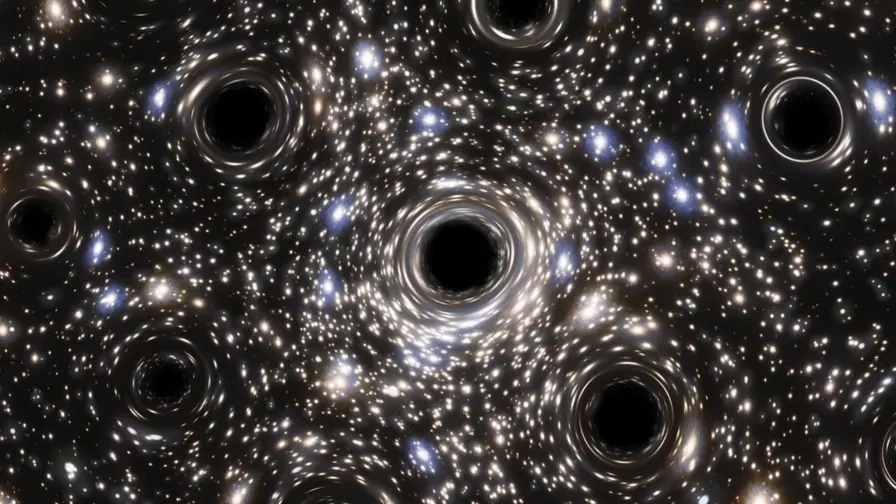
Why do they matter now? Because if enough of them exist, primordial black holes could account for some or even all of dark matter - the invisible mass that holds galaxies together. That would rewrite parts of cosmology. But data must lead the story; extraordinary claims require convincing, repeatable evidence.
The University of Miami analysis
Researchers at the University of Miami, led by associate professor Nico Cappelluti and Ph.D. student Alberto Magaraggia, set out to test whether the odd LIGO candidate is consistent with a primordial origin. Their calculations estimated how many primordial black holes the universe might host and how often LIGO should spot mergers involving them.

Nico Cappelluti, associate professor in the College of Arts and Sciences.
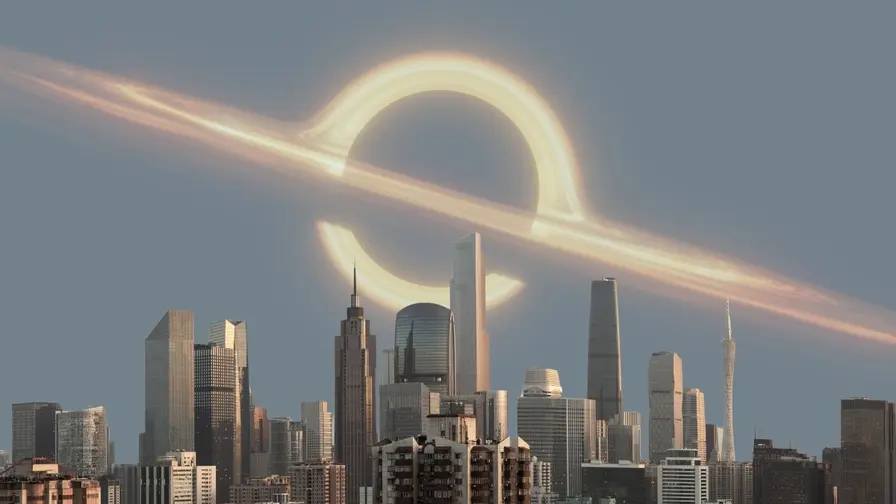
Their verdict is cautious but intriguing. Subsolar mergers should be rare, they say, and LIGO seeing one or a few such events fits the expectation for a sparse primordial population. In other words, the signal is not easily explained by ordinary astrophysical channels, and a primordial black hole provides a plausible interpretation.
Still, Cappelluti and Magaraggia stress that a single detection cannot close the case. The LIGO candidate could be statistical noise, an instrumental artifact, or a previously unknown astrophysical process. Confirming primordial black holes will require multiple consistent detections and careful cross-checks across detectors and observing runs.
Implications for dark matter and cosmology
If primordial black holes are real and abundant enough, they could carry a large fraction of the universe’s dark matter. That possibility excites researchers because it connects gravitational-wave astronomy to one of cosmology’s biggest mysteries. But linking the LIGO candidate to dark matter is a long chain of inference: detection, population statistics, mass distribution, and consistency with other cosmological probes such as microlensing and the cosmic microwave background. This is science by accumulation. One event lights a path. Many events can chart it.
How future detectors will help
LIGO and its international partners within the LVK network - which includes the Virgo detector in Italy and KAGRA in Japan - will continue to search the sky. Planned upgrades will improve sensitivity, pushing detection thresholds lower and increasing the volume of space surveyed. Even so, ground-based instruments like LIGO were designed primarily to catch high-frequency waves from relatively recent mergers, not direct signals from the earliest cosmological epochs.
Space-based observatories and next-generation ground arrays promise to extend the reach. The European Space Agency’s Laser Interferometer Space Antenna, scheduled for launch in 2035, will detect lower-frequency waves that probe more massive and earlier-era systems. Projects such as Cosmic Explorer aim to be roughly ten times more sensitive than current detectors, potentially identifying mergers from the era when the first stars were forming.
Those instruments will not only increase event counts but will allow better mass measurements and improved discrimination between astrophysical and primordial origins. With richer data, researchers can test mass distributions, merger rates, and spatial clustering - all key diagnostics for a primordial population.
Expert Insight
Dr. Elena Ruiz, an observational cosmologist not involved in the Miami study, offered a measured take: "A single subsolar candidate is fascinating, but it’s a hint rather than proof. The strength of gravitational-wave astronomy is statistical power. If future observing runs reveal a handful more of these low-mass mergers with consistent properties, then we will begin to shift from speculation toward solid inference."
She added, "We must also reconcile gravitational-wave findings with constraints from microlensing surveys and the cosmic microwave background. A consistent picture across methods is what will ultimately convince the community."
Conclusion
The LIGO signal has rekindled a debate that spans half a century. It has moved primordial black holes from abstract theory into an empirical testing ground. The University of Miami analysis places the candidate within a plausible primordial scenario, but the work ahead is clear: collect more events, tighten error bars, and cross-check against multiple astrophysical channels. In the coming years, as detectors improve and the catalog of gravitational-wave events grows, we will either find the missing pieces that make primordial black holes a viable dark-matter candidate or rule them out and refine our models of the universe accordingly.

“The cosmos has always fascinated me. I write about space missions, astronomy, and the technologies pushing humanity beyond Earth.”

Discussion
Leave a Comment
Comments (3)
feels overhyped, tbh. cool hint but LIGO false alarms happen and microlensing limits still bite. gather stats then hype
is this even true? sounds wild - primordial black holes as dark matter seems like a big leap. show me repeated events, pls
wow, a sub-solar black hole?? mind blown. but one blip isn't proof, could be noise or glitch. curious tho, keep watching