
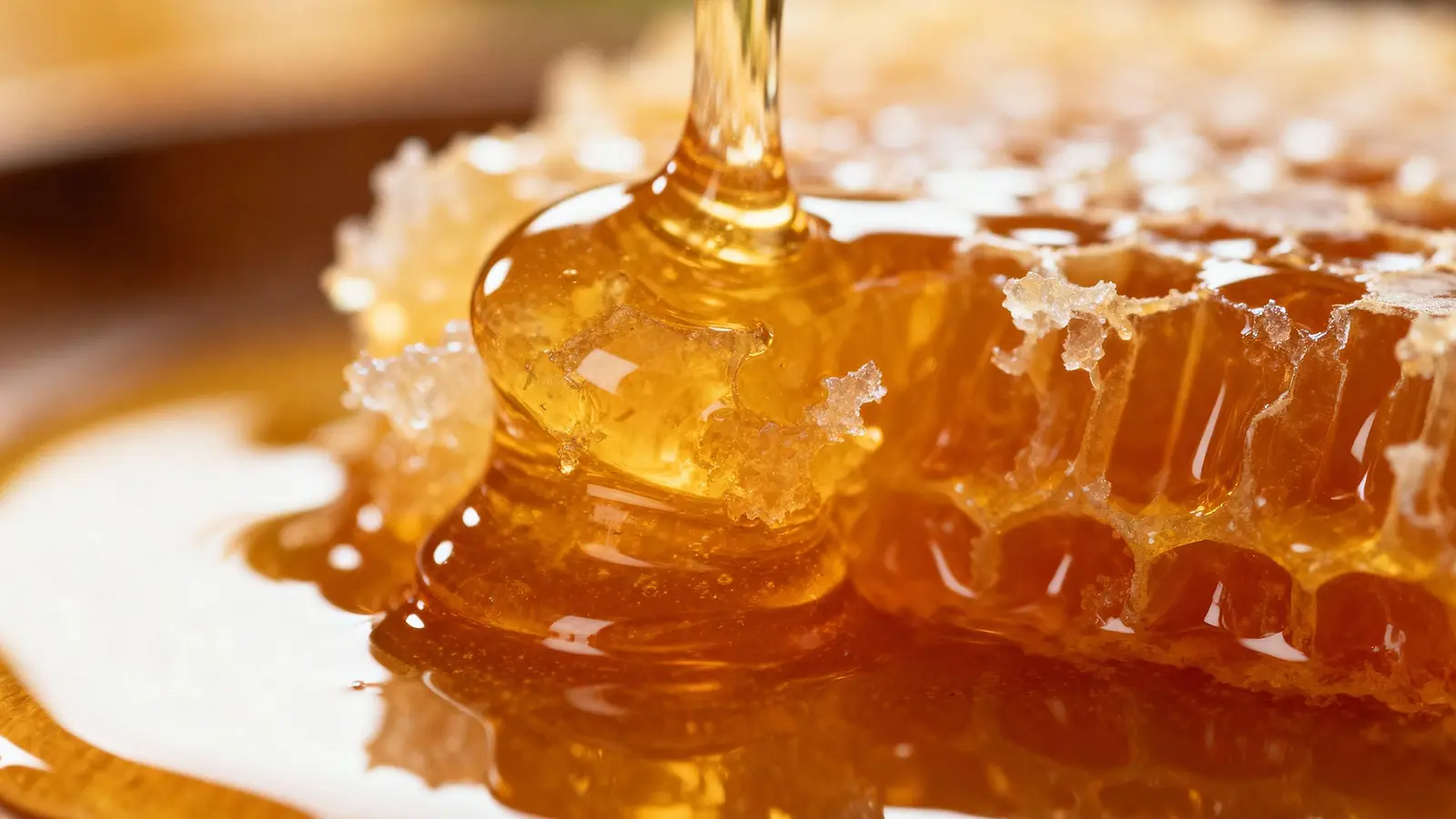
Sunlight feels good on the skin. But at a cellular level, it is a persistent stressor that nudges skin cells toward premature aging and, over time, can seed the types of damage linked to skin cancer. A team in Italy has turned an old remedy into a new experiment: could multifloral honey strengthen the skin’s own defenses against ultraviolet radiation?
From beehives to bioreactors: why honey caught a researcher’s eye
The idea did not spring from folklore alone. Honey has a documented portfolio of biological activities: antioxidant, antimicrobial, anti-inflammatory and wound-healing effects have all been reported in clinical and laboratory contexts. Manuka honey already occupies space in medical dressings. For Dr. Fikiye Fulya Kavak, whose background spans medical biology, beekeeping and cosmetic science, the question was simple and practical. If certain single-origin honeys can be harnessed medically, might a high-quality multifloral honey help intact skin cells resist UV stress?
The team at the University of Sassari grew human skin stem cells, fibroblasts and keratinocytes together inside a continuously perfused bioreactor designed to mimic aspects of living skin. Some cultures received a mild, 1 percent multifloral honey treatment for 48 hours before exposure to UV light. Others were left untreated to serve as controls. The researchers then tracked cellular outcomes and molecular signals tied to aging, stress response, tissue renewal and stemness, using real-time quantitative PCR to measure gene activity.
Subtle shifts in cell behaviour after honey exposure
The headline finding is not dramatic rescue, but rather a recalibration. Cells pretreated with honey showed signs of stronger intrinsic defenses. In stem cells and fibroblasts, markers associated with stemness rose, while genes often linked to senescence and aging declined. The honey-treated stem cells produced less nitric oxide, a reactive molecule that can increase under stress, and they displayed greater overall antioxidant capacity.
Genetic readouts indicated upregulation of stress-protection pathways and modulated signals for proliferation and renewal. In plain terms: honey did not push cells into an overactive repair mode. Instead it appeared to support protective mechanisms and help maintain a healthier balance after UV insult. "It looked as if the honey helped the cells find equilibrium rather than overreact," Kavak says.
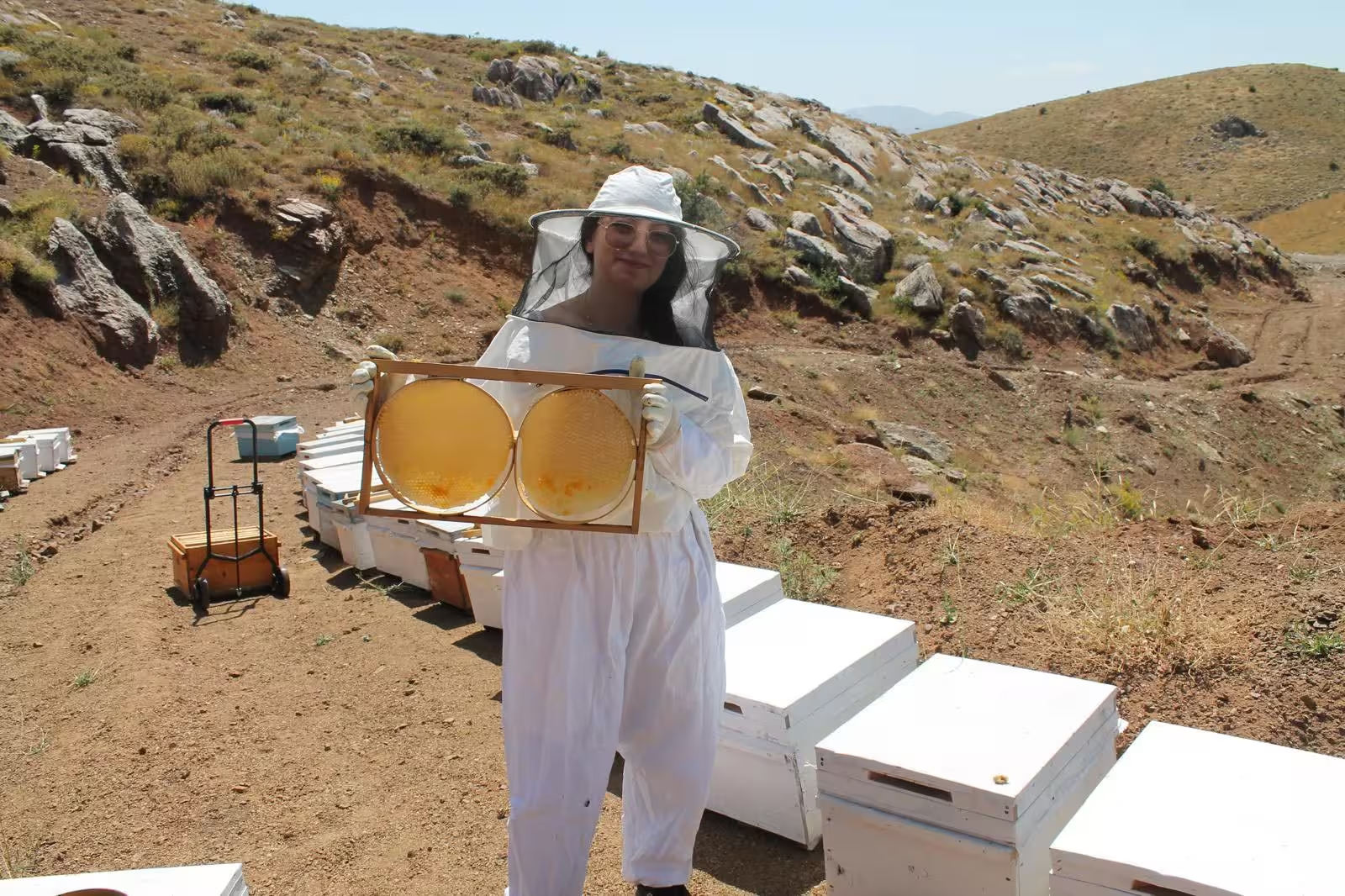
Fulya extracting multifloral honey from a field site.
What this means and what it does not
These results belong to a laboratory model. That matters. Cell-based systems provide controlled insight into molecular events, but they are not a substitute for human trials. The researchers are careful to note that honey must not be regarded as an alternative to sunscreen. Topical sun protection and behavior that limits excessive UV exposure remain the primary defenses against photodamage and cancer risk.
At the same time, the study opens a realistic path for translational work. If specific compounds in multifloral honey act on stress-response pathways, they could inform new cosmetic formulations or adjunctive treatments for skin damage. Honey-derived molecules with antioxidant or signaling activities might be delivered in a controlled form to enhance skin resilience without replacing established photoprotection.
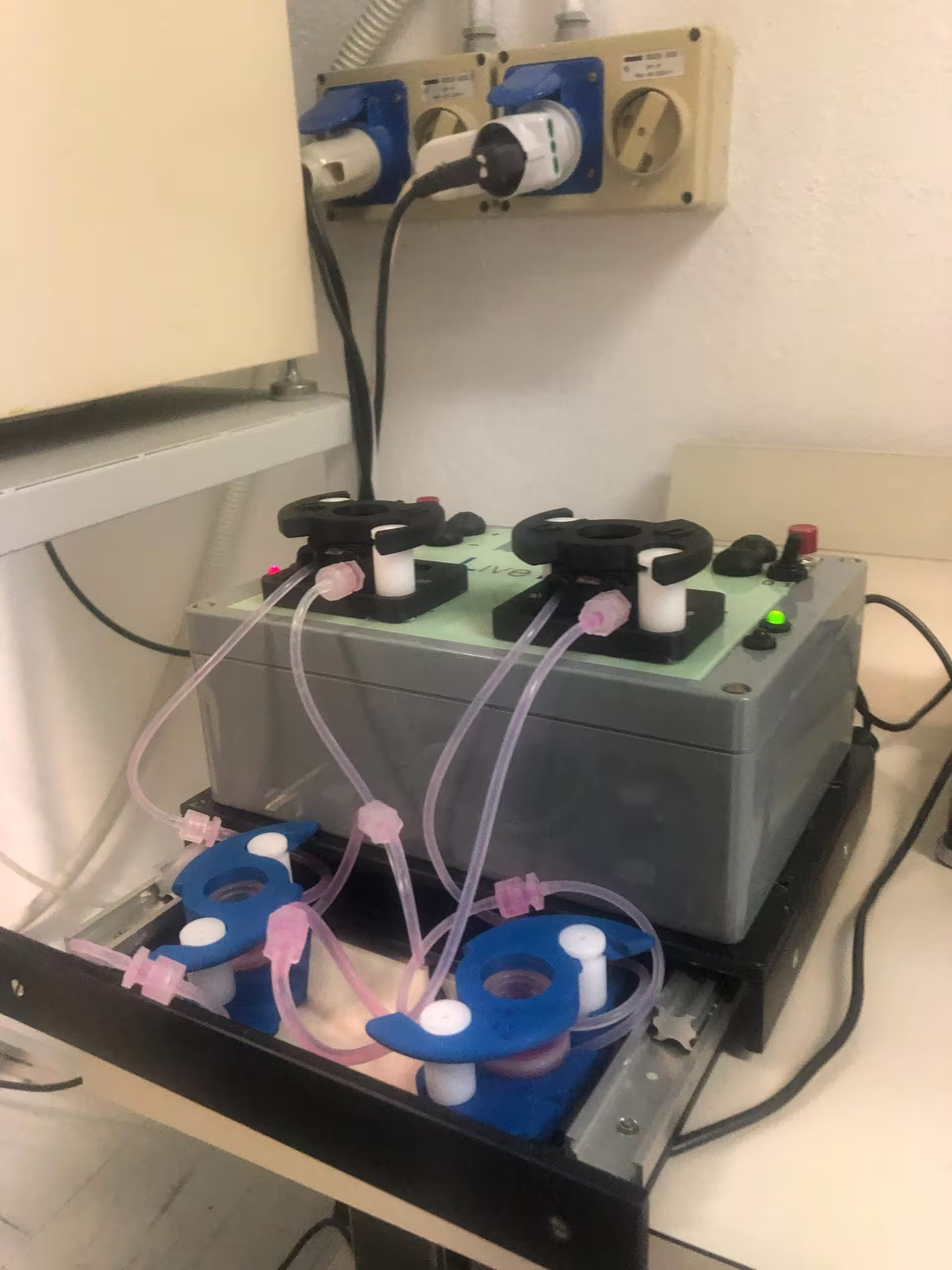
Bioreactor used to house the skin cells for the honey treatment experiment.
Next steps in the lab and beyond
The team is following molecular breadcrumbs. Changes observed at the mRNA level require protein-level confirmation to show that the shifts translate into functional proteins inside the cells. Parallel lines of work are testing nanofiber-based delivery systems that could present honey’s active compounds in a skin-compatible matrix, tuned for controlled release and cosmetic acceptability.
Such delivery platforms are relevant because crude honey is a complex mixture. Identifying the active fractions and packaging them so they remain bioavailable, stable and non-irritating will be crucial for any product or therapeutic application. The research sits at the intersection of natural product chemistry, skin biology and material science.
Expert Insight
"Early cellular signals are encouraging, but caution is required," says an independent dermatological researcher not involved in the study. "Cell models tell us how molecules interact with pathways. They do not predict clinical efficacy or tolerability. The real test will be well-designed human studies and careful formulation work that isolates useful compounds without introducing irritation or allergenicity."
Conclusion
This work reframes a familiar substance as a potential modulator of cellular stress networks. Multifloral honey appears to nudge skin cells toward enhanced antioxidant defences and a steadier renewal program after UV exposure, at least in vitro. That is promising and modest at once: promising because it identifies new biological activity to pursue; modest because practical applications lie several experimental milestones away. For now, the most immediate takeaway is scientific curiosity plus a reminder that traditional remedies still have the power to inspire contemporary laboratory discovery.

“The cosmos has always fascinated me. I write about space missions, astronomy, and the technologies pushing humanity beyond Earth.”

Discussion
Leave a Comment
Comments
No comments yet. Be the first.