
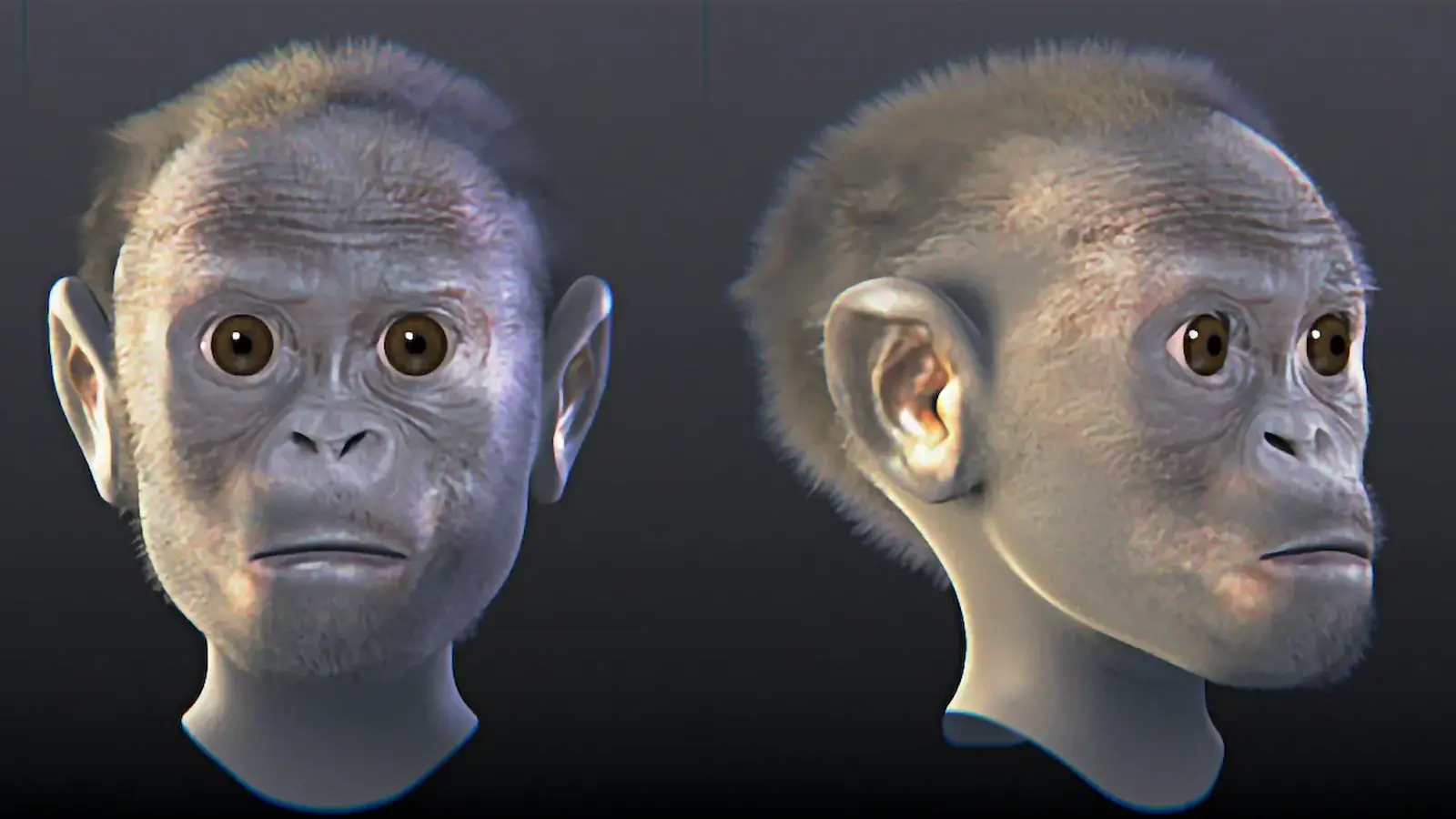
A small skull, unremarkable at first glance, has been quietly forcing scientists to rethink a familiar narrative about where we come from. The Taung Child fossil, discovered a century ago in South Africa, is no longer just a landmark specimen that pointed to Africa as humanity's cradle. It now looks like a clue that points to something far more complicated: multiple early human relatives living, splitting, and sometimes mixing across the southern African landscape.
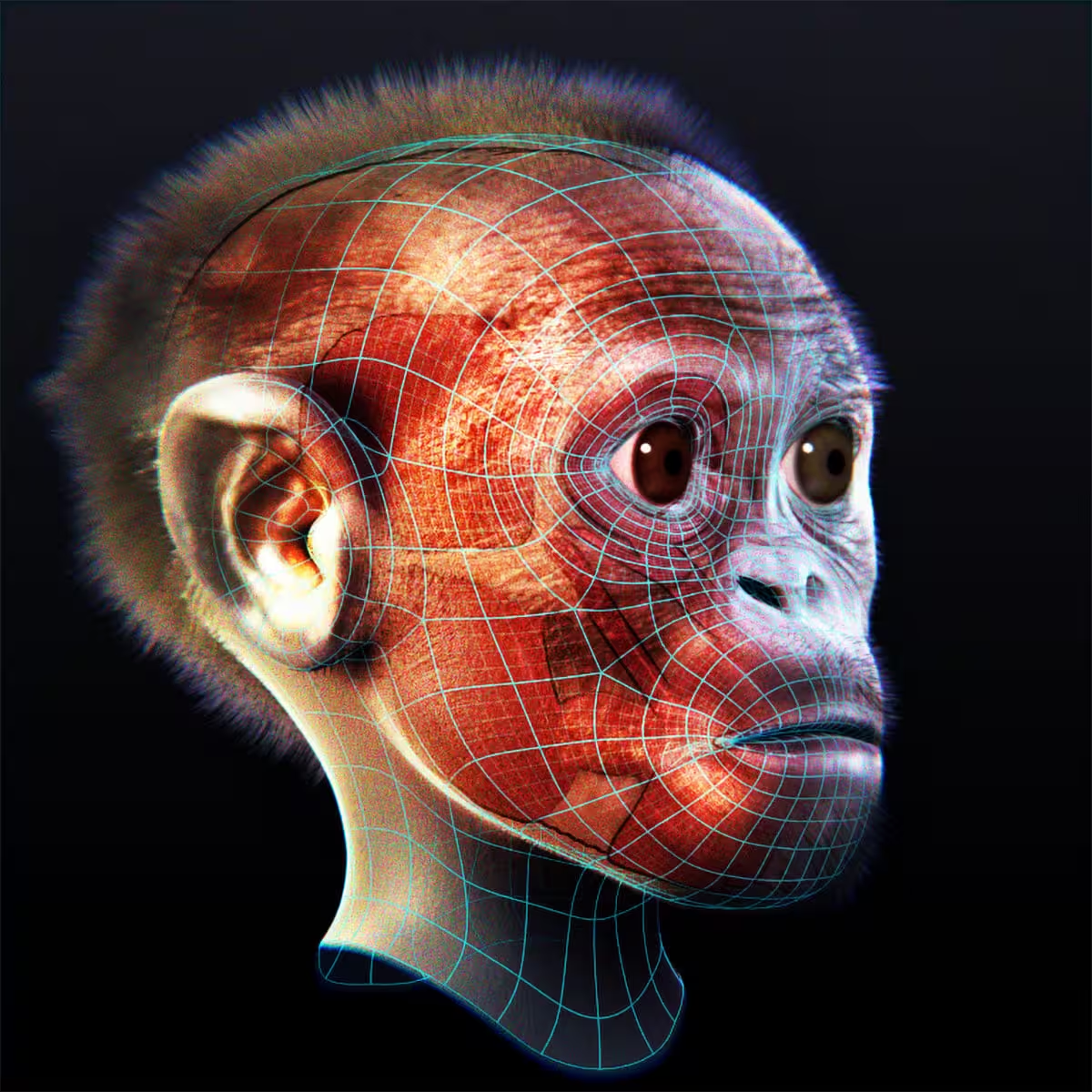
Artistic reconstruction of the Taung Child fossil.
When the fossil was first described, it became the type specimen for Australopithecus africanus and anchored a simple story. But a new paper, published in Nature and led by Professor Gabriele Macho at Vrije Universiteit Brussel, places the Taung Child between 2.96 and 3.03 million years old and reexamines developmental markers preserved in teeth and braincase structure. The result: many adult fossils that have long been lumped together under the same species name do not follow the same growth pattern seen in the Taung specimen.
The difference shows up in how the brain and teeth developed as individuals matured. Those differences are not subtle. They point to distinct growth trajectories, which in turn imply separate evolutionary histories. In plain terms, southern Africa may have hosted several hominin species rather than a single, uniform population.
From teeth to timelines
How can a tooth tell us about species? Tooth enamel and root formation record the pace of childhood growth. When researchers compare those patterns across fossils, they are effectively reading developmental schedules that evolution scribbled in mineral. The Taung Child’s pattern stands apart from many later specimens attributed to Australopithecus africanus. Brain development data reinforce that separation. The team argues these patterns are consistent with different species adapting to different ecological niches.
That ecological story is crucial. Pollen preserved in sediments near the Taung site shows a landscape that was wetter and more forested than much of modern South Africa. Over millions of years the region swung between humid intervals and drier ones. Forests advanced. Grasslands expanded. Populations shifted, sometimes becoming isolated, sometimes coming back into contact. Isolation promotes divergence. Contact invites mixing. Both processes leave traces in bones and teeth.
Why this matters for human origins
We have long pictured the evolution of Homo as a ladder. Step by step. Clean and ordered. That image is breaking apart. The evidence from Taung and other Sterkfontein fossils suggests a tangled bush instead. Different hominins may have taken different evolutionary paths in close geographic proximity. Climate-driven cycles of fragmentation and reunion could have produced bursts of innovation, local specializations, and hybridization events that seeded new lineages.
Professor Macho summarizes the shift: we thought the Taung Child was one among many similar fossils. The new data suggest otherwise. The human family tree was not a single trunk. It was a complex network shaped by environmental change.
Key takeaway: fossil growth patterns and paleoclimate together point to greater hominin diversity in southern Africa than previously recognized.
- Implication one: taxonomy may need revision for several australopith fossils.
- Implication two: Homo likely emerged from a web of interacting populations, not a single ancestral line.
- Implication three: paleoecology is essential to understanding how species split and met again.
The Taung Child case underlines a broader lesson for paleoanthropology. Small details matter. A tooth, a growth line, a pollen grain. Together they reconstruct lives and landscapes. The next step is to expand sampling, refine growth models, and revisit other classic fossils with fresh methods. Only then will we begin to map the true complexity of our deep past.

“My work centers on sustainability, energy, and environmental science — examining how innovation can lead to a greener future.”

Discussion
Leave a Comment
Comments (2)
Interesting find but is tooth growth enough to split species? feels like rushing to rename fossils, need broader samples, imo
wow, that Taung Child keeps surprising ppl. multiple hominins in one region? mind blown... Teeth as time capsules, neat but also kinda wild, need more digs