
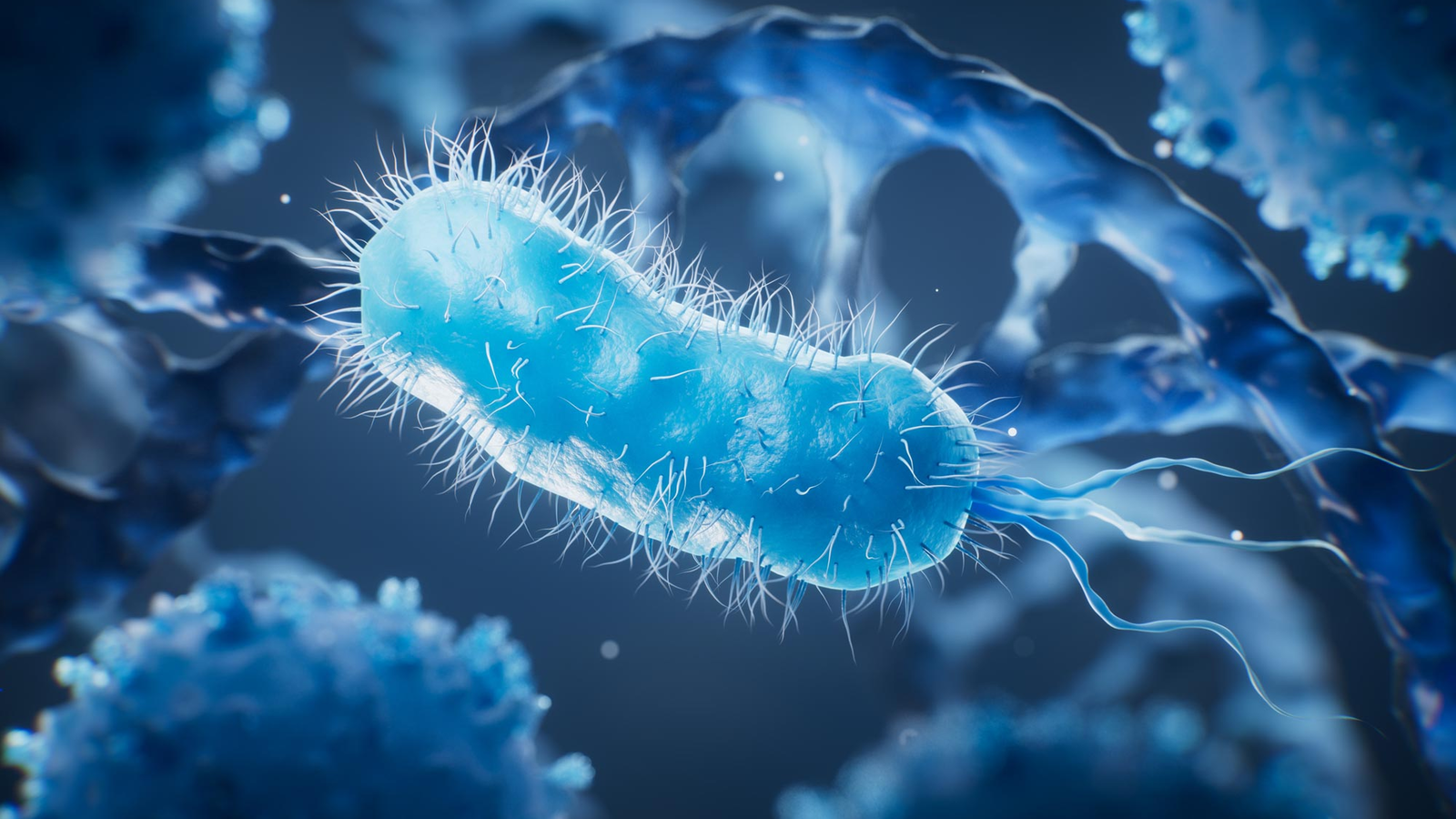
Imagine a bacterium that navigates by Earth’s magnetic field quietly nudging the clock of aging. That is what researchers in Hefei observed when a magnetotactic microbe, Magnetospirillum magneticum AMB-1, produced a surprisingly large lifespan gain in the nematode Caenorhabditis elegans.
Worms fed AMB-1 lived noticeably longer—an average increase of 43.39 percent—and they showed better neuronal performance and preserved intestinal structure late in life. The team, led by Prof. An Xu at the Hefei Institutes of Physical Science of the Chinese Academy of Sciences, published their results in Free Radical Biology and Medicine.
The effect did not appear mystical. It tracked back to a cellular death pathway called ferroptosis, which is driven by iron-dependent lipid peroxidation. In aging animals, iron can catalyze destructive chemistry in cell membranes. AMB-1 exposure reduced both iron accumulation and lipid peroxidation in the worms, blunting that cascade and slowing tissue decline.
How a magnetic trait links to aging biology
Magnetotactic bacteria build magnetosomes, intracellular chains of magnetic mineral crystals that act like a compass needle for the cell. Those magnetosomes are the microbe’s defining feature, and they mattered here: wild-type AMB-1 gave the strongest benefits. A reversibly non-magnetotactic variant, RNM-AMB-1, provided weaker effects, while a permanently non-magnetic strain, NM-AMB-1, failed to extend lifespan.

AMB-1 significantly extended the healthy lifespan of C. elegans by inhibiting ferroptosis.
Genetic tests in the worms implicated specific ferroptosis-related genes—ftn-1, bli-3, and ads-1—in the protective response. That genetic evidence strengthens the case that the microbe’s influence converges on iron handling and lipid stability rather than on some generic probiotic boost.
Why should a compass-bearing bacterium change iron chemistry in a host? The study does not claim a single, simple mechanism. Instead, it opens multiple plausible routes: altered iron bioavailability, sequestration effects from microbe-produced minerals, or indirect modulation of host oxidative stress responses. Each possibility has different implications for how a microbial trait could be harnessed in medicine.
Magnetosomes have attracted attention before for imaging, targeted delivery, and cancer applications because of their biocompatibility and precise physical properties. This new work pushes the conversation toward aging biology: if microbes or their mineral structures can reduce ferroptosis, they may provide experimental tools or therapeutic leads for age-related tissue degeneration.
The authors are careful not to overclaim. Worms are a tractable aging model; they are not humans. Nonetheless, the magnitude of the lifespan gain is striking and gives researchers a concrete starting point to test whether magnetotactic traits influence iron-driven damage across species.
Potential next steps include dissecting the chemical interactions between magnetosomes and host iron pools, testing effects in more complex animals, and exploring whether isolated magnetosome components can reproduce benefits without live microbes. If those lines hold up, they could expand the biomedical role of magnetotactic bacteria from toolkits for imaging and drug delivery into the realm of geriatric research.
The study offers a simple, bold message: a microbe’s physical architecture—its tiny compass—can have biological consequences far beyond orientation. That discovery reframes how we think about microbial contributions to aging and points to new, testable hypotheses for protecting cells from iron-driven decline.


“The cosmos has always fascinated me. I write about space missions, astronomy, and the technologies pushing humanity beyond Earth.”

Discussion
Leave a Comment
Comments (2)
Is this even true? Worms are neat but mammals way more complex. Could magnetosomes just chelate iron or is there another trick? Skeptical, idk
Wow, tiny compass bacteria actually slow worm aging? wild. Curious how magnetosomes tweak iron not just probiotic vibes. if true, huge .