
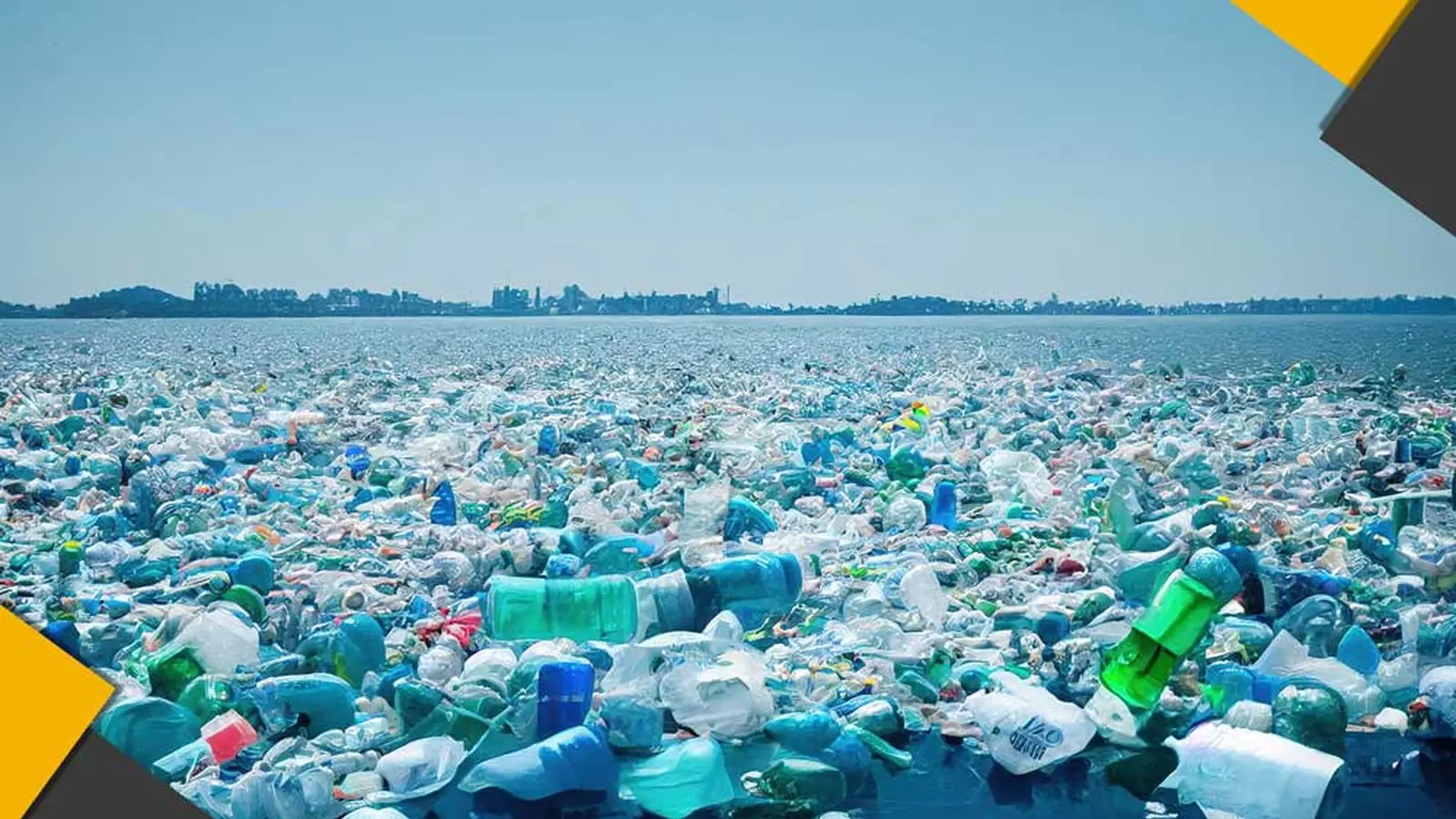
Down where sunlight never arrives, scientists lowered nets and gloved hands into a dark, steaming world and found something unnerving: plastic. Tiny, abrasive, human-made fragments sitting in the bodies of creatures that evolved utterly apart from our littered coasts.
Surveying life around vents and what it revealed
Researchers led by Dr. Su-ju Kim and Dr. Jinyoung Jeong from a Korean bioscience research institute sampled snails and bivalves living on and around hydrothermal vents along the Central Indian Ridge and the North Fiji Basin. These vents are among Earth's most remote ecosystems, where heat and chemicals fuel life independent of sunlight. Still, their study, published in Water Research, found microplastics in nearly all specimens analyzed.
The numbers are stark yet subtle at once. On average there were only about 3.4 particles per individual, a relatively low count compared with some coastal studies. But 11 out of 12 animals contained at least one microplastic particle. When the team expanded the view, they observed that 92 percent of animals sampled near vents carried microplastic contamination.
Polymer analysis showed a high share of polystyrene, roughly 56 percent of detected particles, implicating disposable insulated cups and similar packaging as long-lived sources. Surface-dominated plastics tend to be polyethylene or polypropylene. Particle sizes ranged from 81 micrometers up to 1.2 millimeters.

How the particles behaved inside animals
Patterns of deposition tracked with feeding style. Snails concentrated most particles in the digestive tract. Filter-feeding bivalves displayed a broader dispersion: microplastics lodged not only in guts but also throughout soft tissues. This echoes patterns already documented in shoreline species and implies whole-organism exposure, not just gut passage.
Geography mattered too. Specimens from the Indian Ocean contained substantially more particles than those from the Fiji Basin. Per sample, particle counts were 1.9 times higher, and when normalized by body mass the difference widened: depending on species, there were three to fifteen times more particles per gram. Two explanations stand out: ocean circulation can concentrate debris in particular regions, and input rates of plastic differ between ocean basins.

It is tempting to hope that plastics float away on the surface, leaving abyssal communities untouched. The data reject that hope. As Dr. Kim put it in a statement, 'Plastic pollution has penetrated hydrothermal vent ecosystems that were once considered some of the most isolated habitats on Earth.' That penetration raises questions about exposure pathways, persistence, and long-term effects on deep-sea biodiversity.
Why this matters for science and policy
Microplastics stem from two main routes: the fragmentation of larger items and direct release from products and clothing. Once particles sink or become entrained in deep currents they can travel far. The presence of polystyrene in vent fauna points to legacy pollution from single-use insulation and packaging. At the same time, the range of particle sizes suggests both recent inputs and older, weathered debris.
Ecologically, the consequences are uncertain but worrying. Microplastics can carry adsorbed pollutants and may physically abrade tissues or block feeding structures. For species adapted to narrow thermal and chemical niches, any additional stressor could alter reproduction, growth, or survival. Practically, the findings argue for establishing systematic deep-ocean monitoring and for expanding marine protection policies to consider the seafloor, not just surface waters.
Expert Insight
'We are seeing the fingerprints of human activity in places we once assumed were sheltered,' says Dr. Maria Lopez, a marine ecotoxicologist at a European university. 'This study adds to a growing body of evidence that microplastic exposure is nearly universal. The next step is to quantify biological harm, not just presence.' Her view highlights a shift: detection is no longer the end goal. Understanding pathways and impacts has become urgent.
Conclusion
Microplastics have moved from beaches to the abyss. The study of hydrothermal vent animals shows contamination is widespread, varied by location and species, and often dominated by polymers tied to disposable products. Addressing this problem will require better monitoring of deep-sea ecosystems, tighter waste-management and product-design choices on land, and targeted research into how tiny particles affect the physiology and ecology of deep-sea life.

“The cosmos has always fascinated me. I write about space missions, astronomy, and the technologies pushing humanity beyond Earth.”

Discussion
Leave a Comment
Comments (2)
is this even true? polystyrene from cups down at vents? sounds plausible but also like sample contamination.. did they rule that out
wow, didn't expect plastic in vent snails... heartbreaking. tiny particles inside creatures that never saw sunlight. if that's real, what next? we need deep ocean monitoring, seriously