
Imagine finding a sliver of metal in lunar soil that does not belong to any known meteorite or human probe. Tiny, mirrorlike flakes, each no larger than a grain of sand, could carry the fingerprints of civilizations long extinct elsewhere in the galaxy. That possibility is the central claim of a new paper from Oxford astrophysicist Brian C. Lacki: the debris of ancient megastructures can grind down to dust, ride interstellar winds, and eventually settle on worlds like our Moon, where it might remain preserved for billions of years.
From megastructures to micromotes: how technosignatures might travel
Traditional searches for intelligent life have focused on active emissions: radio broadcasts or laser pulses that require a civilization to be transmitting at the moment we listen. That approach assumes simultaneity, a slim chance given cosmic time. Lacki suggests a different, older strategy. What if we look for passive technosignatures, the durable remains of technology that no longer requires maintenance? What if the echoes of industry are not powerful beacons but dust.
Passive artifacts can take several forms. Lacki divides them into diffusers, occulters, and glinters. Occulters are structures that block starlight in patterns inconsistent with natural transits. Glinters are vast reflective arrays that create anomalous flashes or focused beams. Diffusers scatter light and alter polarization or color in ways natural materials would not. Each of these systems could be built by advanced civilizations and, crucially, could persist long after their creators vanish.
Even intentional megastructures such as Dyson swarms are not eternal. Gravitational interactions, collisions, and a cascade of debris similar to the Kessler syndrome that plagues Earth orbit can reduce macroscopic components to microscopic fragments. Lacki coins the term technograins for these dust-sized remnants. Once small enough, some grains can be accelerated by stellar winds beyond their host star and become interstellar vagabonds.
Why the Moon is a prime archive for alien dust
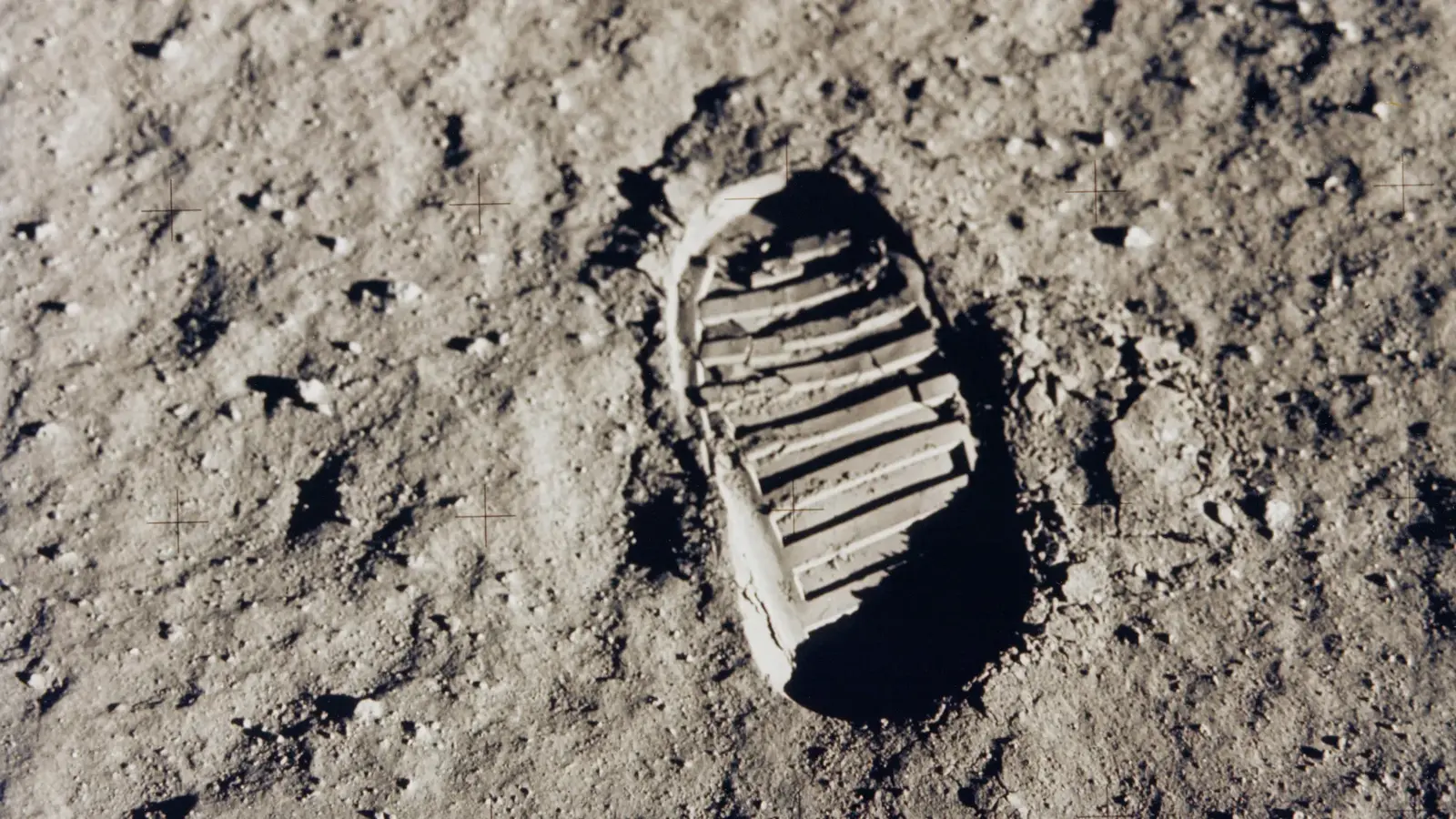
An interstellar mote that finds its way into our inner solar system can collide with planets, be trapped, or simply drift outward. But the Moon offers unique advantages for preservation. It lacks an atmosphere, weather, and active geology to churn and destroy surface material at the rate Earth does. Lunar regolith accumulates over eons, burying and protecting particles beneath micrometeorite layers. Samples returned by Apollo missions show that the top centimeters of lunar soil can remain undisturbed for millions of years in places.

An iconic photograph of Buzz Aldrin's bootprint on the Moon. Regolith like that pictured here could contain technosignatures, research suggests.
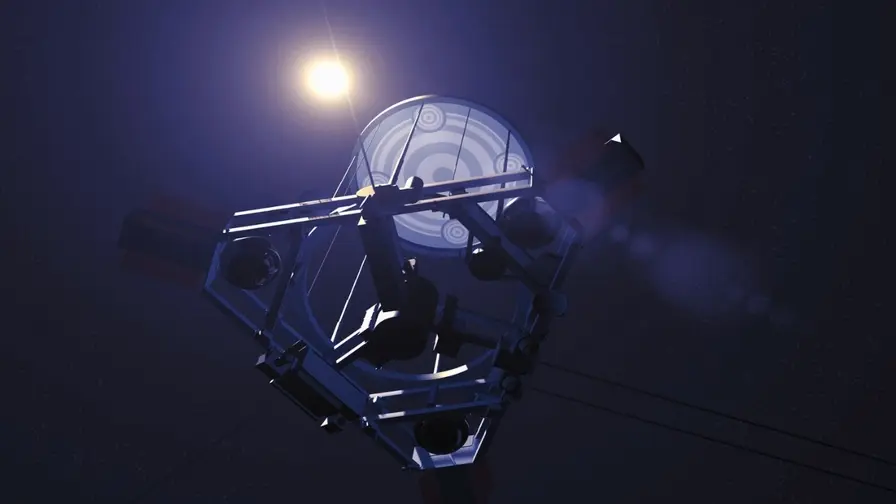
Detecting technosignatures in regolith is not science fiction. We already possess the tools needed to examine dust for unusual composition and structure. High-resolution imaging, scanning electron microscopy, energy-dispersive X-ray spectroscopy, and mass spectrometry can reveal metallic alloys, uncommon isotopic ratios, or engineered microstructures. Polarimetric studies of returned dust can search for patterns of reflectance consistent with mirror fragments. Magnetic and electrical properties may also betray manufactured origins.
Of course, distinguishing an artificial grain from a strange but natural mineral requires rigorous criteria. Contamination control will be essential. Any mission that collects lunar dust for this purpose must follow strict planetary protection and curation protocols, so samples remain pristine from collection through analysis. That is why targeted lunar sample-return missions, and in situ analysis on well-chosen sites, are strategic priorities if we want definitive answers.
Implications for SETI and future missions
If proven feasible, the search for passive technosignatures in the Solar System reframes SETI. It shifts some focus from building ever-larger telescopes to designing careful, high-fidelity sample collection and analysis campaigns. Lunar exploration programs such as Artemis, planned robotic sample returners, and orbital dust collectors could be configured or extended to include technosignature protocols.
Finding technograins would change everything. It would tell us that technological civilizations can die out yet leave physical traces that survive galactic voyages. It would also expand the kinds of targets we search. Instead of only scanning for ephemeral signals, we could build catalogs of anomalous materials found within the Solar System and compare them to natural baselines derived from meteorites and known lunar samples.
Expert Insight
Dr. Elena Marquez, a planetary scientist at the Lunar Materials Laboratory, offers a practical view: "The Moon is a slow-motion archive. Layers of regolith record impacts and arrivals over deep time. If an unusual foreign fragment is present, careful stratigraphy and microanalysis will reveal it. The challenge is sample fidelity. We must avoid terrestrial contamination and analyze multiple, geographically diverse locations to rule out local anomalies."
Her point highlights a dual challenge and opportunity. The technical hurdles are tangible, but they are also incremental improvements to existing lunar science capabilities, not leaps into the unknown.
Conclusion

The suggestion that fragments of alien megastructures may lie hidden in lunar dust does not promise immediate discovery, nor does it guarantee that such fragments exist. What it does offer is a practical, testable strategy that complements traditional SETI. By treating the Moon as a repository for microscopic technosignatures and by equipping upcoming missions with the instruments and protocols to distinguish the artificial from the natural, researchers can open a new front in the search for extraterrestrial intelligence. The next time we sift lunar soil, the smallest scrap might carry the largest story.

“My work centers on sustainability, energy, and environmental science — examining how innovation can lead to a greener future.”

Discussion
Leave a Comment
Comments (2)
wow, that gave me chills. The Moon as a galactic time capsule? mind blown, but also skeptical... curious to see samples.
Is this even true? Mirror flakes from dead megastructures on Moon sounds wild. How to rule out Earth contamination tho, lol.