
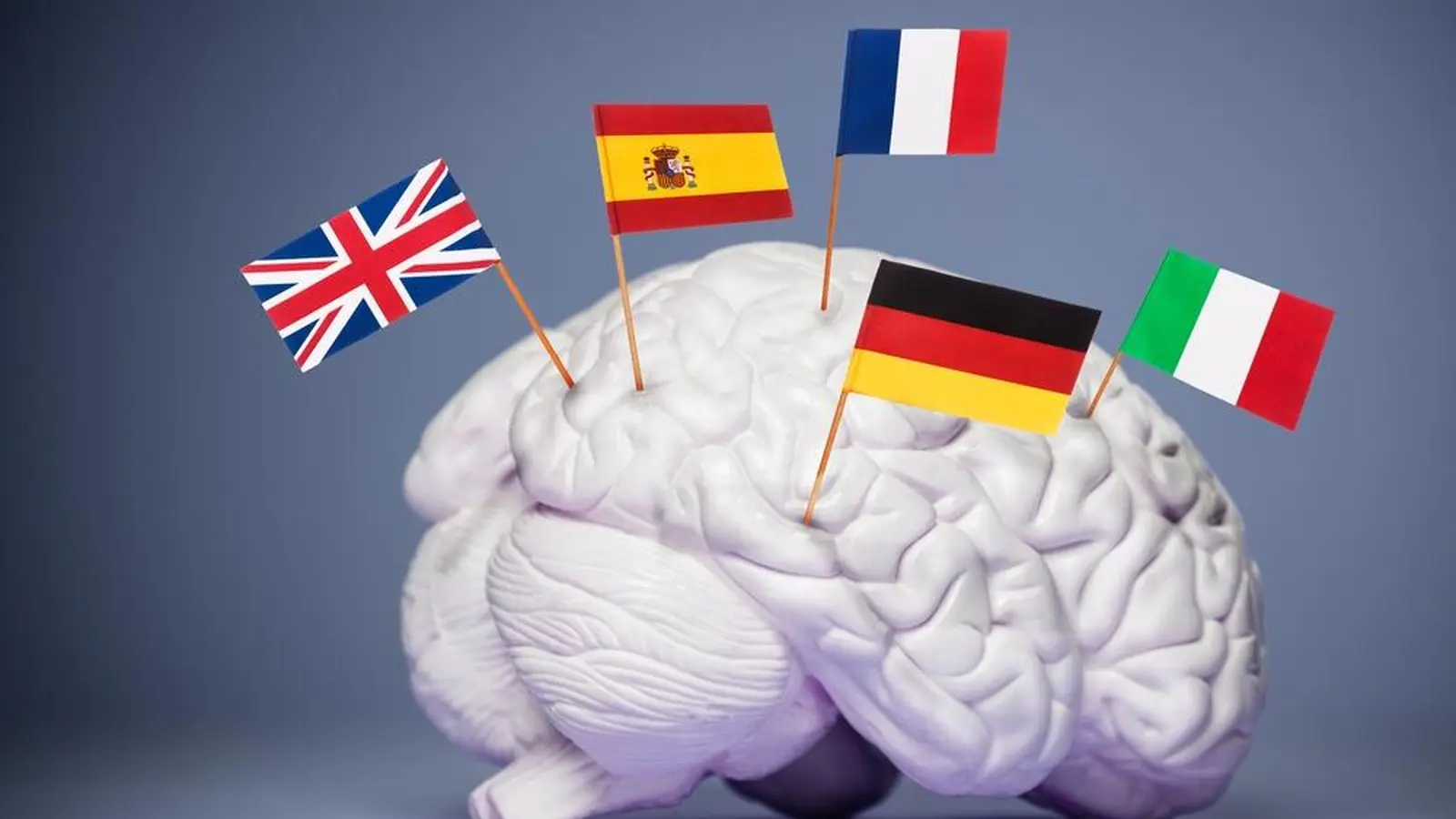
Imagine a busy café in San Sebastián. A waiter flips between Basque and Spanish, a student practices English, and an elderly neighbor answers in French. In less than a minute each person selects words, suppresses alternatives, and adjusts accents. Small acts, repeated for decades. Could that daily juggling shape the brain itself?
When daily bilingualism becomes a laboratory
Researchers who study aging and cognition have long wondered whether the mental work of switching languages might change how the brain ages. At the Federation of European Neuroscience Societies Forum 2026, a team led by Dr Lucia Amoruso reported evidence that multilingual experience correlates with brain connectivity patterns that look younger than expected for a person’s chronological age.
The setting matters. The Basque Country is linguistically rich: many residents routinely use Spanish, Basque, French and English in different combinations. That variety allowed the team to go beyond simple monolingual-versus-bilingual comparisons and to examine whether increasing language exposure tracks with progressively younger-appearing brains.
Magnetoencephalography and an age-predicting model
They recorded neural activity from 728 people using magnetoencephalography, or MEG. MEG senses the tiny magnetic fields produced by firing neurons and captures millisecond-scale patterns of communication across brain regions. Those patterns change with age, as connections weaken and coordination shifts.
Using those data, the team trained a machine-learning model to recognize typical connectivity signatures at different ages. The model thus became a brain-age clock: feed it a person’s MEG connectivity, and it returns an estimated brain age based on learned patterns.
To avoid circular results, the clock was built on the larger group and then tested on a separate sample of 144 participants. That independent test set is crucial when evaluating how well a model generalizes to people it has not ‘‘seen’’ before.
Clear gradient: more languages, younger-looking brains
When predicted brain age was compared with actual age, a pattern emerged. Bilinguals (two languages) showed brains that appeared roughly six years younger than monolingual peers. People speaking three languages showed a similar, slightly larger advantage at about seven years. The strongest effect was seen in speakers of four languages, whose brain patterns suggested an advantage near 13 years.
The advantage was not simply a yes-or-no effect. Earlier acquisition of a second language and higher proficiency both strengthened the association. In other words, depth and duration of multilingual experience appear to matter.
What could explain this? A few mechanisms are plausible. Managing multiple languages places constant demands on executive control: selecting a target language while suppressing others, resolving interference, and rapidly shifting rules. Those operations recruit frontoparietal networks that support attention and cognitive control. Repeated engagement might promote efficiency and resilience in those circuits, sometimes described as cognitive reserve or neural maintenance.
Limitations and open questions
Correlation is not causation. The team adjusted analyses for age, sex and education, but other lifestyle differences could explain part of the effect. Multilingual people may have different social networks, employment patterns, travel histories, or leisure activities that also support brain health.
Other methodological caveats deserve attention. MEG captures electrical activity indirectly through magnetic fields and is sensitive to measurement conditions. The brain-age model learns from population patterns; its predictions depend on training data composition. And while the sample from the Basque region is well suited to study graded multilingualism, findings may not generalize to very different cultural settings.
The researchers plan follow-up work in populations with neurodegenerative disorders such as Alzheimer’s disease. If multilingual experience relates to slower decline or greater resilience in these cases, the public-health implications could be important. They also want to test whether switching between closely related languages, which might produce more interference, imposes a stronger control demand and therefore a larger protective effect.
Practical implications beyond neuroscience
Learning additional languages carries obvious cultural and social benefits. This study adds a potential cognitive-health incentive: long-term, active language use may help maintain youthful patterns of neural communication. That does not mean language learning is a guaranteed shield against dementia. But it joins a list of lifestyle factors linked to healthier cognitive aging, such as physical activity, balanced nutrition, social engagement and lifelong learning.
- Neural efficiency: repeated practice may tune networks, improving signal coordination.
- Cognitive reserve: diverse experiences could build redundancy that delays clinical symptoms.
- Social and sensory stimulation: multilingual lives often involve rich interpersonal and perceptual demands that boost brain health.
Expert Insight
"The study offers a compelling piece of the puzzle," says Dr Helena Ruiz, a cognitive neuroscientist at a European brain institute who was not involved in the research. "We should view multilingualism as one of several experiences that shape brain aging. The key advance here is the graded relationship: more sustained, fluent use appears to linearly associate with younger connectivity patterns. The next step is to test whether targeted language training can produce measurable changes in at-risk people."
Dr Ruiz emphasizes pragmatic nuance. "Not everyone can relocate to a multilingual region. But structured language learning, especially when combined with social interaction and cognitive challenge, may still be beneficial. Randomized trials would help determine causality."
Conclusion

The FENS 2026 study strengthens the idea that how we use our minds matters for how they age. In a region where several tongues are part of daily life, speakers with broader, earlier, and more proficient multilingual experience showed brain connectivity that looked years younger than their chronological age. The finding encourages further experimental work and suggests that language learning could be a component of cognitive-health strategies across the lifespan.

“My work centers on sustainability, energy, and environmental science — examining how innovation can lead to a greener future.”

Discussion
Leave a Comment
Comments
No comments yet. Be the first.