
NASA's Cryocoupler Brings Orbital Refueling Within Reach
Picture a spacecraft easing alongside an orbital tank, a nozzle reaching out like a petrol pump in slow motion. No astronauts tethered to the hull. No risky spacewalks. That image is closer to reality after a recent test of a new device nicknamed the Cryocoupler, developed by NASA in partnership with L3Harris.
The Cryocoupler is designed to mate spacecraft with orbital fuel stations and transfer cryogenic propellants such as liquid hydrogen and liquid oxygen without leaks. These fluids must be stored at temperatures hundreds of degrees below zero Celsius, so every component must survive extreme cold and repeated thermal cycling. A NASA project manager at Marshall Space Flight Center summed it up plainly: "Transferring cryogenic propellants in orbit remains one of the most difficult engineering challenges we face."

Testing the nozzle that could change mission design
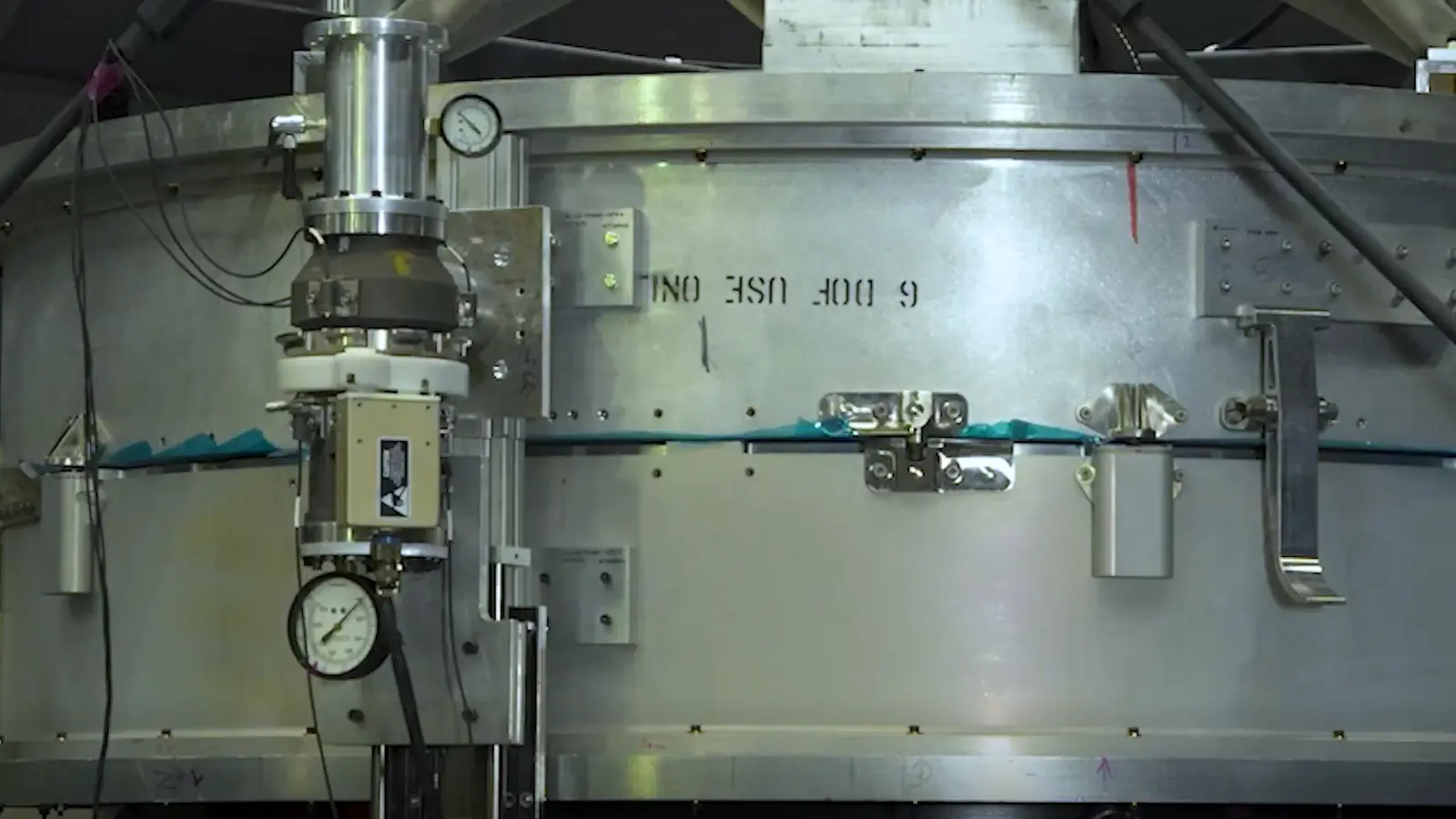
Engineers pushed the Cryocoupler through a battery of thermal and operational trials. For cold-flow assessment they routed liquid nitrogen at minus 196.1 degrees Celsius through connected and disconnected configurations to measure how materials and seals react when temperatures plunge. Those thermal contraction effects matter. Metal and composite parts shrink at different rates, and a tiny mismatch can open a leak path or jam a coupling.
To simulate real docking scenarios, researchers mounted one half of the coupler on a robotic table that introduced deliberate misalignment and movement. Space encounters are rarely picture-perfect. Relative motion, imperfect alignment and vibration are the norm. The robotic rig tested whether the Cryocoupler could accommodate those imperfections while preserving a tight, leak-free transfer.
Unlike ground-based couplers used on rockets such as the Artemis launch system, which often require manual connection or astronaut intervention, this device operates autonomously. That design choice removes the need for hazardous extravehicular activity during refueling and shortens the timeline for on-orbit operations. The unit is optimized for the harsh vacuum, radiation and thermal swings of space.
Current testing focuses on core functionality. The Cryocoupler remains at an early development stage and engineers expect further refinements for mission-specific needs. Future iterations will tackle long-duration storage, insulation improvements, and integration with orbital refueling architectures such as depots and reusable vehicle networks.
If scaled and flown, orbital refueling could reshape mission planning. Spacecraft could launch with less fuel, extend missions beyond low Earth orbit, and support lunar gateway logistics or deep-space expeditions. It is a technical stepping stone toward sustainable, reusable infrastructure in space.
For now the Cryocoupler is a promising prototype. The tests show the physics is manageable. The engineering still needs work. But the image of spacecraft rolling up to a pump in orbit is no longer science fiction.


“The cosmos has always fascinated me. I write about space missions, astronomy, and the technologies pushing humanity beyond Earth.”

Discussion
Leave a Comment
Comments
No comments yet. Be the first.