
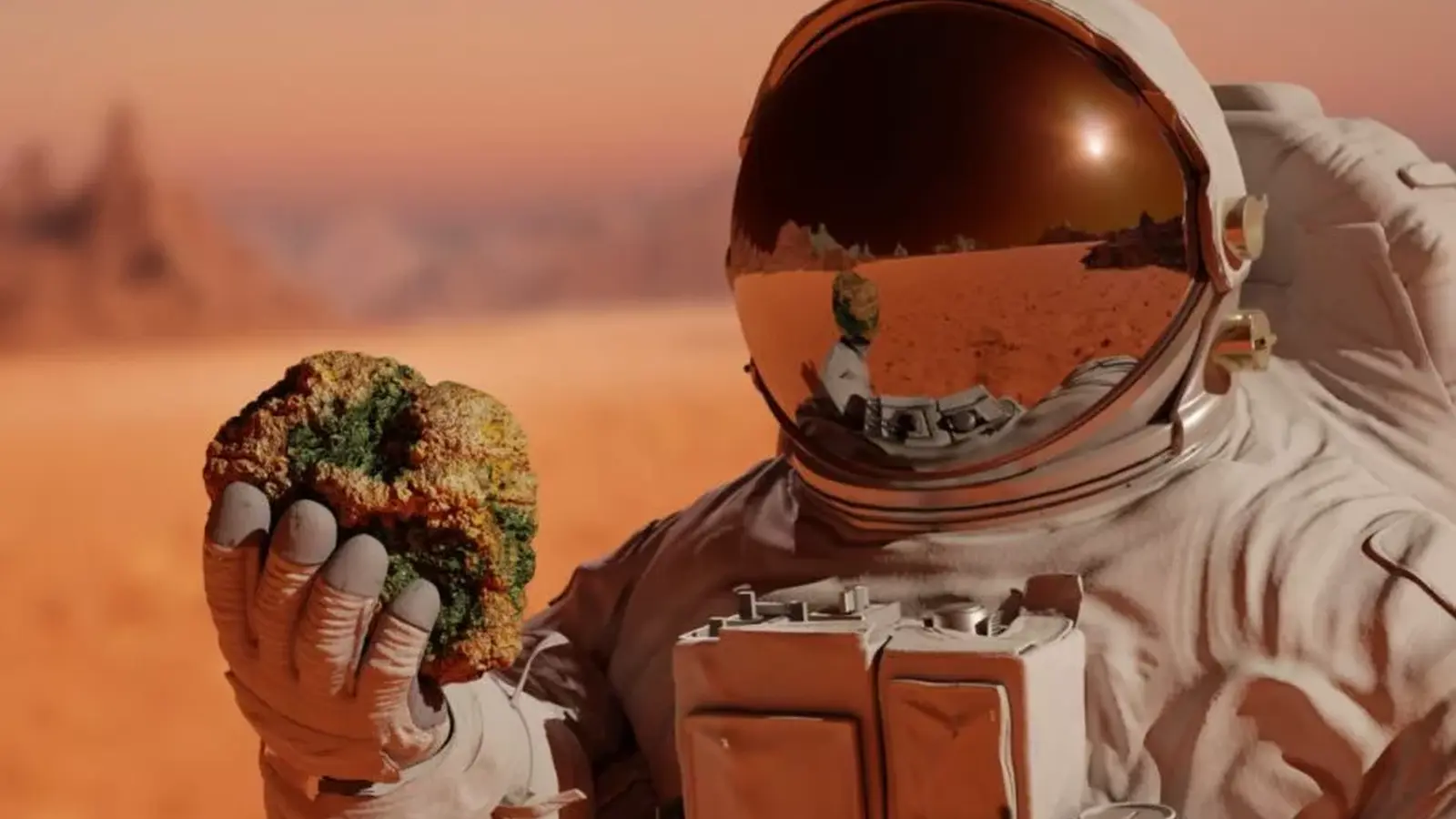
Imagine waking to the same recycled air for 365 days, stepping out onto simulated red dust and testing a rover that will never see the real sky. That is the scenario NASA is offering to four people willing to live inside a Mars-analog habitat on Earth.
What the mission looks like
The project will run at NASA's Johnson Space Center in Houston. Participants will live in a fully isolated facility designed to recreate many of the operational and environmental constraints of a Mars mission. Tasks will include simulated spacewalks, interplanetary transit procedures, surface operations and rover handling. The agency plans to use the collected data to improve hardware, develop operational protocols and refine health-care strategies for long-duration missions and for a planned permanent moon base starting in 2029.
Selected volunteers will spend 12 months inside the habitat. They will also take part in two months of additional testing and training—one month before and one month after the main mission—to gather medical and psychological baseline data and to ensure the team is mission-ready. The mission will carry pay, though exact compensation has not been published.

Who can apply and why the rules matter
NASA's eligibility criteria are precise. Applicants must be 30 to 55 years old, shorter than 188 centimeters, and be either U.S. citizens or permanent residents. Candidates should have a background in technical fields, engineering, science or military operations. They must be medically and psychologically fit, free of food restrictions, and not prone to sleepwalking or dependent on sleep medications. Successful applicants will pass both physical fitness tests and psychological evaluations.
- Age: 30 to 55 years
- Height: under 188 cm
- Citizenship: U.S. citizen or green card holder
- Background: technical, engineering, science or military experience
- Health: no major physical or psychiatric conditions; no sleepwalking or sleep-meds
Applications are open now, but the simulation will not begin before August 2027. That gives candidates time to prepare and NASA time to finalize mission design.
Why this matters for future exploration
Long periods in confined, isolated environments affect sleep cycles, mental health and cognitive performance. Past studies have shown changes in circadian rhythms, increases in stress and occasional declines in task performance. By recreating similar conditions on Earth, researchers hope to identify mitigation strategies—everything from habitat design tweaks and lighting schedules to behavioral countermeasures and medical protocols—that protect crew health during multi-month or multi-year flights.
Data from this study will feed directly into planning for Artemis-era lunar operations and eventual crewed missions to Mars. Think of it as rehearsal under rigorous conditions; the better the rehearsal, the safer the real thing.
NASA described the program as a key step toward understanding human resilience beyond low Earth orbit. Independent reporting has highlighted the mission's potential to shape astronaut training and spacecraft systems alike.
Interested applicants should review NASA's detailed requirements and consider both the challenges and the unique opportunity: a year of isolation that could change how humans travel to other worlds.


“The cosmos has always fascinated me. I write about space missions, astronomy, and the technologies pushing humanity beyond Earth.”

Discussion
Leave a Comment
Comments (2)
So only citizens or green card holders and under 188cm? kinda exclusive. 30-55 age limit too, curious why. ethics? testing on volunteers, hmm
Wow waking to recycled air for 365 days?? Thrilling idea but also scary. sleep, mental load, food boredom... who signs up??