
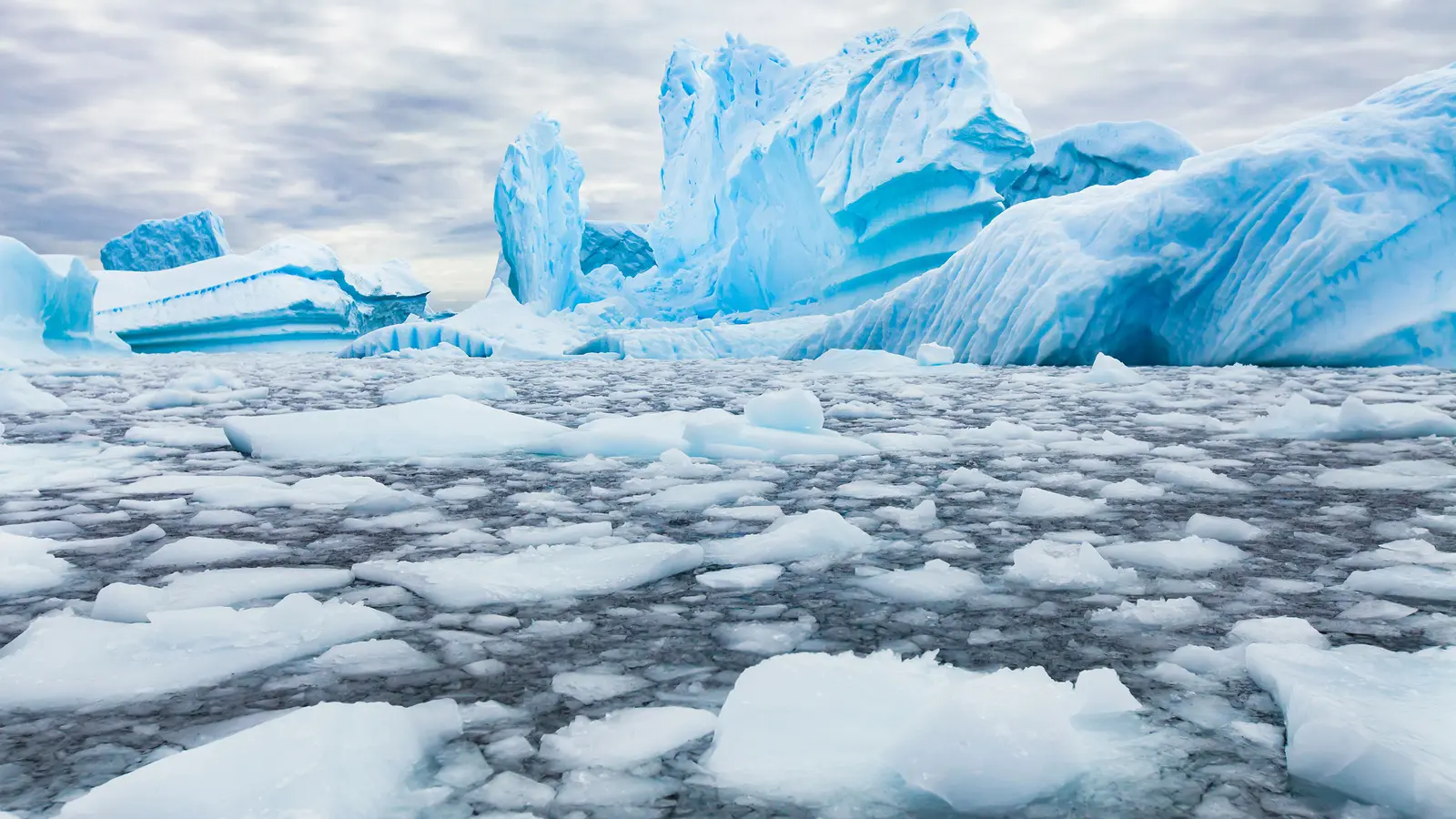
A widening belt of open water at the ice edge is doing more than changing the Arctic skyline. As sea ice thins and retreats, sunlight strikes dark ocean patches and wakes up biological life along the ice margin. That wake-up call appears to be producing a previously overlooked supply of tiny particles that can seed clouds.
Satellites have long recorded the Arctic's dramatic loss of sea ice and the growing season of open water. Snow-covered ice bounces back roughly 50 to 70 percent of incoming sunlight. Dark ocean absorbs far more. The result is a surface that heats differently and a marginal ice zone that is becoming larger and more biologically active each year.
Why this discovery matters
Researchers now report a new pathway: biological activity at the ice edge releasing particles into the atmosphere. Those particles are small, but they can matter a lot. They act as cloud condensation nuclei, the seeds around which water droplets form. Clouds in the Arctic do double duty. They can trap outgoing heat and warm the surface at night. They can also reflect sunlight and cool the surface during daylight. Which effect dominates depends on cloud amount, thickness, and timing. More particles could shift that balance.
Professor Zongbo Shi of the University of Birmingham, who led the study, emphasizes the link to feedbacks. He explains that if the new particles lead to more or thicker clouds during the melting season, the net outcome could be complex: surface warming that accelerates ice loss in some places, and localized cooling over newly open water in others. The feedbacks are subtle and depend on where and when clouds form.

This particle pathway is not yet included in current climate projections
That omission matters. Climate models used to forecast Arctic change do not currently represent this freshly identified mechanism. Without it, projections may miss an important driver of regional cloud behavior and, by extension, regional warming and sea-ice responses. The research team is already working to convert field observations into model-ready parameters so the process can be tested in simulations.
Practical questions remain. How large and long-lived are these particles in the atmosphere? Which biological sources at the ice edge produce them? And how will the particle-cloud interactions play out as the Arctic continues warming faster than the global average? Answering those questions will require coordinated field campaigns, targeted lab work, and model development.
In short, the Arctic is revealing another way that its transformation can ripple outward through the climate system. Observations are landing on a simple but powerful idea: change the surface, and the sky will change back.


“The cosmos has always fascinated me. I write about space missions, astronomy, and the technologies pushing humanity beyond Earth.”

Discussion
Leave a Comment
Comments
No comments yet. Be the first.