

When your phone presses against your ear at the end of a long day, the worry that a whisper of unseen radiation might be doing harm is an old one. It has followed the rise of mobile phones like a shadow—persistent, loud, and hard to ignore.
Public anxiety reached a peak as smartphones became ubiquitous over the past two decades. People wondered whether carrying a radio transmitter next to the skull could raise the risk of brain tumours. That question prompted the World Health Organization in 2019 to commission a suite of systematic reviews to clarify what the evidence actually shows.
Where the evidence leads
Two lead authors from the WHO cancer-related reviews recently published an independent summary in the New Zealand Medical Journal that distills the findings for public scrutiny. Their reanalysis focused on radiofrequency electromagnetic fields emitted by mobile phones and whether those fields are linked to cancers of the brain, head, or neck.

The investigators examined 63 high-quality epidemiological and observational studies spanning 1994 to 2022. The bottom line: there is no credible evidence of either a statistical association or a causal relationship between mobile phone use and cancers of the brain, head, or neck. Patterns such as daily use, or long-term ownership exceeding 10 years, produced no measurable increase in risk. Separate analyses also refuted an older idea that radio transmitters or television towers raise childhood leukemia rates.
Why does this conclusion matter? Because the scientific community has spent decades separating plausible biological mechanisms from misconceptions. Radiofrequency fields that carry phone calls are non-ionizing. They lack the energy to directly break DNA. That contrasts with ionizing radiation such as X-rays or radioactive particles, which can damage genetic material and increase cancer risk.
- Scope: 63 epidemiological studies reanalyzed from 1994 to 2022.
- Main outcome: no detectable link between phone radiation and brain, head, or neck cancer.
- Additional finding: no evidence linking broadcast towers to childhood leukemia.
Exposure limits set by regulators were informed by the worst-case thermal effects of higher-frequency microwaves and have kept consumer devices well below levels that produce measurable heating. Over time, that engineering caution, plus repeated independent testing, has reduced plausible pathways by which everyday phone use would create harm.

How scientists reached this point
Large-scale reviews like the WHO project rely on many moving parts: study selection, assessment of bias, and statistical pooling where appropriate. The studies included a mix of case-control and cohort designs, conducted in different countries and epochs of mobile technology. That breadth matters because usage patterns and handset power have shifted dramatically since the 1990s.
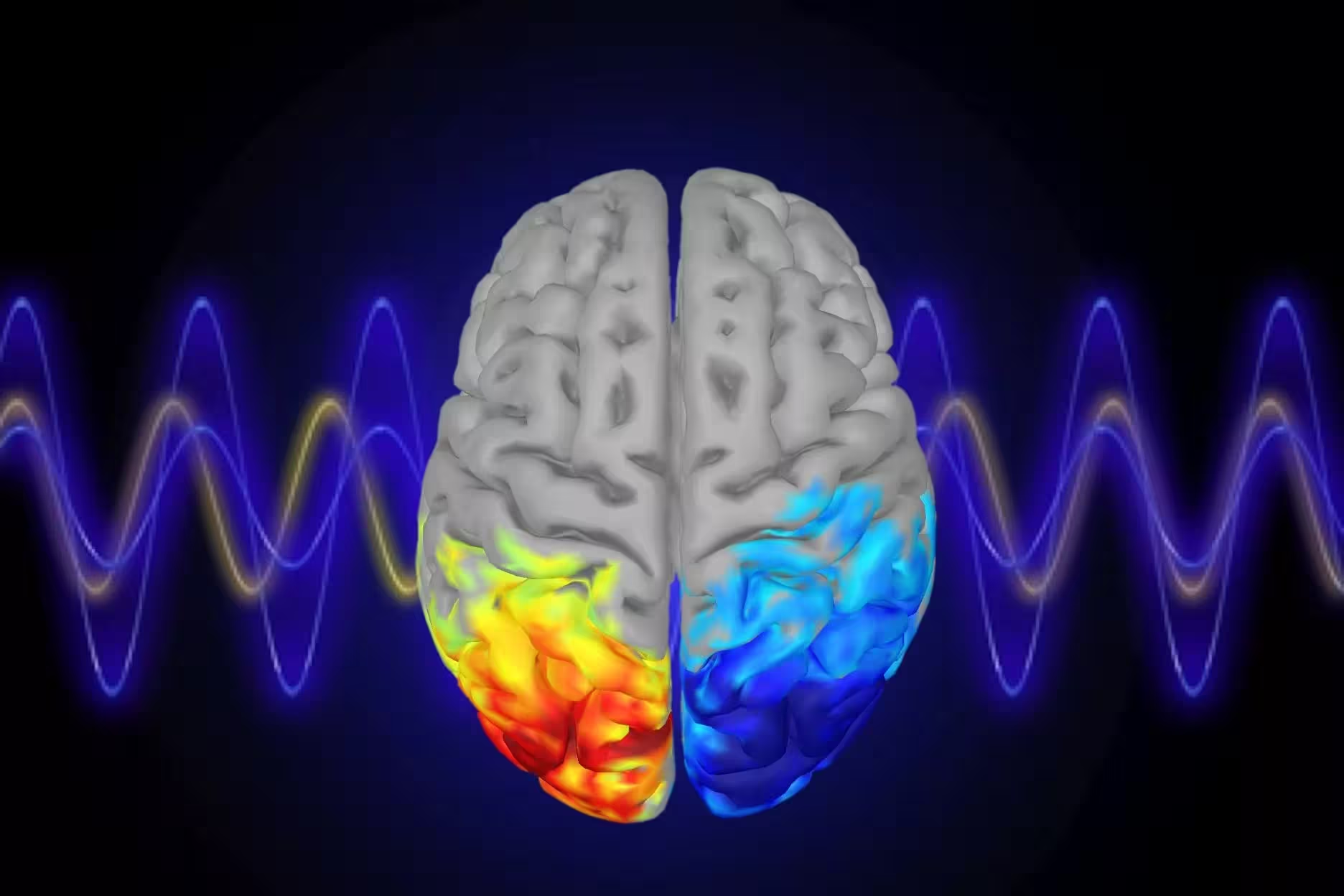
Still, observational research has limits. Recall bias can affect case-control studies, where participants estimate past phone use. Device exposure today is not identical to device exposure twenty years ago. Emerging technologies such as 5G use different frequency bands. None of these caveats overturn the central finding, but they do justify continued monitoring and research as networks and habits evolve.
Practical implication: public health agencies should continue evidence-based communication. Alarmist headlines do not help. Nor does complacency. Ongoing surveillance, better exposure measurement in future studies, and transparent reporting will keep the record clear.
Expert Insight
Dr. Emily Carter, an epidemiologist who has worked on environmental exposures, commented: "The weight of the evidence is steady. When independent teams reexamine large numbers of studies, consistent null findings are telling. That does not mean zero uncertainty, but it does mean current data do not support changing policy on mobile phone use based on cancer risk."
Her point highlights a practical truth in public science: robust null results are as important as positive findings. They narrow the landscape of plausible risks and guide where research dollars should go next.
Conclusion

Current, high-quality evidence does not link mobile phone radiofrequency exposure to cancers of the brain, head, or neck. That statement reflects decades of research and a recent synthesis of dozens of studies. Continued vigilance is wise, but the data today argue against fear-driven changes in everyday phone habits.

“The cosmos has always fascinated me. I write about space missions, astronomy, and the technologies pushing humanity beyond Earth.”

Discussion
Leave a Comment
Comments (2)
Is this even true? studies seem solid but recall bias and old phones differ. curious how they measure real exposure now, anyone?
wow ok, kinda relieved tbh been worried for years, makes sense. still, keep monitoring right? 5G stuff though…