
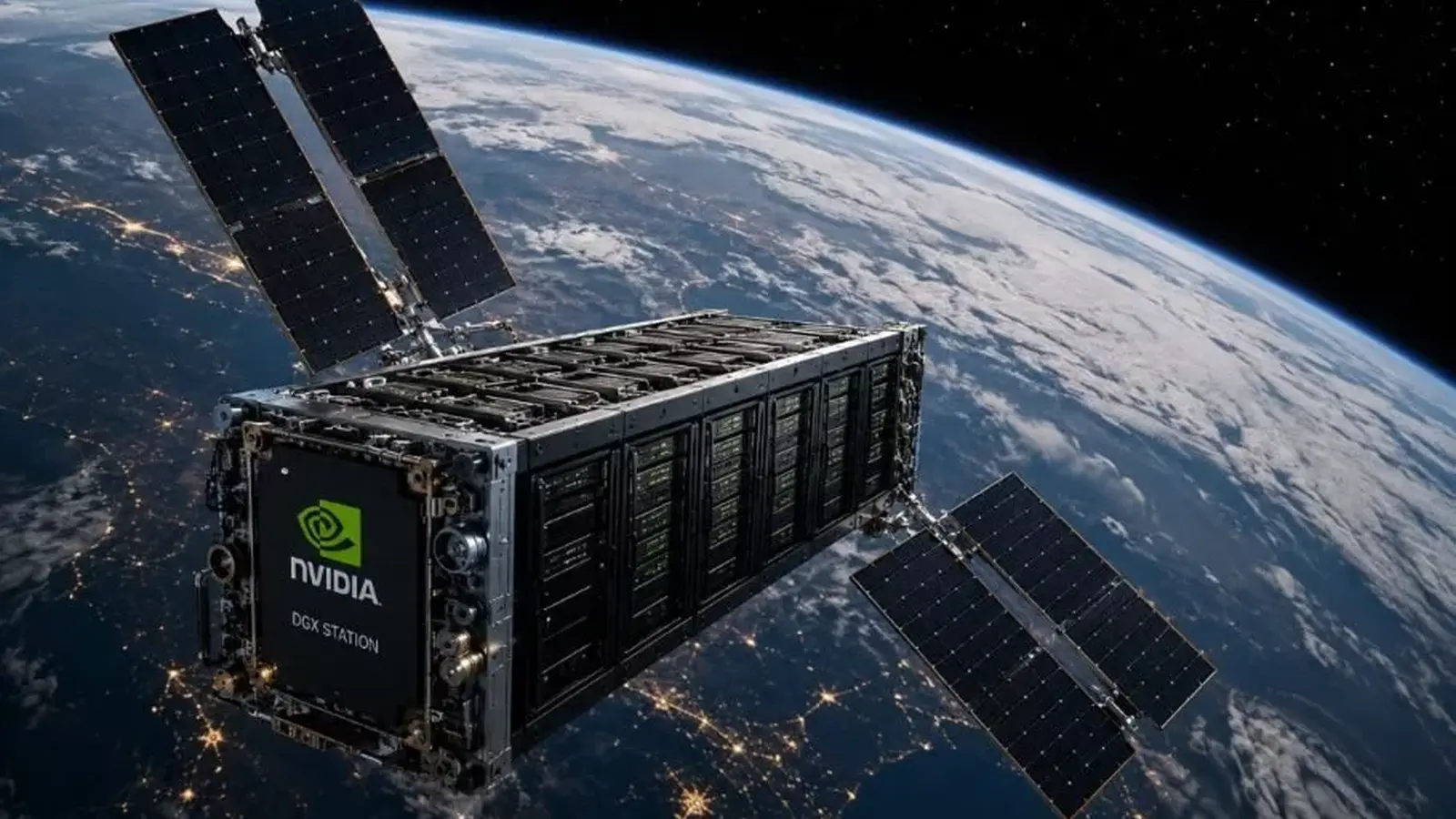
Imagine a GPU rack orbiting Earth, crunching neural networks while sunlight flashes across heat sinks. It sounds like science fiction. Nvidia is moving that fiction toward reality with a project called Space-1.
From job postings to hardware in orbit
Over the past weeks Nvidia has advertised a second senior role tied to orbital datacenters. The new listing for a senior system software architect focuses on making Space-1 operational rather than just conceptual. Earlier this year the company posted for an architect of orbital datacenter systems, a role centered on overall design from AI processors to satellite comms. The fresh listing shifts attention to production software: resilient stacks that can survive radiation, wide temperature swings, and months without a hands-on technician.
Space-1 will use Nvidia’s Vera Rubin AI chip platform and is aimed at missions in low Earth orbit. That choice signals a push for heavy on-orbit inference and training workloads close to Earth, where latency and data-transfer tradeoffs differ from ground installations. The software lead will need experience in AI infrastructure, distributed systems, and satellite operations. Nvidia lists a base annual compensation of approximately €250,240 to €397,550, not including potentially valuable stock awards.

Why orbital datacenters matter and what stands in the way
Why put datacenters in orbit at all? Cooling is one reason. Space offers a vast thermal sink if you can radiate heat efficiently. Proximity to sensors and satellites is another. Processing data in orbit can cut the time and bandwidth needed to shuttle raw sensor streams to Earth. For applications like near-real-time Earth observation analytics, maritime monitoring, or relay-based low-latency services, on-orbit compute can change the economics.
But hurdles remain. Launch costs, radiation-hardened design, remote update mechanisms, and power generation in space all add complexity and expense. Industry leaders are testing different approaches. SpaceX and other commercial launch providers are part of that race to make orbital compute commercially viable. Skeptics persist. Recently the CEO of SoftBank described Elon Musk’s orbital datacenter ideas as implausible for now. Even Nvidia’s CEO has acknowledged the economics of space compute are weak at present but suggested they could improve over time as technology and scale advance.
The new software role at Nvidia tells a clear story: the company has moved beyond blueprints. Job ads point to concrete engineering work on fault-tolerant control planes, secure remote management, and AI runtime stacks tuned for Vera Rubin silicon. That means software teams will need to orchestrate distributed GPUs across satellites, handle degraded links gracefully, and apply rigorous testing for radiation-induced bit flips and thermal cycling.
If companies can solve those problems, a new layer of infrastructure could emerge above the planet. Expect incremental steps. Don’t expect a sudden boom. Instead look for steady engineering advances, partnerships with launch and satellite firms, and pilot missions that validate the concept one payload at a time.

“The cosmos has always fascinated me. I write about space missions, astronomy, and the technologies pushing humanity beyond Earth.”

Discussion
Leave a Comment
Comments (2)
promising but pricey. if they nail fault tolerant software and rad testing, could work. for now expect slow pilots, step by step
wow orbital GPUs in LEO? crazy. cooling sounds legit, but radiation, launch costs, and remote fixes... big hurdles. curious how they test, tho.