
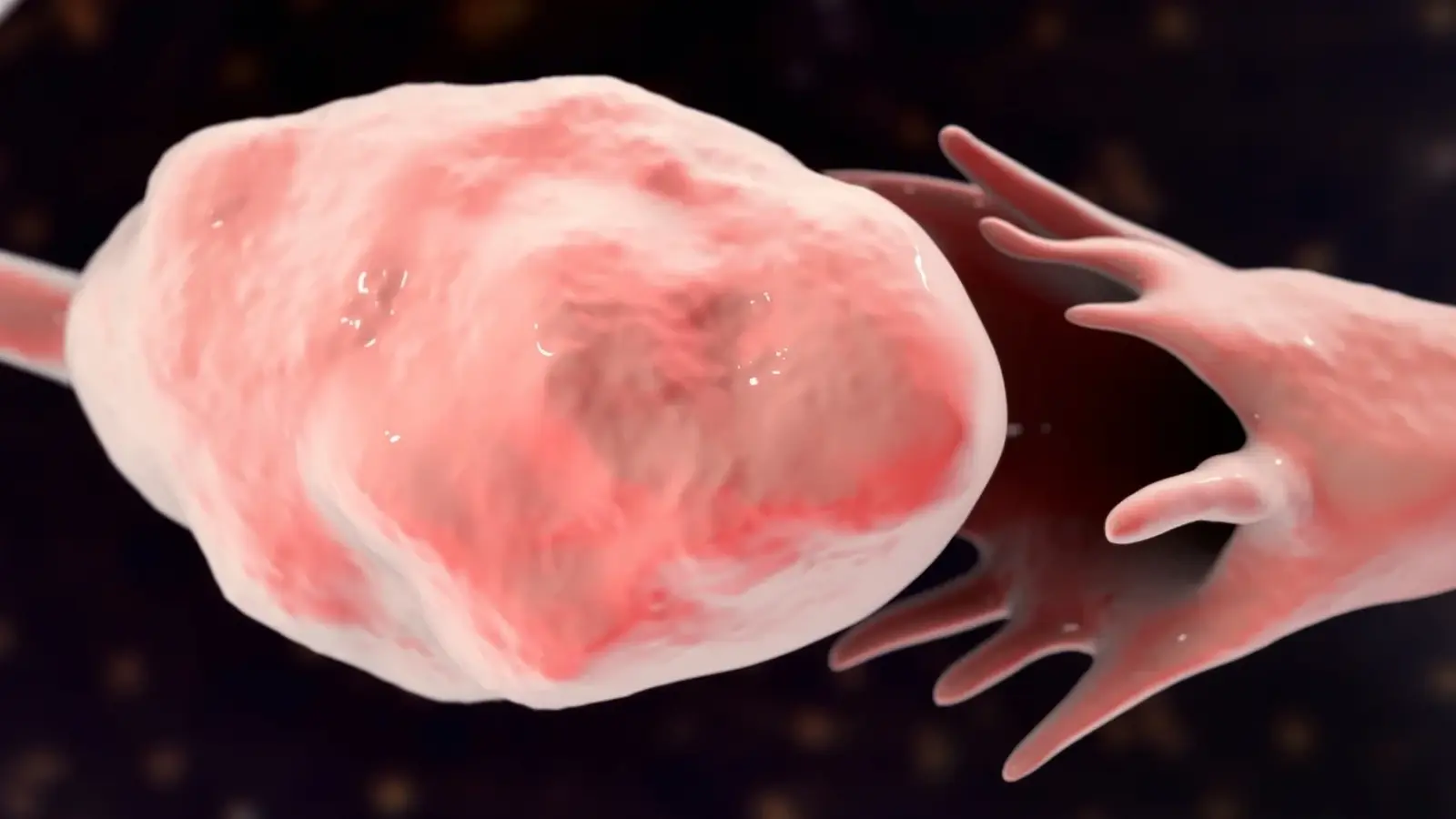
You might think of ovaries as simple egg producers. Think again. New laboratory work suggests these organs change their behavior and structure far earlier than the moment menstrual cycles stop.
Cardiovascular researcher Hattie Chung, senior author on the new paper in Nature Aging, offers a blunt summary: the ovary is an endocrine hub with roles that stretch well beyond ovulation. "It has so many important endocrine functions beyond just reproduction," she says. The organ secretes estrogen, progesterone, inhibin and testosterone, and those hormones shape metabolism, bones, cardiovascular health and immune signaling across the body.
How the ovary changes before menopause
Chung and colleagues dissected 22 mouse ovaries spanning multiple ages and reproductive stages to create a cellular atlas of aging tissue. They mapped interactions between 358 oocytes, 668 follicles and 236 corpora lutea, following how individual cell types communicate as animals moved from youth to middle age and beyond.

Aging impacts key processes underlying tissue-wide homeostasis, impacting both the reproductive and endocrine functions of the ovary.
Patterns emerged that were striking for their subtlety. Tissues began to fray. Cells that once operated in tight coordination—coaxing follicles to develop, timing ovulation, and remodeling tissue afterward—started to fall out of sync. Immune cells changed identity and location. Inflammatory signals rose. Architecture loosened. These were not single catastrophic failures; they were progressive losses of coordination.
Reproductive aging looks less like an emptying battery and more like a system losing synchronization.
That observation matters because of an odd fact about human menopause: at the transition, many people still carry roughly 1,000 eggs in reserve. Chung and her team point out that egg number alone cannot explain the decline in reproductive function. Instead, the ovarian microenvironment — the complex cellular ecosystem surrounding eggs — deteriorates in ways that undermine both fertility and the organ’s broader endocrine roles.
Why mouse data matter, and where they fall short
Mice are not people. Still, mammalian reproductive systems share deep evolutionary roots, and mouse models can reveal trajectories and mechanisms that justify deeper investigation in human tissue. In this study, the mouse data highlight immune remodeling, increased inflammation, and disordered tissue timing as early hallmarks of ovarian aging—features that might also appear in humans.

Spatial and temporal distribution of immune cell types across the mouse ovary's stage (estrus or metestrus) and age (young, middle, or old).
The study’s approach combined spatial and single-cell profiling, allowing researchers to watch which immune and stromal cells cluster near follicles at different ages and cycle stages. These spatial relationships changed with age, hinting at why hormonal outputs and tissue repair become less reliable long before menstruation ceases.
What this means for patients and clinicians
There are practical consequences. People undergo oophorectomy—the surgical removal of ovaries—for many reasons: cancer treatment, severe endometriosis, or gender-affirming care. If ovaries influence systemic immunity and hormone balance in nuanced ways before menopause, surgeons and primary care doctors may need to refine how they counsel patients about long-term risks and post-surgical hormone management.
Understanding the ovary as a gradual breakdown of tissue-level coordination reframes clinical questions. Should hormone replacement strategies be tailored to account for inflammatory signatures? Can we detect early ovarian disorganization with biomarkers, imaging or tissue sampling? Those are the next steps.
Chung notes the obvious next phase: look in human tissue. Her team has begun working with obstetrics and gynecology researchers at Yale to gather ovarian samples across age groups. The goal is to verify whether the mouse patterns—immune shifts, tissue disorganization, impaired coordination—appear in humans and to tie those changes to clinical outcomes beyond fertility.
Expert Insight
Dr. Maya Patel, a reproductive biologist unaffiliated with the study, says this research helps redirect the conversation around female reproductive aging. "We have to stop seeing ovaries as mere egg boxes," she explains. "This paper suggests the organ is an integrated signaling center. Declines in reproductive health may stem less from egg scarcity and more from breakdowns in cellular teamwork. That shift in perspective opens new targets for intervention, from immune modulation to tissue-support therapies."
Patel adds a practical note: early detection matters. If inflammatory patterns or spatial disorganization can be identified before clinical decline, clinicians might intervene earlier to preserve function or manage systemic risks tied to ovarian aging.
Conclusion
What emerges is a new portrait of the ovary: constantly active, playing endocrine and immune roles, and subjected to a gradual unraveling that long precedes the cessation of menses. Mouse models point to immune remodeling and loss of tissue coordination as early hallmarks. The critical next step is careful study of human ovaries to confirm these signals and translate them into better clinical pathways for aging, surgical care, and reproductive health.
For sufferers of gynecologic disease, for people considering oophorectomy, and for clinicians who manage long-term health, the message is clear: ovarian aging is a systemic story, not merely an egg-counting problem.


“My work centers on sustainability, energy, and environmental science — examining how innovation can lead to a greener future.”

Discussion
Leave a Comment
Comments (2)
Is this really relevant to people? Mice are useful, but translation is tricky. Can we detect ovarian disorganization noninvasively? curious, skeptical rn
wow this flips my view of ovaries, not just egg boxes. The immune angle tho... kinda worrying, and the idea of tissue timing failing is wild. Need human studies, fast