

What if a handful of genes could nudge tired nerve cells back toward youth? That question has moved out of mice cages and into a first-in-human trial, testing a gene therapy aimed at restoring vision by partially reprogramming damaged retinal neurons.
A bold clinical test arrives
Life Biosciences has announced the first participant has received ER-100, a gene therapy designed to rejuvenate retinal ganglion cells and the optic nerve fibers that carry sight signals to the brain. The technique does not attempt to replace cells. Instead, it seeks to restore a younger functional state within surviving neurons so they work better and resist further decline.
Why the retina? Because retinal ganglion cells are the information highways of vision. In glaucoma, and some other optic neuropathies, these cells are injured and fail to regenerate naturally. Loss becomes permanent. If you could restore some youthful function to those stubborn cells, you might recover sight that would otherwise be lost.

How ER-100 works
The therapy uses an engineered viral vector as a delivery vehicle. It carries three genes drawn from a broader set of factors researchers discovered years ago can reprogram mature cells toward a stem-like state. In ER-100 the approach is conservative: activation of only three genes aims to make cells younger without erasing their identity as retinal neurons.
Controlled activation
Crucially, the introduced genes are designed to switch on only while a specific antibiotic is given. Stop the drug. The genes stop being active. That off-switch is meant to reduce risks tied to prolonged or uncontrolled reprogramming.
Preclinical work underpins the concept. A team led by Harvard geneticist David Sinclair reported in 2020 that activating a subset of reprogramming factors in mice promoted repair of the optic nerve and partially reversed age-related vision loss. The intervention was later tested in rodents and nonhuman primates, and according to the company, no serious treatment-related adverse events emerged in those studies.
Trial design and immediate goals
This is a Phase 1 safety study enrolling up to 18 participants. The initial cohort will include 12 patients with open-angle glaucoma, followed by up to 6 people with non-arteritic anterior ischemic optic neuropathy, a condition that damages the optic nerve. Participants will be followed for at least five years and dosing may be adjusted depending on observed responses.
Primary endpoints are safety and tolerability. But researchers will also collect early signals of efficacy: visual acuity, visual field testing, retinal imaging, and electrophysiology. Any hint that partial reprogramming improves function would be a powerful motivator for larger trials.
The stakes are high. If the approach is safe and shows functional benefit in eye disease, it could unlock broader applications. Many age-related disorders—from neurodegeneration to muscle wasting—are linked to a decline in cellular performance rather than simple cell death. Reprogramming-based therapies aim to reset some of that lost cellular information.

Real promise, real concerns
There is cautious optimism in the field. Restoring youthful gene expression patterns could make aged cells more resilient. It could also slow or reverse decline in tissues where replacement is difficult, like the central nervous system.
But altering a cell's genetic program carries risks. One worry is that cells partially stripped of their mature control systems might begin uncontrolled growth. In other words, cancer is a theoretical possibility. Researchers built the antibiotic-dependent switch into ER-100 precisely to limit how long the reprogramming genes are active, but long-term safety remains unknown.
Another limitation: in glaucoma the principal mechanical problem is elevated intraocular pressure. Rejuvenating ganglion cells may improve survival and function, but it does not by itself address pressure. Critics point out that without managing the underlying stressors that caused the injury, any gains could be lost to renewed damage.
Independent researchers emphasize caution. The technique is still at an early stage. Spreading it beyond carefully controlled trials would be premature.
Expert Insight
"This trial is an important inflection point," says Dr. Elena Martinez, a retinal neurobiologist at the University of California. "If ER-100 proves safe, it validates the idea that cellular age is malleable in humans. But safety must come first. The nervous system is unforgiving; unintended changes can have lasting consequences. We need rigorous, long-term follow-up to know whether benefits persist without trade-offs."
Her observation captures the tension in the research community: excitement about a new lever on aging biology, coupled with the need for prudence.
Broader implications and next steps
If ER-100 shows a favorable safety profile and hints of efficacy, the logical next step will be larger, randomized trials. These would test different doses and compare results to standard-of-care treatments, including pressure-lowering therapies in glaucoma. They would also evaluate whether combining reprogramming approaches with neuroprotective or pressure-targeting strategies yields additive benefit.
Beyond ophthalmology, successful translation of partial reprogramming could spur work on other age-related conditions where cell function, not cell absence, is the main problem. That includes certain forms of neurodegeneration and muscle decline. But translating from one tissue to another is not straightforward. Each organ system presents unique delivery, control, and safety challenges.
For patients and clinicians, the message is simple: this is an early and carefully controlled test of an audacious idea. It is neither a cure-all nor a proven therapy yet. Results from the initial cohort and subsequent follow-up over the next several years will determine whether partial cellular reprogramming matures into a practical medical tool or remains an intriguing laboratory finding.
Conclusion
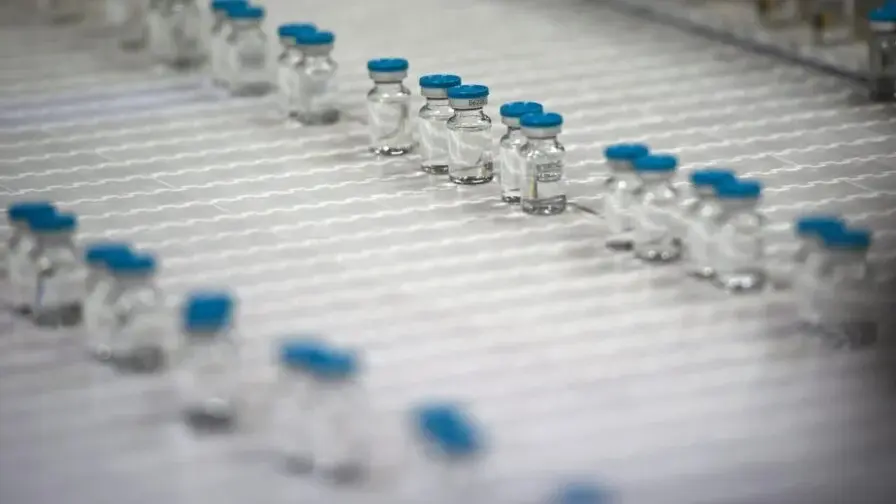
ER-100 marks the first human test of partial cellular reprogramming aimed at restoring function in retinal neurons. The trial will prioritize safety while watching for signs of visual improvement. Success could reshape how we think about aging at the cellular level. Failure, or significant safety signals, would temper expectations and redirect research toward safer or more targeted strategies. Either way, this study will teach us how far we can safely push the biological clocks inside human cells.

“The cosmos has always fascinated me. I write about space missions, astronomy, and the technologies pushing humanity beyond Earth.”

Discussion
Leave a Comment
Comments (3)
Hmm hopeful but feels overhyped. Good idea tho, but long followup needed, and don't forget standard glaucoma care. Not a miracle pill.
Interesting, but how will they handle high eye pressure? Rejuvenated cells wont last if the underlying pressure isnt fixed.
Whoa partial reprogramming in humans? mind blown. If it even helps a little, huge deal. Still worried about cancer risk, fingers crossed.