
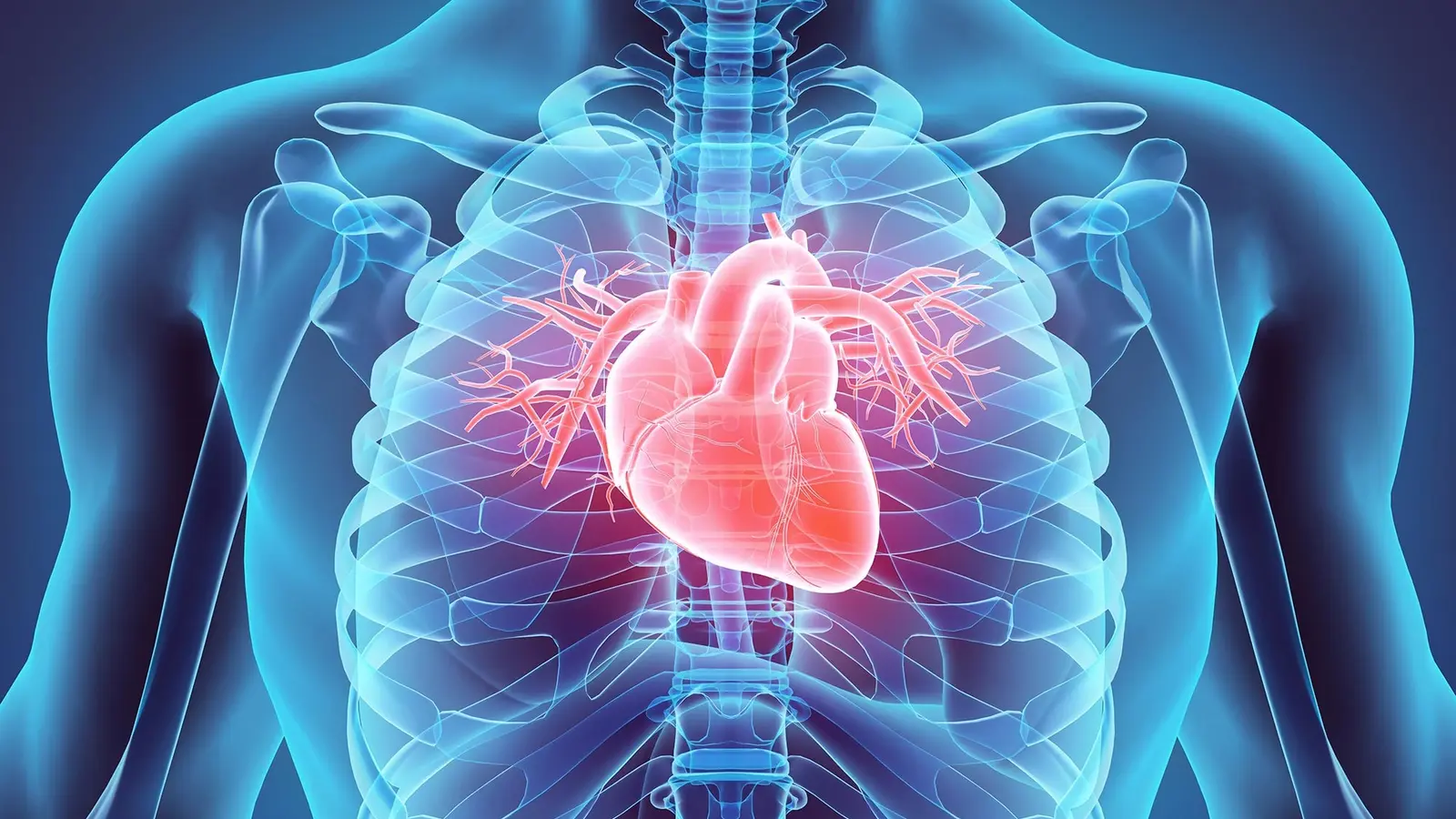
Imagine a heart that can still pump strongly but behaves like a stiff rubber band: it squeezes blood out but struggles to relax and refill. That stiffness is the core problem in nearly half of all heart failure cases, a condition clinicians call heart failure with preserved ejection fraction, or HFpEF. New laboratory work now points to a surprising ally: a molecule your gut can make after you eat pomegranates, walnuts, or certain berries.
Researchers at King’s College London report that urolithin A — a metabolic product produced when gut microbes break down certain plant compounds — restored relaxation in engineered human heart tissue and produced large improvements in animal models of HFpEF. The changes were not incremental. In some measures, heart function improved by as much as 80 percent in treated experimental models, driven by reduced scarring and less harmful enlargement of heart muscle cells.
How a dietary metabolite switched on a relaxation pathway
The study centers on a protein kinase called PKG Iα, a molecular switch known to promote blood-vessel health and help heart muscle relax. The team discovered that urolithin A modifies a specific amino acid on PKG Iα, activating a cascade that eases the heart’s ability to relax between beats. Think of it as oiling a hinge that had become stiff with age and stress.
This mechanism matters because HFpEF is not a simple failure to pump; it is a failure to fill. Patients often retain normal ejection fraction, meaning the heart still ejects a normal proportion of blood, but the ventricle walls are less compliant. Common drivers include aging, hypertension, obesity, and diabetes — all conditions that alter cellular metabolism and promote fibrosis, the buildup of scar tissue that stiffens cardiac muscle.

A single engineered heart tissue attached to two posts. When the tissue contracts, the posts move back and forth.
Laboratory models and engineered human tissue: what changed
The investigators used complementary approaches. In animal models designed to mimic HFpEF, urolithin A treatment led to markedly improved diastolic function — the phase when the heart relaxes and fills. Measures of relaxation improved by up to 80 percent versus untreated controls. At the tissue level, treated hearts showed less fibrosis and smaller, healthier cardiomyocytes.
To bridge the gap between animals and patients, the team also applied urolithin A to engineered human heart tissue derived from stem cells. Those tissues better resembled human cardiac architecture than isolated cells do; when treated, they relaxed more effectively and demonstrated functional improvements consistent with the animal findings. These parallel results strengthen the case that the pathway activated by urolithin A is relevant to human heart physiology.

Engineered heart tissues each grown between fixed posts.
Why this could matter clinically
Treatment options for HFpEF are limited precisely because the condition is heterogeneous. A single drug that fixes one mechanism may fail in another patient whose disease is driven by different pathways. The appeal of urolithin A lies in two features: it targets a relaxation pathway that is central to HFpEF physiology, and it is a naturally derived metabolite with an existing human safety record from prior early studies.
Still, laboratory efficacy is not the same as clinical benefit. Human trials are required to test whether oral supplementation, dietary strategies that enhance urolithin A production, or synthetic derivatives can safely produce meaningful outcomes for patients — improved exercise tolerance, fewer hospitalizations, or better quality of life.
Treatment options remain relatively limited because the condition can arise from several different factors, including aging, high blood pressure, and diabetes. Since the heart can continue pumping normally while struggling to relax and fill, conventional heart failure treatments are less effective. Clinicians instead concentrate on managing underlying conditions and recommending lifestyle changes such as weight loss and blood sugar control.
Expert Insight
"The novelty here is twofold," says Dr. Elise Mercer, a cardiometabolic physiologist at a European cardiovascular institute (commentary provided for context). "First, the discovery ties a gut-derived metabolite to a specific cardiac signaling node. Second, the work uses engineered human tissue alongside animal models, which gives a more realistic sense of translational potential. That doesn't replace clinical trials, but it raises the probability that this pathway could be druggable."
Dr Joseph Burgoyne, senior author of the study at King’s College London, noted that HFpEF is growing more common as populations age and rates of obesity and diabetes rise. He said that the research identifies a completely new therapeutic target and shows that urolithin A can activate this pathway to improve heart relaxation and reduce disease severity, raising the possibility of new treatments that could improve outcomes and quality of life for people with the condition.
Urolithin A activates a relaxation pathway Interest in urolithin A has grown because the compound has been linked to healthy aging and mitochondrial function, the process through which cells generate energy.
Limitations and the road ahead
A number of caveats temper excitement. Gut microbiomes vary widely among people, and the capacity to produce urolithin A from dietary precursors differs. That means simply eating pomegranates will not reliably produce therapeutic levels in every person. The study’s authors explicitly caution that the findings do not mean patients should attempt to self-treat HFpEF with diet alone.
Furthermore, the precise dosing, pharmacokinetics, and long-term safety of sustained urolithin A supplementation in people with cardiac disease remain unknown. There may also be subpopulations of HFpEF patients who are more likely to benefit, depending on comorbidities and molecular disease signatures. Carefully designed clinical trials will be needed to answer these questions and to define biomarkers that predict response.

Engineered heart tissues in a petri dish after being removed from the posts.
This work opens an intriguing avenue: a metabolite derived from common foods can engage a defined molecular pathway to restore heart relaxation in experimental models of HFpEF. It is a promising lead, not a cure. The next steps are rigorous human studies and, if warranted, development of targeted molecules that produce consistent, safe activation of PKG Iα in patients.

Engineered heart tissues with solution.
Professor James Leiper, Director of Research at the British Heart Foundation, summarized the cautious optimism shared across the field: while early-stage studies like this are promising, benefits seen in animals and engineered tissue must be tested in people before any treatment claims can be made. In the meantime, maintaining a balanced diet and controlling blood pressure, weight, and blood sugar remain foundational for heart health.
Dr Joseph Burgoyne is a cardiovascular scientist at King’s College London who studies the molecular processes that regulate heart and blood vessel health. His research examines how cells respond to oxidative stress and how those responses affect blood pressure, heart function, and vascular health, with the aim of identifying new treatments for conditions including hypertension and heart failure.


“My work centers on sustainability, energy, and environmental science — examining how innovation can lead to a greener future.”

Discussion
Leave a Comment
Comments (3)
hmm feels a bit overhyped, 80% improvement in animals is wild tho. Still, translating stem cell and animal wins to humans is hard. watch this space
Is this even true? Sounds promising but gut microbiomes vary so much, not everyone will get urolithin A from food. Trials needed.
Wow, gut microbes helping heart relaxation? mind blown. If urolithin A really boosts PKG Iα in people, this could change HFpEF care… but human trials plz, asap